

More news on this day
Air travel across Germany faced fresh disruption this week as Gulf Air, Lufthansa, KLM and several other major carriers canceled more than 30 flights, disrupting connections to Amsterdam, Paris, Bahrain, Tel Aviv, Doha, Frankfurt and other key hubs amid ongoing instability affecting routes between Europe and the Middle East.
Get the latest news straight to your inbox!
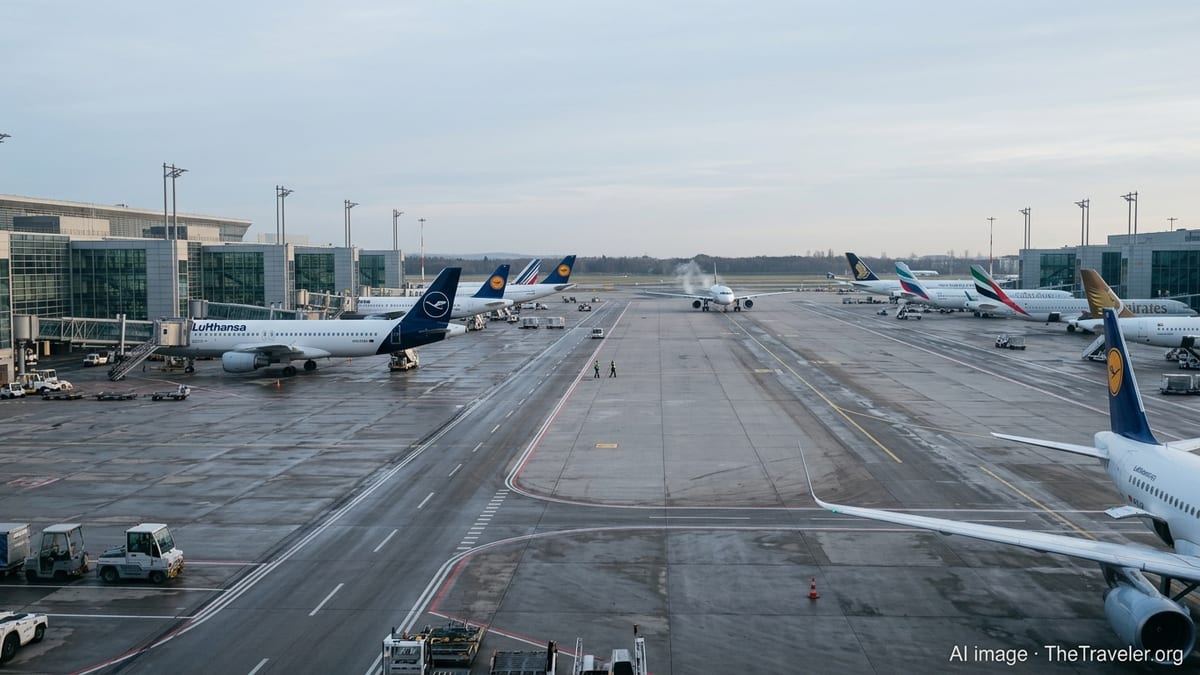
Wave of Cancellations Hits German Hubs
Publicly available flight information and media coverage indicate that a new round of cancellations has swept through major German airports, notably Frankfurt and Munich, with knock-on effects at Berlin and regional hubs. While exact tallies vary across airports and days, combined schedules show more than 30 flights scrubbed or heavily modified over a short window, many of them linking Germany with major European and Gulf destinations.
Lufthansa and other members of its group have been at the center of the disruption. The carrier has periodically extended suspensions and reductions on services to Tel Aviv and other Middle Eastern cities, and recent timetable updates show further cancellations on departures from Germany to Israel, Lebanon and parts of the Gulf region. These adjustments reduce connectivity from German hubs to Tel Aviv, Beirut and onward transfer points that rely on those links.
Alongside Lufthansa, Dutch flag carrier KLM has been cutting and reshaping services through its Amsterdam hub. Reports indicate that KLM has already been operating a constrained schedule at Amsterdam Schiphol following earlier operational pressures, and current disruptions in the wider region have now translated into additional cancellations on flights to and from Germany, especially on routes that normally feed longer-haul services to Tel Aviv, Dubai and other Gulf gateways.
Bahrain-based Gulf Air has also been impacted. Travel forums and schedule data point to changes on routes that usually connect Bahrain with German cities such as Frankfurt, with some services canceled outright and others rerouted via alternative Gulf points. For travelers relying on Bahrain as a link between Europe and destinations across the Middle East and South Asia, the loss of nonstop German frequencies has added another layer of uncertainty.
Middle East Tensions and Airspace Restrictions
The latest cancellations are unfolding against a backdrop of heightened tensions in the Middle East and evolving airspace restrictions that have affected multiple carriers since late February. Aviation analyses and news reports describe airlines carefully avoiding certain flight information regions over Iran and neighboring states, as well as city pairs directly affected by conflict or security assessments.
Lufthansa Group has repeatedly extended suspensions on services to Tel Aviv and several other cities in the region, citing ongoing risk evaluations and the need to route aircraft away from sensitive airspace. KLM has also been reported as suspending or limiting operations to Tel Aviv and key Gulf destinations, while diverting flights around Iranian and Iraqi airspace. These measures add flying time and complexity to many itineraries, making some schedules impractical and leading to cancellations when rerouting is not feasible.
Gulf Air’s network is closely intertwined with these developments. Bahrain stands near several of the affected corridors, and the airline’s European services often rely on predictable access to overflight routes across the wider region. Travelers discussing recent schedule changes describe some Gulf Air flights to Germany operating via alternate Gulf cities, while others appear as canceled in booking systems, reflecting the fluid nature of route planning during the current airspace uncertainty.
Other global carriers have made similar moves, adjusting or pausing flights to Tel Aviv, Beirut, Dubai, Doha and other hubs. Although not all of these airlines operate directly from Germany, their decisions further constrict options for passengers attempting to connect between German airports and destinations in the eastern Mediterranean and Gulf via third-country hubs.
Knock-On Effects for Amsterdam, Paris and Other European Gateways
The disruption is not confined to direct Germany–Middle East services. Because Lufthansa, KLM and partner airlines feed large numbers of passengers through Amsterdam Schiphol, Paris Charles de Gaulle and other European hubs, cancellations in Germany ripple through wider regional networks.
Amsterdam has already been coping with an unsettled winter and early spring, including episodes of severe weather that previously forced KLM to cancel a significant share of its schedule at Schiphol. More recent operational constraints combined with airspace detours have prompted further adjustments. When German feeder flights are dropped or consolidated, passengers lose key connections from cities such as Frankfurt, Munich or Berlin to onward KLM departures bound for Tel Aviv, Dubai or other long-haul markets.
Paris is experiencing similar secondary effects. Air France has periodically scaled back or suspended flights to Tel Aviv, Dubai and Riyadh during the current period of regional instability, and reduced capacity on these routes makes each canceled German–Paris segment more consequential. With fewer long-haul seats available from Paris and Amsterdam, travelers displaced by Germany-originating cancellations have less room to rebook on alternative services.
The cumulative result is that seemingly local schedule changes at German airports quickly become a Europe-wide connectivity issue. Travelers heading from Germany to Amsterdam or Paris for onward flights to the Middle East may find that both legs of their journey are now subject to disruption, even if their original booking did not involve transiting the most affected conflict-adjacent airspace.
Impact on Travelers to Tel Aviv, Doha, Bahrain and Beyond
Passengers booked between Germany and Tel Aviv, Doha, Bahrain and other Middle Eastern destinations are among the hardest hit. Tel Aviv has been at the center of multiple suspension decisions by European and Gulf carriers, and current timetables show significantly reduced options compared with earlier in the winter season. This means that when a Lufthansa or KLM service from Germany is canceled, there may be no straightforward same-day alternative via their traditional hubs.
For Doha-bound passengers, publicly visible schedules and airline travel advisories show that several Gulf carriers, including Qatar Airways and others, have been operating on revised and sometimes limited patterns through late March and into April. When combined with cancellations from German cities, the reduced frequency can lengthen journey times and force detours via less direct routings, such as through southern European or alternative Gulf airports.
Travelers connecting to or from Bahrain are facing similar challenges. Gulf Air’s adjusted operations, paired with restrictions or reductions by European partners, can translate into last-minute schedule shifts, including the rerouting of German-origin flights through different Gulf hubs. In practical terms, this often means longer layovers, unexpected overnight stays or the need to rebook on completely different airlines.
Even for routes that remain technically open, the combination of reduced capacity and elevated demand from rebooked passengers has tightened seat availability. This environment makes it harder for stranded travelers to secure seats on later services, especially during peak travel days, and increases the likelihood of extended delays before reaching final destinations.
What Passengers Flying From Germany Should Expect Now
Given the fluid situation, publicly available guidance from airlines and travel industry observers suggests that passengers departing from German airports over the coming days should prepare for potential last-minute changes. Many airlines serving Germany and the Middle East have introduced or expanded flexible rebooking policies that allow travelers to alter dates or routes without traditional change fees, although fare differences may still apply when switching to higher-priced alternatives.
Travelers are widely encouraged by airline advisories and airport communications to monitor flight status closely on the day of departure and to allow extra time between connections, particularly when itineraries involve transfers in Amsterdam, Paris, Bahrain, Doha or other hubs that are either directly affected by cancellations or indirectly impacted through network knock-on effects.
Industry commentary also notes that travelers might see aircraft swaps, combined services or unscheduled technical stops as airlines work around restricted airspace and staffing constraints. While these measures can keep some flights operating, they also introduce further uncertainty about arrival times and onward connection reliability for passengers originating in Germany.
With no definitive end date to the current combination of regional tensions and operational bottlenecks, aviation analysts expect that German travelers heading to Tel Aviv, Doha, Bahrain and other affected destinations could face an extended period of rolling adjustments. For now, the latest wave of more than 30 cancellations underscores how quickly route networks linking Germany with Amsterdam, Paris and key Middle Eastern hubs can be reshaped by developments far beyond European borders.