

More news on this day
Major US and international airlines including Delta, United, American, Emirates, and KLM have canceled or rerouted more than 40 flights touching the United States, as widening conflict and airspace closures around the Middle East disrupt routes linking Atlanta, Dallas, Chicago, Los Angeles, and New York with hubs such as Tel Aviv, Dubai, Amsterdam, and Toronto.
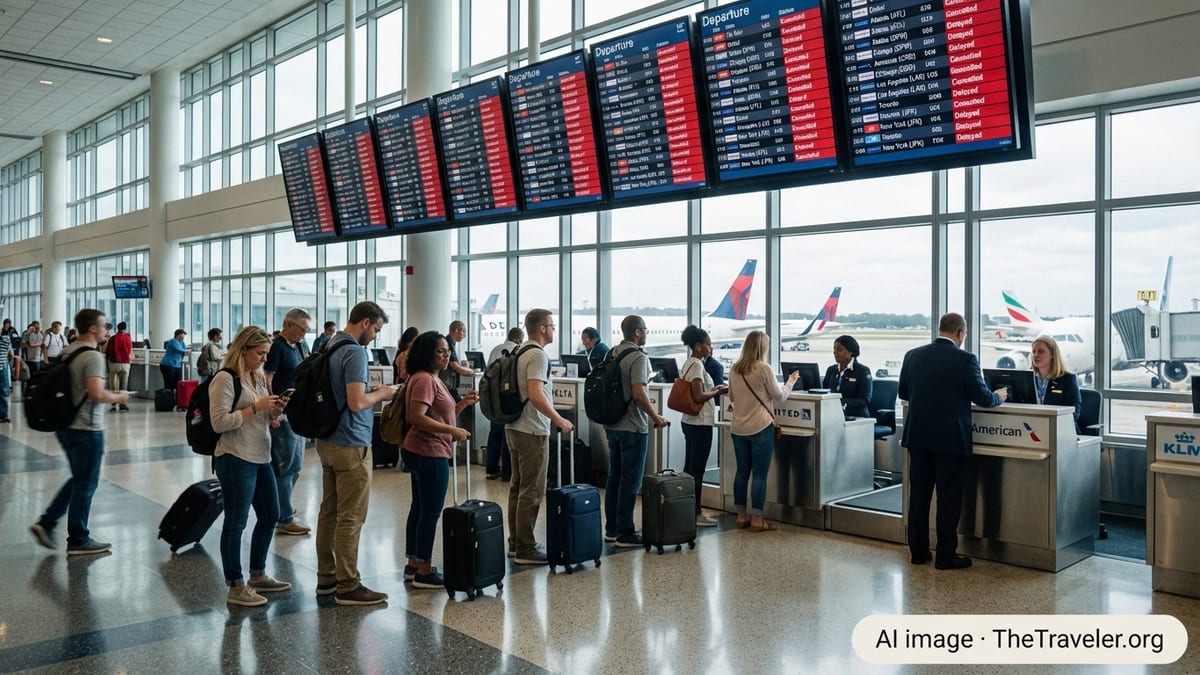
Escalating Middle East Conflict Triggers New Wave of Cancellations
The latest round of disruptions unfolded on February 28 after a sharp escalation in military action involving the United States, Israel, and Iran prompted widespread airspace restrictions across parts of the Middle East. Aviation authorities in several countries temporarily closed or restricted their skies, forcing airlines to reassess the safety and viability of flying to and over the region.
Carriers that rely on eastbound corridors over the Middle East for connections between North America, Europe, and Asia faced immediate operational challenges. Flights that would normally track over or near Iranian, Iraqi, Israeli, and Gulf airspace were either canceled outright or rerouted along longer paths that avoid sensitive zones, adding hours to flight times and complicating schedules.
Industry analysts say the situation is fluid, with airlines updating timetables multiple times a day. While some cancellations are framed as short term, many carriers are also signaling that schedules to Tel Aviv and major Gulf hubs will remain under review as security assessments evolve.
Delta, United, and American Adjust US Gateways and Tel Aviv Service
Delta confirmed that it has paused its New York JFK to Tel Aviv service through at least March 1, canceling near-term departures and activating a travel waiver for customers booked to or from Israel between February 28 and March 5. The carrier is notifying passengers via its app and direct contacts while encouraging travelers to monitor flight status and rebooking options.
Across the broader US market, operational data and airport boards on Saturday showed dozens of cancellations and significant delays on routes that either serve Tel Aviv directly or depend on transatlantic and Middle Eastern connections. Flights from Atlanta, Chicago, Dallas, Los Angeles, and New York to European gateways used to connect onward to Israel and the Gulf have also been trimmed or retimed, as US airlines coordinate with partners on alternative routings.
United Airlines and American Airlines, both of which have historically maintained strong transatlantic networks and links into the region, have been selectively canceling or consolidating frequencies where load factors and operational constraints make flights harder to sustain. Some passengers are being rebooked via alternative European hubs or shifted to later departure dates, while others are opting to postpone trips altogether amid uncertainty.
Emirates, KLM, and Global Carriers Cut Back Tel Aviv and Dubai Links
International carriers are also tightening their schedules. KLM has already signaled a full suspension of its Amsterdam to Tel Aviv route starting March 1, citing the combined impact of commercial demand and operational feasibility. The move follows weeks of on and off flying to the Israeli city as regional tensions repeatedly disrupted planning.
Emirates and other Gulf-based airlines are contending with both direct security concerns and logistical bottlenecks at major hubs. Dubai, one of the world’s busiest international airports, has seen waves of cancellations and diversions in recent days as operators respond to airspace limitations, with knock-on effects for passengers originating in or connecting from US cities such as Los Angeles, New York, Chicago, and Houston.
European and Asian airlines that funnel US travelers to Tel Aviv, Dubai, and other regional destinations are similarly affected. Some have opted to cancel specific rotations from North American cities where alternative routings are impractical, while others are stretching flight times with lengthy detours. For travelers booked from US points to Amsterdam, Paris, or other hubs on their way to Tel Aviv or the Gulf, itineraries are being rebuilt on the fly as airlines attempt to maintain at least partial connectivity.
Impact on Key US Hubs and Transatlantic Connections
The brunt of the disruption for US passengers is being felt at the country’s largest international gateways. Atlanta, Dallas Fort Worth, Chicago O Hare, Los Angeles International, and New York JFK have all reported cancellations and significant delays on services that either fly to the Middle East directly or depend on connections through European and Canadian hubs.
Routes linking these airports with cities such as Tel Aviv, Dubai, Amsterdam, and Toronto have been particularly affected, as airlines juggle crew availability, aircraft rotations, and longer detours. Some transatlantic flights are still operating but with adjusted routings that add fuel stops or extended flight times, creating cascading delays that ripple through domestic networks.
Airport operational teams are working with airlines to manage gate changes and rebook stranded travelers, but terminal scenes on Saturday reflected long lines at customer service desks and busy call centers. Passengers with complex itineraries that include multiple international legs are among the hardest hit, particularly those aiming to reach Israel or connect onward through Gulf hubs to South Asia and Africa.
What Affected Travelers Can Expect in the Coming Days
For passengers whose flights have been canceled or heavily delayed, airlines are broadly offering fee waivers for date changes, rebooking on alternative routes where available, and refunds when trips can no longer be completed. However, limited seat availability and rapidly changing schedules mean some travelers may face multi day disruptions before reaching their destinations or returning home.
Travel advisers recommend that passengers with imminent departures to or through the Middle East, as well as those headed to Tel Aviv, Dubai, or nearby hubs via Europe and Canada, check their flight status frequently and ensure contact details are up to date in airline profiles. Relying solely on printed or previously saved itineraries is risky, as flight numbers, times, and routings may change with little notice.
With no clear timeline for a full reopening of affected airspace and security guidance shifting in step with geopolitical developments, airlines are emphasizing that safety remains the overriding priority. In the meantime, travelers should brace for ongoing volatility in schedules, be flexible with routing options, and expect that more cancellations and last minute adjustments are likely as carriers continue to recalibrate their networks.