

More news on this day
Major US and international airlines including Delta, United, American, Emirates and KLM scrapped or rerouted more than 40 long haul flights on Saturday, February 28, as a fast moving security crisis in the Middle East and related operational constraints rippled across major US hubs from Atlanta and Dallas to Chicago, Los Angeles and New York’s JFK.
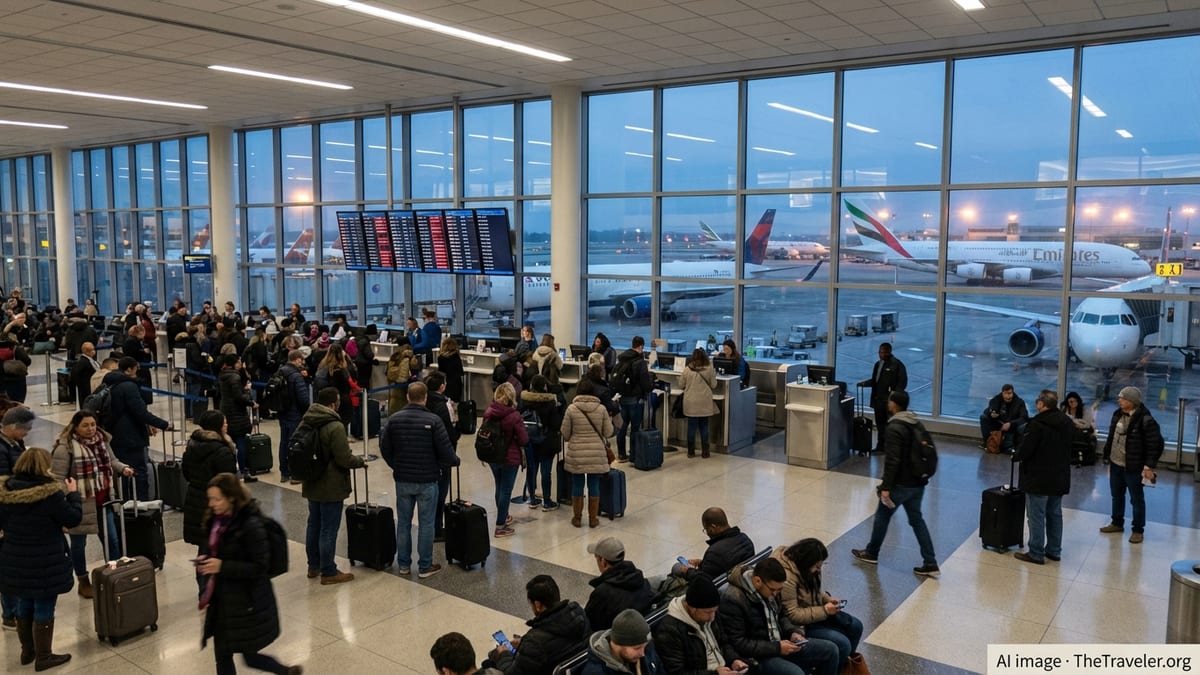
Key Routes Between US Hubs and Global Gateways Disrupted
Operational data and airline travel alerts on Saturday showed a wave of cancellations and last minute routing changes affecting transatlantic and transcontinental services linking major US airports with Tel Aviv, Dubai, Amsterdam, Toronto and other international gateways. The impact was most visible at New York’s JFK, Los Angeles International, Atlanta, Chicago O’Hare and Dallas Fort Worth, where long haul departures to the Middle East and parts of Europe were pulled from departure boards or placed into extended delay.
Delta confirmed it has paused flights between New York JFK and Tel Aviv through March 1, cancelling weekend rotations and issuing a flexible travel waiver for customers booked to or from Israel between February 28 and March 5. United and American have also trimmed or adjusted their Tel Aviv schedules, focusing on rerouting passengers over alliance partners while holding back on operating their own metal into the region until security guidance becomes clearer.
Beyond Israel, carriers reported targeted cancellations and aircraft swaps on routes into Dubai and other Gulf hubs, as well as selective adjustments across Europe. KLM’s latest travel alerts flagged cancellations and schedule changes on services touching Tel Aviv and Dubai, while maintaining most of its US Amsterdam trunk flights but warning that onward connections in the Middle East could be disrupted at short notice.
For travelers booked from Atlanta, Dallas, Chicago, LAX and JFK, the immediate effect has been a patchwork of same day cancellations, rolling delays and rebookings through alternative hubs, often with significantly longer travel times. Airlines urged passengers to rely on official apps and text alerts rather than airport counters for the latest status information.
Delta, United, American and KLM Tighten Schedules to Tel Aviv
The sharpest focus remains on Tel Aviv, where the security situation has repeatedly forced global carriers to reassess their operations. Delta’s pause on the JFK to Tel Aviv route, announced Saturday morning, underlined how quickly airlines are willing to stand down high profile services when risk assessments change. The carrier emphasized that customer and crew safety remains the primary factor in deciding when to reinstate the link.
United, which has been operating select flights to Israel from its Newark and other hubs, has quietly removed several weekend departures from schedules and is consolidating demand onto fewer services, giving itself more flexibility to cancel or reroute if the regional picture worsens. American, which had already been phasing in a cautious return to Israel service, has also taken a conservative stance, prioritizing reaccommodation over maximizing capacity.
KLM’s latest alerts confirmed that flights between Amsterdam and Tel Aviv are being suspended at the end of the winter timetable period, with customers able to rebook or request refunds. While most of the airline’s US Amsterdam services are still running, passengers connecting onward to Israel face immediate disruption and are being offered alternative routings where possible through partner airlines in Europe.
Across these carriers, rebooking windows and refund policies are broadly similar: customers whose flights are cancelled can shift travel dates without change fees, opt for credits valid for up to a year, or request full refunds if their trip no longer makes sense. However, limited seat availability in the coming days means many travelers are being pushed to later departures or different routings.
Emirates and Gulf Carriers Face Knock-On Effects in Dubai
Emirates and other Gulf based airlines are also navigating operational headwinds, with Dubai International again under pressure as a global transit hub during a period of heightened geopolitical risk. While Dubai has remained open, carriers have trimmed selected daylight frequencies, delayed departures and occasionally rerouted aircraft to avoid sensitive airspace, creating a rolling pattern of disruption on routes between US cities and the United Arab Emirates.
Emirates services linking Los Angeles, New York, Chicago and other US gateways with Dubai have generally continued to operate, but with scattered cancellations and schedule adjustments that ripple through connecting banks to destinations across the Middle East, South Asia and Africa. Passengers bound for onward connections to Tel Aviv and nearby markets are among the most affected, often finding their itineraries severed midway and needing complete reissues.
KLM has separately warned that some flights to and from Dubai are being adjusted or cancelled around the weekend as it responds to both security guidance and airspace management changes in the region. Travelers using Amsterdam as a one stop link between US cities and the Gulf are being advised to regularly refresh their booking details, since automatic rebookings can change again as the situation evolves.
Air traffic control restrictions and last minute airspace closures over parts of the Middle East are also forcing airlines to fly longer diversionary routes, increasing fuel burn and squeezing aircraft rotation times. That can translate into same day cancellations on certain US bound sectors even where the underlying demand remains strong.
Passengers Face Crowded Rebooking Channels and Limited Options
For passengers caught up in the latest round of cancellations, the most immediate challenge has been finding alternative seats in an already busy late winter travel period. With multiple carriers trimming the same high demand corridors from the US to Tel Aviv and Dubai, and selectively adjusting schedules toward Amsterdam and beyond, replacement options are limited, particularly for those needing to travel within a tight window.
Airlines are steering customers first to digital channels, where most can change dates, shift origin or destination within a region, or request travel credits without waiting on hold. However, travelers with complex multi segment itineraries, corporate tickets or separate onward connections on low cost carriers are often finding that they still need human agents to manually reissue itineraries or secure through checked baggage on alternative routings.
Airport terminals at JFK, LAX and other major hubs reported busy but largely orderly scenes on Saturday, with long lines at some international ticket counters and gate podiums as travelers sought clarification and printed documentation for insurance and employer purposes. Many passengers arriving early for long haul departures learned at check in that their flights had already been pulled, underscoring the importance of monitoring status before leaving for the airport.
Consumer advocates are advising affected travelers to document all additional expenses such as hotels, meals and local transportation, as many carriers explicitly invite reimbursement claims when disruptions stem from security and airspace issues rather than airline controlled operational problems. They also recommend keeping records of any written guidance from airlines regarding waivers and compensation.
What Travelers Should Watch in the Coming Days
Airline operations teams and government agencies will continue to reassess routes into the Middle East and surrounding airspace on a rolling basis, meaning the pattern of cancellations and resumptions is likely to remain fluid into early March. Carriers including Delta, United, American, Emirates and KLM are signaling that they are prepared to extend or tighten pauses on Tel Aviv and other sensitive destinations depending on how the security situation evolves.
Travel planners say passengers with nonessential trips to Israel and nearby markets in the next two weeks should consider deferring or rerouting via more stable hubs where feasible. Those with essential travel should build extra buffer time into itineraries, avoid tight connections, and maintain flexibility on routing and cabin class, as premium seats can be especially scarce amid wide body schedule cuts.
For journeys to Dubai, Amsterdam, Toronto and other key cities named in weekend travel alerts, the expectation among industry analysts is that most flights will continue to operate, but with an elevated risk of day of departure disruption, including last minute equipment swaps and routing changes. That uncertainty is likely to persist until tensions in the region ease and airspace patterns normalize.
As airlines recalibrate their networks, the latest disruptions serve as a reminder of how quickly geopolitical and security events can reverberate through long haul travel, turning even well established routes between America’s biggest hubs and the world’s leading gateways into moving targets for passengers and airlines alike.