

More news on this day
Dozens of passengers were left scrambling for alternative travel plans this week as Japan Airlines, Philippine Airlines, Japan Air Commuter and several other carriers canceled more than a dozen flights across key Japanese hubs, including Narita, Fukuoka, Naha and Osaka, according to published coverage and live schedule data.
Get the latest news straight to your inbox!
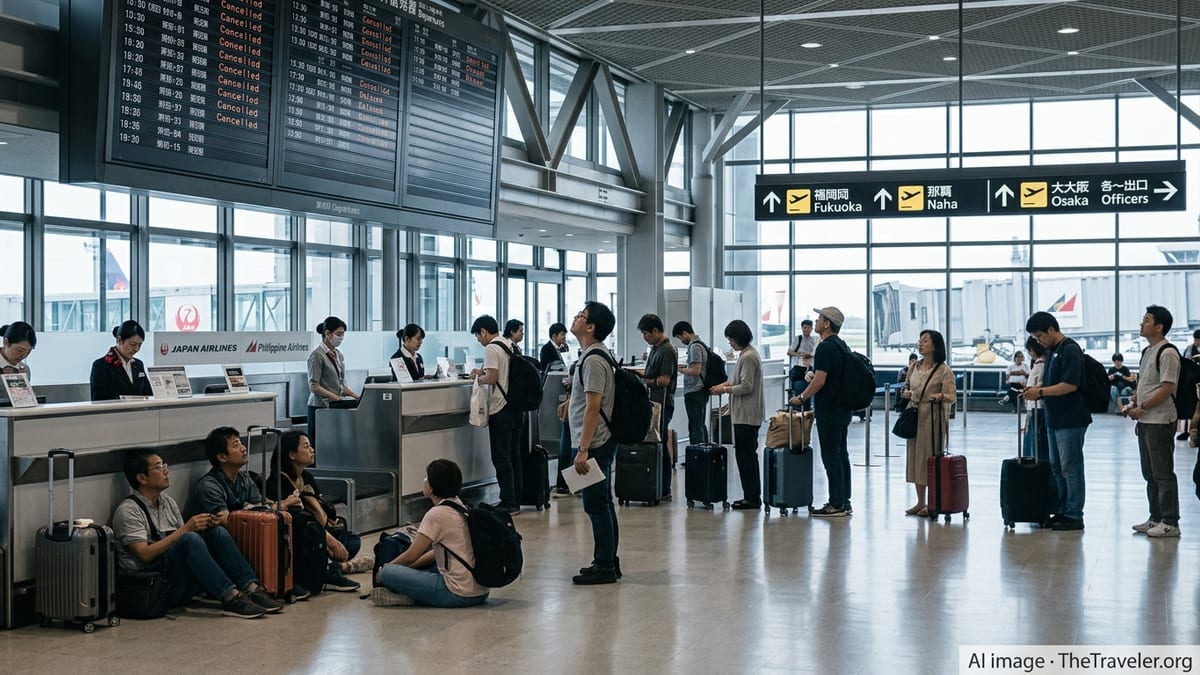
Wave of Cancellations Hits Major Japanese Gateways
Publicly available flight tracking data and local media reports indicate that disruptions began building over several days, culminating in a wave of cancellations affecting routes into and out of Narita International Airport near Tokyo, Kansai International Airport serving Osaka, Fukuoka Airport on Kyushu and Naha Airport in Okinawa. The affected flights span both domestic and international services, impacting travelers connecting across Asia and beyond.
Japan Airlines and its regional affiliate Japan Air Commuter appear among the most visible operators in the disruption, with multiple short-haul domestic flights scrubbed at short notice. These include services linking regional airports to larger hubs such as Fukuoka and Osaka, compounding pressure on already busy domestic corridors and leaving limited same-day alternatives for many passengers.
Philippine Airlines has also been affected on select Japan routes, notably on services connecting Manila with Narita, Osaka and Fukuoka, according to schedule changes and notices referenced in regional aviation coverage. While the number of cancellations remains a fraction of the carrier’s overall Japan operation, the sudden loss of seats has heightened uncertainty for travelers planning spring trips between the Philippines and Japan.
Additional adjustments by other Asian and low-cost carriers serving these airports have added to the turbulence, with some operators thinning schedules or consolidating flights. For passengers on multi-leg itineraries, a single cancellation at Narita, Kansai, Fukuoka or Naha has often triggered knock-on missed connections across the wider network.
Operational Strains and Broader Regional Tensions
Airline statements and industry analyses reviewed in recent days point to a mix of operational and geopolitical pressures behind the latest disruptions. Carriers in the region have been managing aircraft rotations, maintenance checks and crew availability against a backdrop of volatile demand and shifting airspace considerations, particularly on routes touching the broader East Asian and Middle Eastern corridors.
Philippine Airlines and other regional airlines had already been adjusting long-haul schedules to the Middle East earlier in March, as reported by Philippine news outlets, in response to heightened tensions affecting certain air routes. While the cancellations at Japanese airports are not confined to those markets, analysts note that long-haul disruptions can cascade into network-wide schedule changes that eventually touch Japan-facing operations.
For Japan-based operators such as Japan Airlines and Japan Air Commuter, the current wave of short-haul cancellations appears to reflect a combination of tight fleet utilization and the need to prioritize core trunk routes. Publicly accessible fleet and schedule records show that even small shifts in maintenance windows or aircraft availability can trigger the temporary suspension of thinner regional services, particularly at secondary airports feeding into Narita, Osaka and Fukuoka.
Industry observers add that lingering adjustments tied to broader regional travel patterns, including changes in demand from neighboring markets, continue to influence how airlines deploy capacity in and out of Japan. This has left some domestic and near-regional routes more vulnerable to last-minute changes when networks come under strain.
Passengers Face Long Queues, Rebookings and Extra Costs
Travelers caught up in the cancellations at Narita, Kansai, Fukuoka and Naha have reported long queues at airport service counters, limited availability on same-day alternative flights and confusion over rebooking options. Social media posts and traveler forums describe passengers waiting hours to speak with airline staff or call-center agents, particularly when multiple flights on the same route are disrupted within a short window.
Some passengers on Japan Airlines and Japan Air Commuter domestic sectors have reported being rebooked onto later flights the same day or next day, while others have been offered routings through different Japanese hubs. In cases where entire daily rotations were canceled, travelers have described being forced to consider rail or overnight bus options to complete journeys between cities such as Osaka, Fukuoka and Kagoshima.
International passengers, including those flying with Philippine Airlines, face additional complications. When cancellations disrupt tight connections or final outbound flights before visa or accommodation deadlines, travelers often must manage not only rebooking but also last-minute changes to hotel stays and onward tickets. Reports from consumer advocates in the region suggest that some travelers have incurred out-of-pocket expenses for extra nights in hotels or new tickets on alternative carriers when original flights could not be re-accommodated within their travel window.
Air passenger rights frameworks vary across the affected markets, and many Japan-bound travelers originate in jurisdictions where compensation or mandated care is more limited. As a result, even when airlines provide meal vouchers or basic lodging options, some passengers are left unsure of their full entitlements for refunds, rebookings or additional expenses.
How Airlines Are Adjusting Schedules and Capacity
According to updated timetables and booking systems monitored this week, Japan Airlines has been selectively thinning frequencies on certain domestic routes and adjusting aircraft types on others, in an apparent effort to stabilize the remainder of its schedule. Some lower-demand departures have been removed while neighboring departures remain, effectively consolidating passengers into fewer, fuller flights and freeing aircraft for higher-priority sectors.
Japan Air Commuter, which operates regional turboprop services feeding larger hubs, shows a pattern of intermittent cancellations on shorter routes, particularly those serving smaller airports in southern Japan. Industry data providers note that such targeted suspensions can be a sign of carriers working through maintenance backlogs or crewing bottlenecks while trying to keep the broader network functioning.
Philippine Airlines, for its part, appears to be focusing on maintaining core daily services between Manila and major Japanese cities while adjusting around the edges of its schedule. Additional seasonal capacity that had been deployed during peak periods is gradually being wound down, and some non-daily rotations are being removed or merged, reflecting a transition from holiday peaks toward more typical spring demand.
Other carriers operating at Narita, Kansai, Fukuoka and Naha, including Japanese low-cost operators and foreign airlines, have also updated timetables in recent days. While not all changes amount to outright cancellations, reductions in frequency and occasional aircraft downgrades contribute to a tighter seat supply, leaving fewer backup options for passengers whose original flights are canceled at short notice.
What Travelers Should Watch in the Coming Days
Travel advisories compiled by aviation analysts and travel-industry publications emphasize that the situation remains fluid, with further short-notice changes possible as airlines continue to refine their late-March and early-April schedules. Passengers booked on Japan Airlines, Japan Air Commuter, Philippine Airlines and other carriers serving Narita, Osaka, Fukuoka and Naha are being urged to monitor their reservations closely in the days leading up to departure.
Experts recommend checking bookings directly through airline apps or websites rather than relying solely on third-party booking platforms, as carrier channels often reflect schedule updates first. Travelers are also encouraged to confirm departure and arrival airports, as some airlines have been known to shift services between Tokyo-area or Kansai-area airports when adjusting capacity.
Given the current volatility, travel planners suggest building additional buffer time into itineraries that require tight same-day connections, particularly when linking domestic Japanese flights with international departures. For those who must travel on specific dates for events, tours or work commitments, flexible or changeable fare types may offer more security if additional cancellations occur.
While there is no indication at present of a long-term shutdown of routes to and from Narita, Kansai, Fukuoka or Naha, the recent spate of cancellations underlines how quickly conditions can change across interconnected airline networks. For now, passengers heading through these key Japanese gateways may need to plan with extra caution and stay alert to updates as carriers work to stabilize operations.