

More news on this day
British Airways has joined Air France, Delta, KLM, Lufthansa, Singapore Airlines, Turkish Airlines and other major carriers in extending widespread flight cancellations across key Middle Eastern hubs such as Dubai, Tel Aviv, Doha and Jeddah, compounding a rapidly escalating air travel crisis triggered by the latest regional tensions.
Get the latest news straight to your inbox!
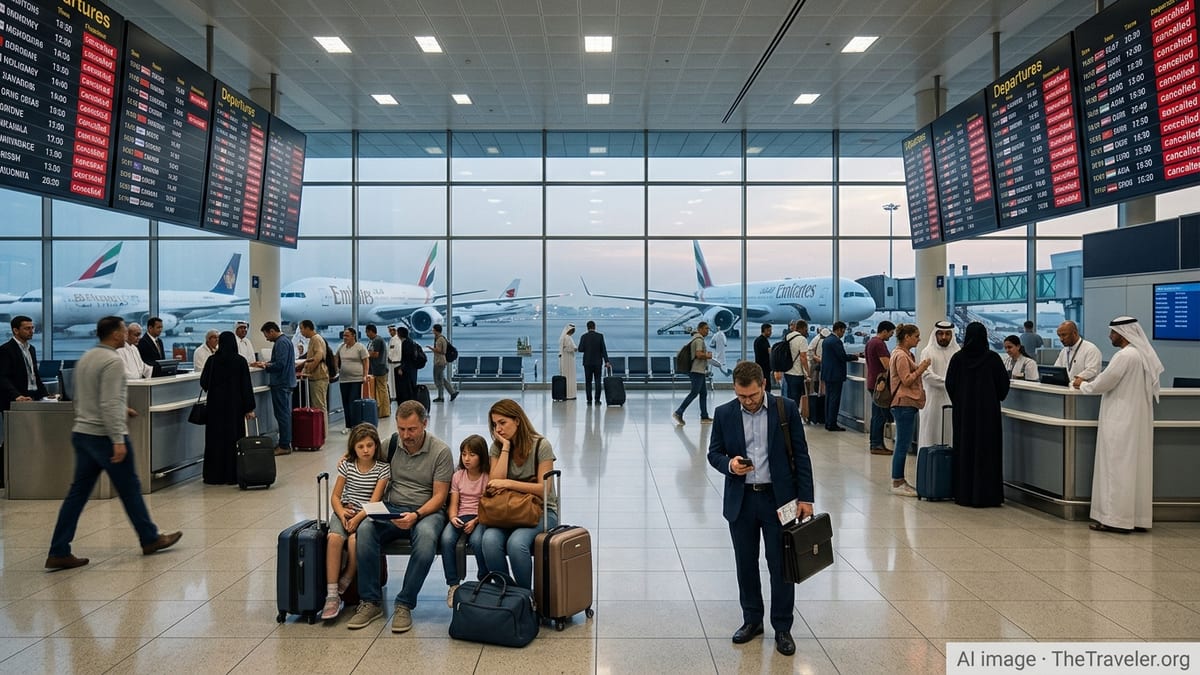
Escalating Conflict Pushes Airlines to Prolong Route Suspensions
Recent attacks and airspace closures linked to the Iran conflict have turned the Middle East into one of the most disrupted aviation regions in the world, forcing airlines to repeatedly extend suspensions on previously high-demand routes. Publicly available timetables and advisories show that carriers have focused their cancellations on destinations including Tel Aviv, Dubai, Doha, Jeddah, Riyadh and other Gulf and Levant gateways as operators wait for a more stable security picture to emerge.
Latest operational summaries indicate that British Airways has stopped flying to Tel Aviv and Bahrain at least through the early days of March, while also closely monitoring nearby markets that rely on shared air corridors. Similar caution is visible at Air France, which has extended the suspension of services to Tel Aviv and Beirut and cancelled flights to Dubai and Riyadh for multiple days, as well as at KLM, which has halted flights to Tel Aviv and paused services to Dubai, Dammam and Riyadh around the peak of the airspace closures.
Germany’s Lufthansa Group has likewise prolonged its suspension of flights to Tel Aviv, Beirut, Amman, Erbil, Dammam and Tehran, while also cancelling services to Dubai and Abu Dhabi during the worst of the disruption. Industry trackers report that US carriers including Delta and other transatlantic operators have continued to trim or suspend flights to Tel Aviv and selected Gulf destinations, extending earlier short-term pauses into longer windows as risk assessments are updated.
Asian and Gulf-based airlines are adjusting in similar fashion. Singapore Airlines has maintained suspensions or schedule reductions on certain Middle East routes, while Turkish Airlines has temporarily halted services to Qatar, Kuwait, Bahrain, the United Arab Emirates and Oman, in addition to routes to Lebanon, Syria, Iraq, Iran and Jordan for defined periods. These measures, initially framed as brief responses to a fast-moving crisis, are increasingly being rolled forward as tensions persist.
Hub Closures Disrupt Global Connectivity from Dubai, Doha and Beyond
The Middle East’s role as a bridge between Europe, Africa and Asia has magnified the impact of these cancellations far beyond the region itself. According to data cited in recent international coverage, thousands of flights have been cancelled since late February, with more than half of all planned movements in the region scrapped on the worst-affected days. Emirates, Etihad and other regional giants have at times paused all operations to and from Dubai, Abu Dhabi and Doha after airspace restrictions and nearby strikes made normal schedules impossible.
Reports from aviation analytics firms show that more than 11,000 flights touching the Middle East were cancelled within a matter of days, with subsequent estimates climbing toward 19,000 or more as the conflict and retaliatory actions unfolded. Key hubs such as Dubai International Airport, Hamad International Airport in Doha and major Saudi gateways have all experienced mass cancellations, diversions and rolling delays, leaving passengers stranded from Bangkok to London when connecting itineraries through the Gulf abruptly collapsed.
Operational notices compiled by travel management companies and civil aviation authorities describe a complex patchwork of closed airspace over Iran, Israel, Iraq, Jordan, Lebanon, Qatar, Bahrain, Kuwait and the United Arab Emirates at various points in late February and early March. With so many corridors either shut or heavily restricted, long-haul aircraft have been forced onto lengthy detours that add hours to flight times between Europe and Asia, or have been grounded altogether when no commercially viable routing could be found.
In this environment, airlines are not only cancelling point-to-point services into cities like Tel Aviv, Jeddah or Doha but also significantly reducing overflight of the broader region. Some carriers are routing south over Saudi Arabia or further out over the Indian Ocean, while others have withdrawn aircraft entirely from disputed corridors until security and insurance conditions are clearer.
Tourism Growth Stalls as Cancellations Hit Key Destinations
The timing of the flight suspensions is especially painful for Middle Eastern destinations that had been enjoying a robust post-pandemic tourism rebound. Dubai, Saudi Arabia’s Red Sea coast, Qatar and other Gulf states attracted around 100 million visitors in 2025 according to international tourism statistics, outpacing pre-2019 levels and fueling major investment in hotels, attractions and aviation capacity. The sudden collapse of air connectivity has put that growth on hold.
Travel and tourism analysts quoted across business and sector publications describe the current disruption as the most severe shock to global travel since the height of the pandemic, with an estimated tens of thousands of flights cancelled or heavily delayed over the first weeks of the crisis. In hotel districts from Dubai Marina to Doha’s West Bay, occupancy patterns have been thrown into disarray as inbound guests are unable to arrive and existing visitors scramble for alternative routes home.
In countries such as the United Arab Emirates and Saudi Arabia, where tourism has become a core pillar of economic diversification strategies, the loss of high-spending visitors from Europe and Asia is particularly acute. Destinations marketed as quick stopovers or extended weekend retreats are bearing the brunt of lost traffic as travelers cancel short breaks that rely on tightly timed connections through regional hubs.
Beyond the immediate revenue hit, regional tourism boards face the challenge of managing traveler perceptions. Even areas that remain physically untouched by conflict are experiencing a spike in cancellations as global travelers avoid itineraries involving Middle East transfers. Industry commentary suggests that while demand may eventually return once security conditions stabilize, forward bookings for the coming months are already being revised downward across multiple markets.
Passengers Face Stranded Trips, Complex Rebooking and Higher Costs
For passengers, the extended cancellations have translated into missed holidays, broken business trips and complicated detours. International media accounts describe hundreds of thousands of travelers stranded or forced to rebook after sudden airspace closures led to aircraft turning back mid-route, diversions to secondary airports, or outright cancellations of multi-leg journeys anchored on Gulf connections.
Customer notices from airlines show that many carriers, including British Airways, Air France, KLM, Lufthansa, Delta and others, have introduced temporary flexibility policies, allowing fee-free changes, vouchers or refunds for tickets involving affected Middle Eastern destinations. However, the sheer scale of the disruption means rebooking on alternative carriers or via non-Gulf hubs is often difficult, particularly during traditionally busy travel periods when seats are already scarce.
At the same time, rerouted flights around closed airspace are lengthening journey times and raising costs. Travel advisors report that itineraries which previously took six to seven hours between Europe and parts of South Asia or Southeast Asia can now stretch to nine to eleven hours when avoiding Iranian, Iraqi, Israeli and Gulf skies. These longer routes increase fuel burn and crew costs for airlines, factors that may ultimately feed into higher fares, especially in premium cabins.
Travel management companies are urging corporate clients and leisure travelers alike to monitor flight status closely, maintain flexible itineraries and consider routing through alternative hubs in Europe or Asia where possible. Yet as long as key transit points such as Dubai, Doha and Jeddah remain vulnerable to sudden operational changes, even the most carefully planned workarounds can be upended with little notice.
Uncertain Outlook Leaves Aviation and Tourism in Limbo
Looking ahead, the outlook for flights to Dubai, Tel Aviv, Doha, Jeddah and other Middle Eastern cities remains uncertain. Airline advisories updated in early March frequently reference only near-term dates, with many carriers committing to reviews every few days rather than setting definitive timelines for full restoration of services. Some operators have quietly removed certain routes from their booking systems well into 2025, indicating expectations of a protracted period of volatility around specific destinations.
Industry experts cited in recent analyses warn that even if active hostilities subside, the process of reopening airspace, recalibrating insurance coverage and realigning schedules will take time. Airlines that have redeployed aircraft onto alternate routes where demand has surged may be reluctant to reverse those moves until they are confident that operations through the Middle East can be sustained without sudden closure.
For tourism sectors across the region, the prolonged absence of regular international flights risks slowing investment plans and delaying large-scale events designed to showcase new attractions and infrastructure. Destinations that had positioned themselves as global transit and leisure hubs now face a period in which their primary competitive advantage, seamless air connectivity, is diminished.
Nonetheless, historical patterns suggest that travel tends to rebound once risk perceptions ease. Stakeholders across aviation and tourism are watching closely for any signs of de-escalation that could allow restrictions on Dubai, Tel Aviv, Doha, Jeddah and other key cities to be lifted. Until that happens, British Airways, Air France, Delta, KLM, Lufthansa, Singapore Airlines, Turkish Airlines and many of their peers are likely to maintain an extended posture of caution, keeping much of the region’s air traffic and tourism activity in an uneasy holding pattern.