

More news on this day
Global air travel was thrown into turmoil on February 28 as American Airlines joined Lufthansa, Air France, Turkish Airlines, KLM, IndiGo, LOT Polish and a growing list of carriers in freezing or rerouting flights across the Middle East, after joint United States and Israeli air strikes on Iran prompted rapid airspace closures from Israel to the Gulf.
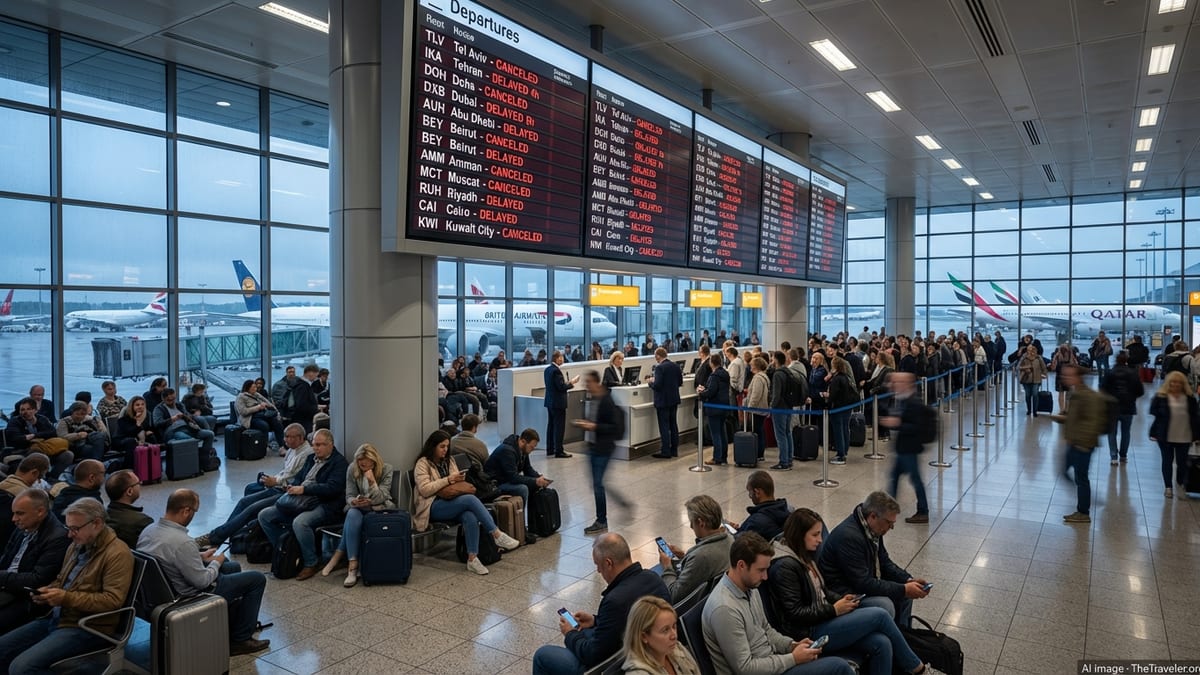
Rapid Airspace Closures After Overnight Strikes
The strikes on Iran in the early hours of February 28 led Iran and Israel to shut their airspace to civilian traffic, with Iraq, Qatar, Bahrain and parts of Jordan also closing or heavily restricting routes used by hundreds of daily long-haul flights between Europe, Asia and the Americas.
Data from regional aviation authorities and flight-tracking platforms showed skies above Iran and Iraq effectively cleared of civilian traffic by mid-morning, as airlines scrambled to divert aircraft already en route and replan upcoming services. Ben Gurion Airport in Tel Aviv halted operations, while airports in Doha, Dubai, Abu Dhabi and Bahrain warned of severe knock-on delays.
Officials in several Gulf states framed the measures as temporary security steps while they assessed the risk of further missile exchanges or debris in key corridors used by transcontinental traffic. However, with military operations and retaliatory fire still unfolding, carriers moved quickly from ad hoc diversions to formal suspensions on multiple routes.
For travelers, the impact was immediate: overnight flights were turned back to origin, others were forced into unscheduled fuel stops, and many passengers woke to notifications that their journeys had been cancelled indefinitely.
American, European and Asian Carriers Pull Back
American Airlines joined European groups and regional rivals in pausing services that transit or touch the affected region. The carrier issued waivers for customers booked on Middle East and connecting itineraries, allowing rebooking without change fees and advising passengers that schedules would be “significantly revised” while airspace restrictions remain in place.
Germany’s Lufthansa suspended flights to and from Tel Aviv, Beirut and Oman until March 7, and halted Dubai operations for at least two days, citing the evolving security situation and the need to keep crews away from closed or contested airspace. Its subsidiaries have been rerouting long-haul services to avoid Iranian and Iraqi skies, adding hours to some journeys between Europe and Asia.
Air France and KLM have likewise frozen flights to Tel Aviv and other affected destinations while replotting their main eastbound corridors. Longer routings around the Arabian Peninsula or over alternative Central Asian tracks are being introduced case by case, subject to clearances and safety assessments.
In Asia, Indian low-cost giant IndiGo warned of widespread disruption on routes linking India with the Gulf and beyond, as popular shortcuts over Iran and the northern Gulf became unavailable. The airline announced a wave of cancellations and schedule changes on services to Doha, Dubai, Abu Dhabi and other hubs, urging passengers to check their flight status before traveling to the airport.
Turkish, LOT Polish and Regional Hubs Hit Hard
Turkish Airlines, one of the world’s largest carriers by number of destinations, has been particularly exposed to the turmoil due to its extensive Middle East and transfer network through Istanbul. The airline cancelled flights to Lebanon, Syria, Iraq, Iran and Jordan until March 2 and scrapped services to Qatar, Kuwait, Bahrain, the United Arab Emirates and Oman scheduled for February 28, as authorities across the region restricted their skies.
Executives in Istanbul said the carrier was monitoring airspace developments “in real time” and warned that further cancellations were likely if closures were extended or new restrictions imposed. Istanbul Airport, a key bridge between Europe, Asia and Africa, reported growing clusters of stranded passengers as onward connections evaporated.
Elsewhere in Europe, LOT Polish Airlines announced it was suspending flights to Tel Aviv and adjusting routings on selected services to Asia that would normally overfly Iran or Iraq. The Polish carrier, along with other central and eastern European airlines, has had to contend with multiple constrained corridors in recent years, including the closure of much of Russian airspace, leaving few efficient alternatives.
The combined effect across the airline industry is a patchwork of cancellations, diversions and extended flying times that is rippling through major hubs from London, Paris and Frankfurt to Doha, Dubai and Singapore.
Passengers Face Cancellations, Reroutes and Lengthy Delays
For travelers in Europe, Asia and North America, the sudden shift has translated into crowded terminals, long lines at rebooking desks and limited clarity on when normal schedules might resume. Airlines have issued broad travel advisories warning of day-long delays, rolling cancellations and the possibility that flights might depart but be forced into diversions if the security picture worsens mid-journey.
At hubs such as Dubai, Abu Dhabi and Doha, thousands of connecting passengers have been stranded as feeders from Europe and Asia arrived without corresponding onward legs. Airport operators have responded by opening additional customer service desks, expanding lounge access for disrupted travelers and working with hotels to secure emergency accommodation where possible.
Travelers transiting between India and Europe have been particularly affected, as many of the most direct routes thread through Iranian or Iraqi airspace. Reports of flight times extended by two to four hours, along with extra fuel stops in Central Asia or southern Europe, have become increasingly common as airlines adopt longer detours to maintain operations on key trunk routes.
Despite the disruption, aviation regulators have stressed that safety remains paramount and that no carrier will be permitted to operate in or near active conflict zones until military authorities confirm conditions are secure.
Uncertain Outlook for Spring Travel
With military operations and diplomatic responses still evolving, airlines have mostly limited formal suspensions to the coming days or, at most, the next week, while signaling that dates may be extended if tensions remain high. Timelines published by Lufthansa, Turkish Airlines and others currently stretch into early March, but executives acknowledge privately that a prolonged standoff would force a much deeper rewrite of spring schedules.
Corporate travel managers and tour operators are already re-evaluating itineraries that rely on Middle Eastern hubs for connections between Europe, Asia and Africa, exploring alternative routings through southern Europe or via emerging transfer points in Central Asia. However, capacity on those alternatives is limited, meaning higher fares and tighter seat availability if the crisis drags on.
For leisure travelers, especially those planning March and April trips involving Israel, Iran or nearby destinations, industry experts are advising a cautious approach: avoid nonrefundable bookings, stay flexible on dates and routing, and sign up for airline and embassy alerts that provide rapid updates as airspace notices change.
What remains clear is that the joint US-Israel strikes on Iran have once again underscored how quickly geopolitical flashpoints in the Middle East can reverberate through the global travel system, turning some of the world’s busiest air corridors into no-go zones overnight.