

More news on this day
Global travelers are being warned to brace for higher airfares as United Airlines, Emirates, Qatar Airways and Lufthansa confront a sudden surge in jet fuel prices and mounting disruptions from the escalating conflict centered on Iran, unnerving aviation markets and upending route networks across key long-haul corridors.
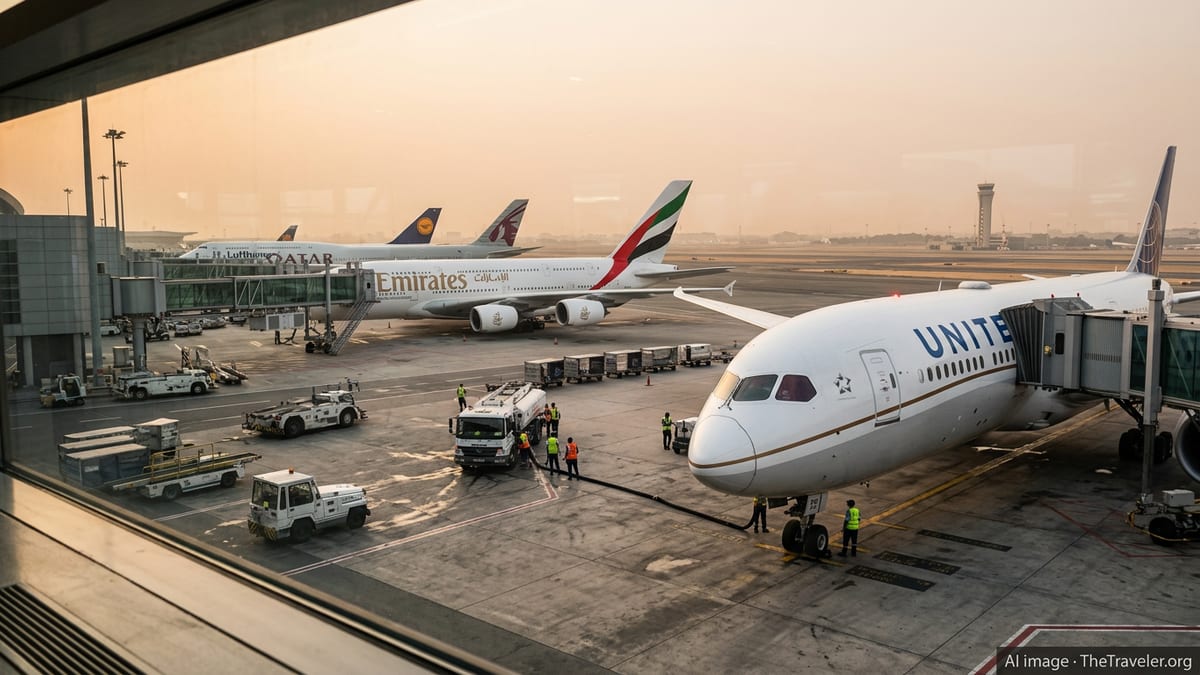
Jet Fuel Price Shock Ripples Through Global Aviation
The war involving the United States, Israel and Iran has triggered fresh turmoil in energy markets, with jet fuel prices climbing far faster than crude oil as supply fears mount. Benchmark crude has jumped toward the low‑80 dollar range in recent days, but refining margins have widened sharply, pushing jet fuel in some hubs above 4 dollars a gallon for the first time in years as crack spreads surge.
Industry data providers report that jet fuel prices have hit record or multi‑year highs in major trading centers such as Singapore and key North American hubs. Analysts say the spike reflects not just higher oil prices, but also concerns about refinery outages, attacks on energy infrastructure and the risk that shipping lanes near the Strait of Hormuz could face prolonged disruption.
For airlines, fuel remains one of the largest operating expenses, typically second only to labor. The renewed price shock arrives at a time when many carriers have scaled back or abandoned fuel hedging, leaving them more exposed to day‑to‑day volatility. As jet fuel costs climb, executives and analysts are increasingly clear that travelers should expect these pressures to filter into ticket prices over the coming weeks and months.
United Airlines Signals Higher Fares for U.S. Travelers
United Airlines has been among the first major carriers to publicly prepare passengers for rising fares. The company’s chief executive warned this week that American travelers are likely to see higher ticket prices if jet fuel remains elevated, noting that the big four United States airlines could collectively face billions of dollars in additional fuel expense this year.
United’s global network leaves it particularly sensitive to disruptions across the Middle East, where rerouting and extended flight times increase fuel burn even before higher prices are taken into account. Longer detours around conflict zones can add hours to select routes, intensifying operating costs on transcontinental and transatlantic services that already run on thin margins.
While demand for international travel out of the United States remains robust, airline analysts say sustained fuel inflation could force United and its peers to balance growth ambitions with profitability concerns. That calculus is likely to show up in the form of seasonal surcharges, fewer flash sales and higher base fares, especially on long‑haul routes where fuel accounts for a larger share of total costs.
Gulf Carriers Face Reroutes, War Risk Costs and Capacity Strain
Emirates and Qatar Airways, two of the world’s largest long‑haul carriers, are contending with a dual shock of surging fuel prices and operational disruption in their home region. The conflict has already upended traffic flows across parts of the Middle East, forcing detours, temporary suspensions and last‑minute schedule changes that ripple through their global hub‑and‑spoke networks.
The closure or restriction of airspace over conflict zones has compelled airlines to chart longer routes between Europe, North America, Africa and Asia. Each incremental hour of flying can add thousands of dollars in fuel and crew expense, eroding the financial viability of some services if those costs cannot be recovered through higher fares or fuller cabins.
At the same time, insurers are raising war‑risk premiums for aircraft operating to and from the wider region. Industry experts say these surcharges, layered on top of pricier fuel, are likely to push Gulf carriers to review pricing, capacity and even network strategy. Emirates and Qatar Airways, long associated with aggressive expansion and competitive fares, may have to trim marginal routes and introduce targeted fare increases to preserve yields while maintaining critical connectivity.
Lufthansa and European Carriers Reroute Around a New Front Line
Lufthansa and other European airlines are also feeling the squeeze as they reroute flights to avoid airspace affected by the Iran war. With Europe sitting between North America and Asia, many of the continent’s flag carriers rely on corridor routes that either pass near or over the Middle East, making them vulnerable to sudden changes in risk assessments and regulatory restrictions.
Several European and Asian airlines have already suspended select services to the region or shifted flights onto longer paths that skirt conflict areas, adding time, fuel consumption and complexity. For Lufthansa, this means higher operating costs on routes to India, Southeast Asia and parts of Africa, just as it works to consolidate the recovery in premium and corporate travel demand.
Airline stock prices in Europe have reflected investor anxiety, slipping as energy markets price in the possibility of a protracted conflict. Analysts warn that if jet fuel prices remain elevated through the peak summer travel season, carriers such as Lufthansa will have little choice but to tighten capacity growth plans and pass more of the burden on to passengers through higher fares and fuel surcharges.
What Travelers Can Expect in the Months Ahead
For leisure and business travelers, the most immediate impact of the Middle East conflict is likely to be felt in pricing rather than availability. Demand for international travel is still strong across many markets, but airlines now face higher and more uncertain fuel bills, increased insurance costs and tighter routing constraints that collectively narrow their room to absorb shocks.
Industry observers expect a wave of fare adjustments as airlines update their revenue management models to reflect new cost assumptions. Instead of sudden across‑the‑board jumps, travelers may see fewer discounted seats, higher average fares on routes that traverse or connect through the broader Middle East region, and new or expanded fuel surcharges baked into final ticket prices.
Some carriers with stronger balance sheets or partial fuel hedging may use the period to capture market share by moderating increases, while others more exposed to regional disruption could scale back capacity and focus on yield. For United, Emirates, Qatar Airways and Lufthansa, the challenge will be to protect profitability without choking off demand just as the industry had begun to put the last fuel price spike behind it.
Much will depend on the trajectory of the conflict and the stability of key energy and shipping chokepoints in the weeks ahead. If tensions ease and flows through the Strait of Hormuz normalize, jet fuel prices could retreat from recent peaks, taking some pressure off airfares. If hostilities drag on, however, travelers should be prepared for a new era of costlier long‑haul flying anchored to the volatile geopolitics of the Middle East.