

More news on this day
Numerous flights were cancelled at Chicago Midway International Airport this week, leaving passengers scrambling for alternatives as severe weather and wider Midwest disruptions rippled through airline schedules.
Get the latest news straight to your inbox!
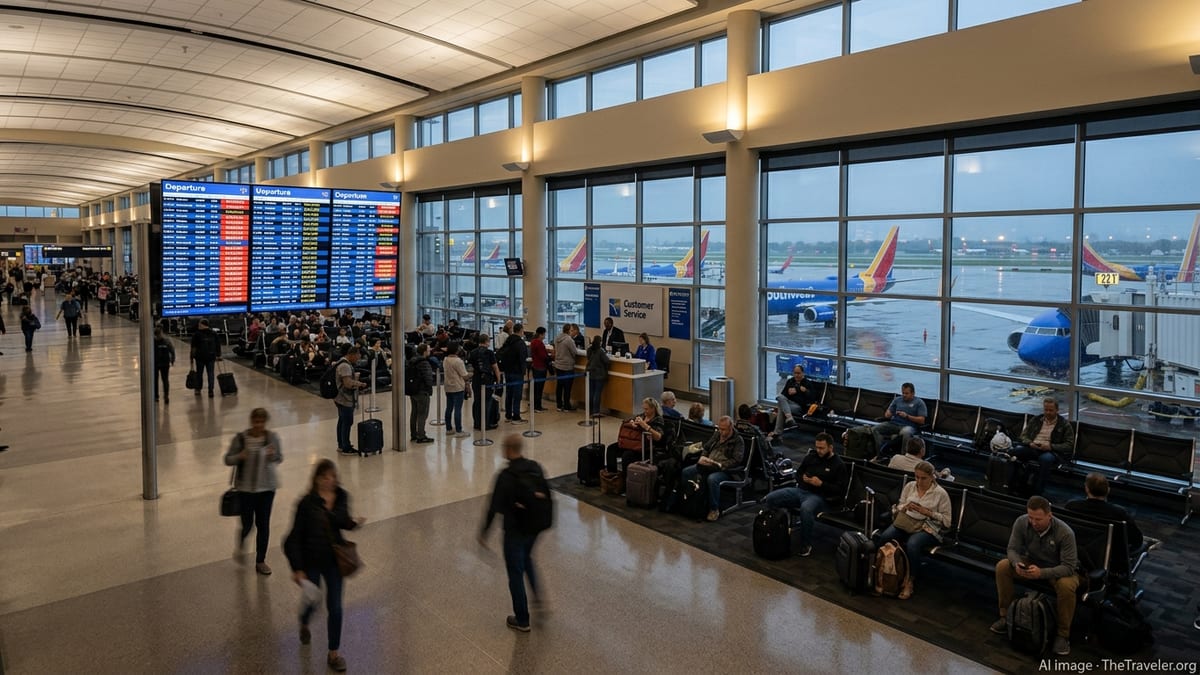
Weather Turbulence Across the Midwest Hits Midway Hard
Publicly available flight tracking data and airline status boards show that Chicago Midway International Airport has experienced an elevated wave of cancellations and delays over recent days as a powerful storm system swept across the central United States. The broader weather pattern has brought a mix of heavy rain, high winds, and thunderstorms to the Chicago area, conditions that often constrain airport operations and cause cascading schedule disruptions.
Coverage from national meteorological outlets describes a large storm complex affecting the Midwest, with severe weather and winter conditions disrupting ground transportation and aviation across multiple states. In such conditions, Midway’s compact layout and heavy reliance on short-haul point-to-point routes can make it particularly vulnerable to rapid schedule changes when arriving aircraft or flight crews are delayed elsewhere in the network.
Reports from airline communications and passenger accounts indicate that many of the cancellations at Midway have been preemptive, as carriers attempt to thin schedules ahead of the worst weather windows. This strategy can reduce the risk of aircraft and crews becoming stranded but also results in a sharp short-term spike in cancelled departures and arrivals from the airport.
Although operations tend to stabilize once the most intense weather passes, travelers connecting through Midway over the coming days should expect lingering knock-on effects, including irregular aircraft rotations and out-of-position crews that may still prompt late schedule changes.
How Many Flights Are Affected and Which Routes Are Hit
Based on airline status pages and major flight-tracking platforms, Midway’s disruptions have focused heavily on short- and medium-haul domestic routes, particularly those linking Chicago with other Midwest, Great Lakes, and East Coast cities. These routes are closely tied to the same storm corridor, so weather issues at multiple airports simultaneously increase the likelihood of cancellations.
While exact numbers fluctuate hour by hour, the proportion of cancelled and heavily delayed flights at Midway has at times reached well beyond a typical day’s baseline. Travelers have reported waves of scrubbed departures clustered around peak weather periods, along with aircraft that never reach Chicago because earlier legs in the schedule were disrupted.
The impact is not limited to departures from Chicago. When an outbound Midway flight is cancelled, the aircraft and crew that would have operated the return segment can no longer position to the next city. As a result, passengers at outstations such as regional Midwest airports may find their flights to Chicago cancelled even when local skies appear relatively clear, simply because the aircraft they were expecting is stuck elsewhere in the system.
Operational challenges are compounded by the fact that Midway’s primary airlines run dense schedules on popular business and leisure routes. When multiple rotations are removed in a short period, remaining flights quickly sell out, making it significantly harder for stranded passengers to find same-day alternatives.
What Stranded Passengers at Midway Can Do Right Now
For travelers currently at Midway or due to fly in the next 24 to 48 hours, publicly available guidance from airlines and travel industry sources consistently emphasizes one step above all others: check flight status frequently and rely on official airline channels. Mobile apps and text alerts are generally updated before airport departure boards, and same-day rebooking tools are often easier to use digitally than at a crowded service desk.
Many major carriers invoke weather-related travel waivers during significant storm events. These waivers typically allow passengers traveling to, from, or through affected airports to change to a different flight on nearby dates without additional change fees. In some cases, fare differences may also be waived if the new itinerary falls within specified dates or city pairs. Passengers should review the specific conditions of their airline’s waiver and act quickly, since open seats on alternative flights can disappear fast during widespread disruptions.
For those who have already reached the airport only to find their flight cancelled, travel experts recommend joining the rebooking queue in multiple channels at once. That can include standing in line at a customer service desk while simultaneously using the airline app, calling customer support, and, when applicable, contacting a travel agent or corporate travel department. The first available workable option is often the best, even if it involves a connection or a nearby airport.
Travel insurance policies and certain premium credit cards may provide additional assistance when long delays or cancellations lead to unexpected overnight stays. Benefits vary widely, but coverage can include reimbursement for meals, hotels, and ground transportation when disruptions meet minimum delay thresholds. Passengers are generally advised to keep receipts and review benefit terms before incurring large expenses.
Planning Upcoming Trips Through Midway in the Days Ahead
For travelers whose flights are scheduled in the coming days, industry analysts note that schedules can remain fragile even after the most intense weather has passed. Aircraft and crews may remain out of position for more than a day, and airlines sometimes make late schedule adjustments to rebuild resilience into their networks. That means travelers heading through Midway should treat departure times as subject to change until closer to travel.
Checking itineraries at least 24 hours in advance and again on the morning of departure can help travelers spot re-timings or aircraft swaps. If a flight has been significantly retimed or downgraded in capacity, it may be worth exploring alternative options early, before rebooking demand increases. Some passengers may also wish to consider adjusting their travel dates voluntarily, especially if their plans are flexible and a weather waiver is in place.
Experts also suggest building extra time into connections involving Midway. Even modest delays can cause missed onward flights when layovers are short. When rebooking or planning new itineraries, slightly longer connections can provide more buffer if ground stops, de-icing operations, or runway configuration changes reduce airport capacity at short notice.
Those driving to Midway should allow for slower road conditions during active weather periods, as heavy rain, strong winds, or lingering winter conditions can slow traffic on expressways leading to the airport. Arriving earlier than usual can reduce stress and provide more options if security lines are long or if a flight’s gate or departure time changes close to boarding.
Key Takeaways for Travelers Using Chicago Midway
Recent disruptions at Chicago Midway highlight how quickly conditions can change at a busy urban airport when severe weather sweeps through the region. Even travelers whose journeys do not pass directly through the worst of the storm can be affected when aircraft and crews are scattered across multiple impacted cities.
For passengers, the most practical steps remain proactive and information-focused: monitoring flight status closely, understanding any available travel waivers, and using multiple channels to secure rebooking options when needed. Building flexibility into schedules, whether through longer connections, alternate routing, or a willingness to shift travel by a day, can significantly reduce the risk of extended airport waits.
As the current weather system moves on and airlines work to realign their networks, conditions at Midway are expected to gradually normalize. Until then, travelers passing through the airport should prepare for the possibility of schedule changes and approach their plans with patience and contingency options in mind.