

More news on this day
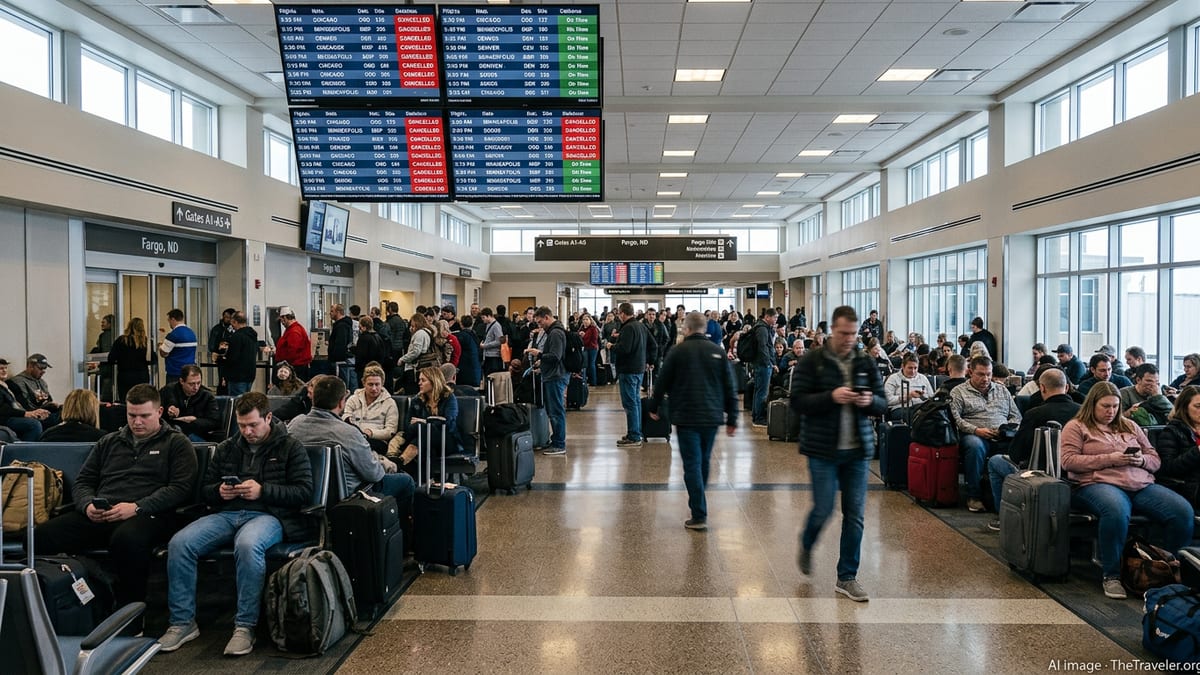
Passengers at Fargo’s Hector International Airport faced hours of uncertainty on March 16 as a cascade of cancellations severed key connections to Chicago, Minneapolis and Denver, leaving many travelers stranded or scrambling to rebook during a broader spell of Midwest flight disruptions.
Get the latest news straight to your inbox!
Midwest Weather Turmoil Ripples Into Fargo
Midwest air travel remained fragile on March 16, with disruptive winds and winter weather around Chicago and other regional hubs triggering widespread schedule changes that spilled over into Fargo’s Hector International Airport. Publicly available tracking data and social media posts pointed to a sharp rise in cancellations and delays affecting flights across the region, particularly those routed through Chicago O’Hare, Minneapolis–St. Paul and Denver.
Reports from Chicago described difficult operating conditions and large numbers of grounded flights on March 15, with the impact carrying into March 16 as airlines attempted to reposition aircraft and crews. Travelers connecting through Chicago to and from Fargo encountered missed connections, rolling delays and, in many cases, outright cancellations.
Denver and Minneapolis, two other critical hubs for Fargo travelers, also experienced operational strain tied to weather and congestion along major Midwest routes. While conditions at those airports were not uniformly severe, knock-on effects from storms, high winds and aircraft routing decisions elsewhere led to additional schedule cuts and delay cascades across multiple airlines.
Key Hector Routes to Chicago, Minneapolis and Denver Disrupted
Hector International’s published March schedule shows a dense pattern of daily flights to Chicago O’Hare, Minneapolis–St. Paul and Denver, serving as lifelines for both local travelers and those connecting onward to national and international destinations. On March 16, several of these core routes were affected, with travelers reporting cancellations on early morning and midmorning departures in particular.
Chicago-bound service has been especially exposed. Fargo’s timetable lists multiple daily flights to O’Hare on major carriers and their regional affiliates, including early departures around 5:00 a.m. and 7:30 a.m. When O’Hare’s operations slowed dramatically because of high winds and congestion, those frequencies translated into a sizable number of affected passengers originating in Fargo. Many reported being rebooked onto later flights or alternate routings, while others faced overnight stays as limited seats quickly filled.
Service to Minneapolis–St. Paul, heavily utilized by Fargo residents for both business travel and international connections, was also hit by the ripple effects. Even when weather at Minneapolis appeared manageable, tight aircraft rotations and inbound disruptions from other cities reduced the flexibility to absorb additional demand from canceled Fargo flights. Some travelers were rerouted through secondary hubs or advised to delay their trips.
The Denver route, a key western gateway for Fargo, encountered similar challenges as airlines adjusted their networks to accommodate weather and operational constraints elsewhere. Passengers reported Denver-bound flights from Fargo being canceled or significantly delayed, often with limited same-day alternatives available.
How to Check Whether Your Flight Is Affected
With schedules changing throughout the day on March 16, travelers were urged to confirm their status directly before heading to Hector International. Publicly accessible flight-tracking platforms, airline mobile apps and airport departure boards all reflected rolling updates as additional cancellations and delays were posted.
Passengers booked on flights from Fargo to Chicago, Minneapolis or Denver on March 16 and the following days were advised to check multiple times, rather than relying on a single early-morning update. In several instances, flights initially shown as delayed were later canceled outright as conditions at hub airports failed to improve or as aircraft and crew logistics became more complicated.
Travelers with connecting itineraries faced particular risk. Even if the Fargo leg remained scheduled to depart, disruptions at Chicago O’Hare, Minneapolis–St. Paul or Denver could result in misaligned onward flights. Many airlines have published travel waivers for weather-affected regions, allowing passengers to change dates or routings without additional fees, subject to certain conditions and fare rules.
Those who are already at Hector International were encouraged to monitor gate displays and public address announcements and, when possible, to manage changes via airline apps to avoid long customer-service lines. For travelers still at home, checking real-time flight status before leaving for the airport remained essential.
Stranded Passengers Navigate a Day of Uncertainty
Throughout March 16, stranded travelers in Fargo shared accounts of crowded gate areas, extended waits at ticket counters and uncertainty over when they would be able to depart. Some had already experienced disruption a day earlier, only to find their rebooked flights again affected by the ongoing operational challenges radiating out from Chicago and other hubs.
Families returning from spring trips, business travelers heading for critical meetings and students connecting back to campus were among those whose plans were derailed. With hotel availability tightening near major hubs, some chose to remain in Fargo rather than risk being stuck mid-journey in a larger airport with fewer nearby lodging options.
Airlines attempted to consolidate passengers onto remaining flights, but aircraft limitations and duty-time rules for crews constrained how many extra seats could be made available on short notice. As the day progressed, some carriers shifted focus toward stabilizing operations later in the week, reducing options for same-day or next-day departures on the most popular routes.
For many travelers, the experience highlighted how a single day of severe weather at a major hub like Chicago O’Hare can reverberate across the network, affecting airports hundreds of miles away. Fargo’s reliance on a small number of high-frequency connections to key hubs made Hector International particularly vulnerable to the cascading effects seen over the weekend and into Monday.
What Travelers Can Do Next
With conditions still fluid, travelers booked through Hector International over the coming days may benefit from building additional flexibility into their plans. Publicly available guidance from airlines and travel experts suggests opting for earlier departures when possible, as morning flights are generally less exposed to the compounding delays that develop later in the day.
Where travel dates are flexible, some passengers may find it easier to move trips to later in the week, once operations at Chicago, Minneapolis and Denver have had time to normalize. Those with nonessential journeys might consider postponing altogether to avoid the risk of becoming stranded during periods of elevated cancellation rates.
Travelers who must fly are encouraged to keep boarding passes, receipts and documentation of disruptions, as these may be needed for any future claims related to expenses or schedule changes, depending on carrier policies and travel insurance coverage. Keeping essentials such as medications, chargers and a change of clothes in carry-on baggage can also provide a margin of comfort if an unexpected overnight stay becomes necessary.
As airlines adjust schedules and weather patterns shift, further changes remain possible. For now, anyone planning to travel through Hector International to Chicago, Minneapolis or Denver is advised to treat real-time status checks and flexible planning as crucial tools for navigating a volatile stretch of late-winter flying in the Midwest.