

More news on this day
Surging air capacity from leading carriers including American Airlines, Air Canada, British Airways, Delta Air Lines, United Airlines and Lufthansa is helping power a fresh wave of tourism to Mexico’s Caribbean coast, just as local hospitality player Sunset World Group completes a slate of high-profile renovations across its resort portfolio.
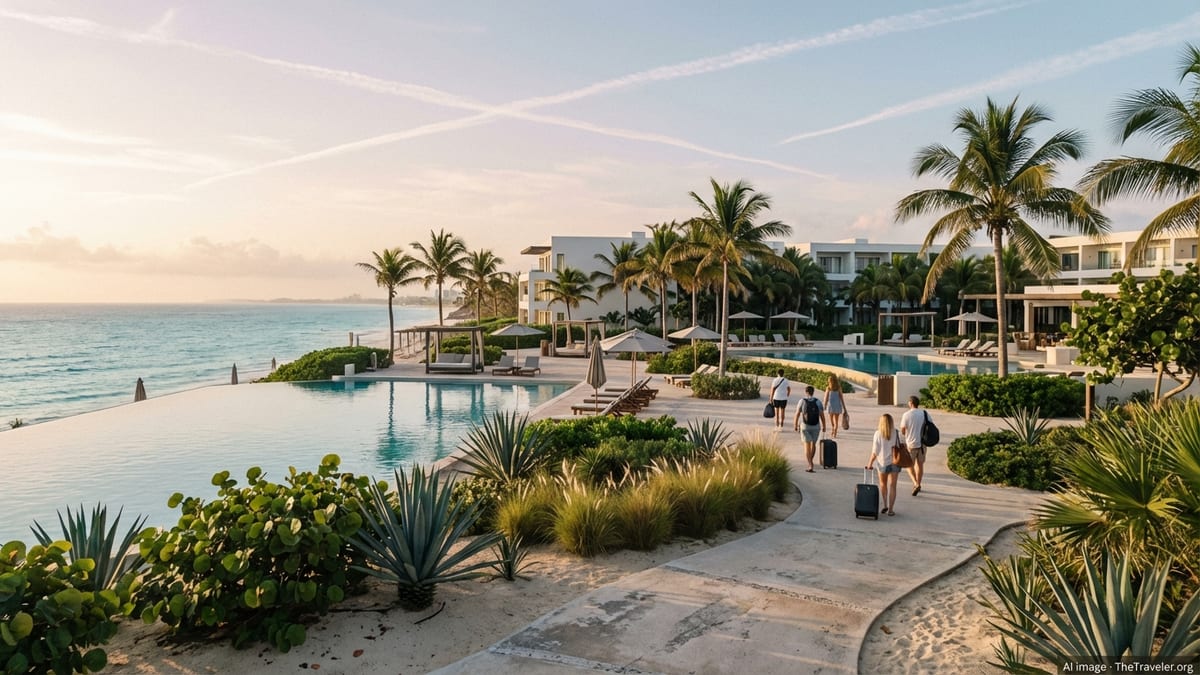
Renovated Resorts Meet a New Wave of Global Airlift
In the wake of a multiyear investment program across its Cancun and Riviera Maya properties, Mexico’s Sunset World Group is emerging into a market environment defined by record air connectivity to the region. The company, which operates resorts such as Hacienda Tres Ríos, Sunset Royal Beach Resort, Sunset Marina and Sunset Fishermen, has focused heavily on upgrading rooms, public spaces and wellness offerings while shoring up its storm readiness and sustainability credentials.
The reopening of Hacienda Tres Ríos in November 2024 marked a key milestone, following what the company has called the most significant phase of a full renovation of the ecoresort within its private nature park. Around the same time, Sunset World highlighted investments in hurricane prevention and response programs across its Riviera Maya and Cancun hotels, underscoring an emphasis on resilient infrastructure alongside cosmetic improvements.
Those projects are coinciding with a broader reshaping of global air networks that favors Mexico’s Caribbean gateways. As major airlines introduce new routes, extend seasonal services and upgauge aircraft into Cancun and nearby airports, the upgraded Sunset World properties are positioned to capture a growing share of leisure traffic from both established and emerging source markets.
Tourism officials in Quintana Roo have stressed that the expansion of airlift is essential to sustaining record visitor numbers. For resort groups like Sunset World, the latest flight additions effectively widen their catchment area, transforming once complex multi-stop journeys into single-hop vacations for millions of potential guests.
American Airlines Deepens Its Stronghold on Cancun and the Riviera Maya
American Airlines remains the most aggressive foreign carrier in the Mexican Caribbean, repeatedly declaring Cancun a strategic centerpiece of its winter sun network. The airline has built up to roughly 40 peak-day flights into the destination during high season in recent years, adding new nonstop routes from secondary U.S. cities and boosting frequencies from key hubs.
For the upcoming winter season, American is once again layering additional service into Cancun and neighboring resorts. Expanded flights from Phoenix and Miami, new connections from cities such as Oklahoma City and a record presence across the Yucatán Peninsula, including Cozumel and Mérida, are all designed to meet enduring demand for beach and cultural escapes.
This robust schedule has direct consequences for resort operators along Cancun’s Hotel Zone and down the coast toward Playa del Carmen and the Riviera Maya. Shorter travel times and more nonstop options have encouraged travelers from the American Midwest and interior West to consider Mexican Caribbean stays as convenient as traditional Florida or Caribbean getaways, feeding occupancy at midscale and upscale properties alike.
Sunset World’s portfolio, which spans family friendly beachfront resorts in Cancun and more nature focused experiences at Hacienda Tres Ríos, is well aligned with the customer mix flowing through American’s network. The carrier’s wide range of fare products, from basic economy to premium cabins, dovetails with Sunset World’s tiered room categories and evolving emphasis on wellness, spa and gastronomic experiences.
Delta and United Target Sun-Seeking Leisure Travelers
Delta Air Lines and United Airlines have also sharpened their focus on Mexico’s Caribbean gateways as part of broader pushes into leisure-heavy markets. In recent winter seasons, both carriers have announced additional frequencies and larger aircraft on routes into Cancun from their primary U.S. hubs, citing sustained appetite for beach vacations even as business travel patterns remain in flux.
Delta’s strategy has centered on leveraging its strong positions in Atlanta, Minneapolis and other key cities to funnel travelers toward Mexico and the Caribbean. Seasonal increases to Cancun have complemented the airline’s expansion into other island destinations, allowing it to market seamless sun-and-sea itineraries to customers across its domestic network.
United, meanwhile, has sought to balance a growing long haul international footprint with solid performance on near international routes. Cancun has featured prominently in its winter schedules from hubs such as Houston and Chicago, benefiting from the carrier’s substantial loyalty base and partnerships with tour operators and package providers.
For resort groups like Sunset World, the presence of multiple large U.S. carriers in the market has translated into year round exposure across airline marketing channels, co-branded offers and dynamic packaging platforms. As Delta and United refine their leisure strategies, properties in Cancun and the Riviera Maya gain access to increasingly diversified demand beyond traditional peak holiday weeks.
Air Canada and British Airways Extend Mexico’s Reach in Key Overseas Markets
Growth in transborder and transatlantic capacity is equally important for Mexico’s high end resort operators. Air Canada has steadily rebuilt and expanded its sun destination schedules, restoring and in some cases surpassing pre pandemic levels of service to Cancun from cities including Toronto, Montreal and Vancouver. With Canada representing one of the largest international source markets for the Mexican Caribbean, those flights provide a vital pipeline of winter business.
The carrier has emphasized premium leisure travelers by pairing wide body aircraft on select routes with upgraded cabin products and bundled vacation offerings through its tour subsidiary. This focus dovetails with demand at renovated resorts that now offer larger suites, enhanced spas and curated culinary programs tailored to long-stay guests escaping the Canadian winter.
British Airways has played a similar role from the United Kingdom, maintaining long haul links between London and key Mexican leisure gateways. While British capacity into Cancun is more limited than that of North American carriers, its flights tap into a higher spending customer base and connect Mexico to a broad network of European origins via London.
Across both airlines, the message to partners in Mexico is that long haul leisure remains a growth opportunity. As carriers restore capacity and pull forward seasonal services to capture shoulder season demand, resorts that can demonstrate fresh hardware, strong service scores and credible sustainability credentials are positioned to benefit disproportionately.
Lufthansa Group and European Connectivity to the Mexican Caribbean
Lufthansa, through its broader group of airlines, has also helped reshape the way European travelers access the Mexican Caribbean. Discover Airlines, the group’s leisure-focused brand, has previously launched nonstop services from Frankfurt to Cancun and added a second Mexican destination at Tulum’s new international airport. Those moves have given German and other European travelers direct access to the Riviera Maya without the need to transfer in the United States.
The Lufthansa Group’s published winter schedules for 2025 and 2026 continue to emphasize long haul leisure, with Mexico among the markets benefiting from additional capacity. Integrating Discover Airlines into the wider Lufthansa network has made it easier for passengers from secondary European cities to connect seamlessly onto flights bound for Cancun and Tulum.
For resort operators such as Sunset World, these developments expand the geographic reach of potential guests. German speaking markets, long familiar with Mexico’s Pacific coast and traditional beach destinations in Spain and the Mediterranean, now have more convenient options to sample the cenotes, Mayan heritage sites and eco focused resorts of the Yucatán Peninsula.
As airlift stabilizes and grows, European tour operators are responding with new packages that combine stays in established hotel zones with time at more secluded properties and nature reserves. Renovated resorts that can offer a clear value proposition to this segment, including certified spas and recognized family friendly credentials, are increasingly featured in brochures and online platforms.
Sunset World’s Renovation Drive and Market Positioning
Sunset World Group has used the years since the pandemic to refine its identity and upgrade its product across several fronts. The reopening of Hacienda Tres Ríos in November 2024 followed a significant renovation that refreshed guest rooms, upgraded common areas and reinforced the property’s blend of luxury and environmental stewardship inside a protected nature park.
In Cancun, the company has highlighted improvements at properties such as Sunset Royal Beach Resort and Sunset Marina, where investment has gone into refurbishing accommodations, refreshing pool and beach areas and enhancing food and beverage concepts. The group has also underscored hurricane readiness, describing comprehensive prevention and attention programs designed to keep facilities fully functional and guests secure during storm season.
A series of events and recognitions has accompanied these physical upgrades. Hacienda Tres Ríos was named Mexico’s Leading Family Resort in the 2024 World Travel Awards, raising the profile of the property among family and multigenerational travel planners. Sunset Fishermen in Playa del Carmen marked its 25th anniversary with celebrations that emphasized the brand’s longevity in the region.
Additional initiatives, including certifications for Sunset Spa and participation in social responsibility campaigns such as the United Nations Blue Heart initiative against human trafficking through local authorities, have been part of a broader effort to align the group with global expectations around wellness and ethical tourism. Collectively, these steps aim to reassure international travelers arriving on new flight routes that renovations extend beyond aesthetics to encompass safety, sustainability and community engagement.
Capacity Surge Translates Into Competitive Packages and Longer Stays
The convergence of expanded airline service and refreshed resort infrastructure is reshaping booking patterns across the Mexican Caribbean. With more competition among carriers such as American, Delta, United, Air Canada and European groups, airfare into Cancun and the Riviera Maya has become more dynamic, occasionally dropping during shoulder periods as airlines seek to maintain high load factors.
Resort operators including Sunset World have responded with flexible promotions, bundled transfers and added value inclusions rather than deep rate cuts, aiming to protect average daily rates while enticing guests to extend their stays. Upgraded spas, family facilities and nature based activities support this strategy, offering reasons for visitors to remain on property longer or to split vacations between multiple resorts within the group.
Travel advisors report that ease of access is now one of the decisive factors in destination choice. When nonstop flights are available from a traveler’s home city to Cancun or Tulum, Mexican Caribbean resorts often outcompete other sun destinations that still require connections. Sunset World’s properties, located within established tourist corridors and now positioned as recently renovated, are natural beneficiaries of this trend.
At the same time, the growing diversity of origin markets means that guest expectations are evolving. Canadian, British, German and American travelers may prioritize different aspects of a stay, from culinary offerings and wellness to adventure excursions and children’s programming. The group’s renovation program, combined with its eco credentials at Hacienda Tres Ríos and coastal locations in Cancun and Playa del Carmen, provides a platform to tailor experiences to these varied tastes.
Outlook: More Seats, Higher Standards and Intensifying Competition
Looking ahead to the 2025 and 2026 winter seasons, industry analysts expect further capacity injections into Mexico’s Caribbean airports as airlines adjust schedules to favor resilient leisure markets. American Airlines has signaled continued strength in its Mexico network, while Delta and United refine their own strategies around premium leisure. Air Canada and British Airways are anticipated to maintain or modestly build their presence as Europeans and Canadians continue to seek winter sun escapes.
Lufthansa Group’s ongoing integration of Discover Airlines and emphasis on long haul leisure point to a sustained European pipeline into Cancun and Tulum. As these carriers finalize their winter schedules, resort groups will keep a close eye on frequency patterns and aircraft assignments that shape booking curves and revenue projections.
For Sunset World Group, the immediate priority is to translate its renovation work and recent awards into stronger brand recognition in source markets now directly linked to the Mexican Caribbean by air. Partnerships with airlines, tour operators and online travel agencies, alongside direct marketing that highlights upgraded facilities and sustainability initiatives, will be central to that effort.
With more seats than ever funneling travelers into Cancun and the Riviera Maya, competition among resorts is intensifying. Those that can offer a compelling combination of refreshed hardware, consistent service and credible environmental and social credentials are likely to emerge as preferred choices. As global carriers increase their commitment to Mexico’s Caribbean coast, Sunset World’s latest investments signal its intent to be among the leading beneficiaries of this surging connectivity.