

More news on this day
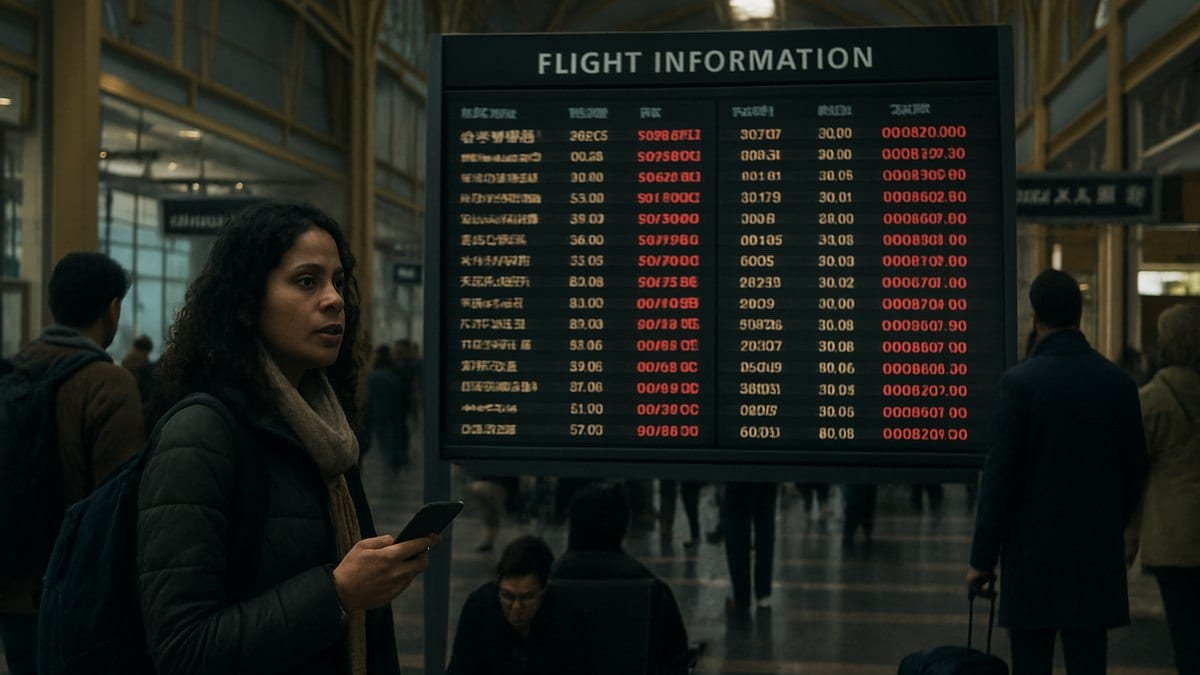
Travelers at Ronald Reagan Washington National Airport are facing another difficult weekend, as a combination of severe weather, air traffic control disruptions and network-wide congestion drives hundreds of delays and cancellations across the Washington region and the broader U.S. system.
Get the latest news straight to your inbox!
Storm Systems and Network Strain Converge Over Washington
Recent storm systems sweeping across the Mid Atlantic and the eastern United States have sharply reduced the number of flights that can safely arrive at and depart from Reagan National Airport. Publicly available Federal Aviation Administration data and national aviation coverage indicate that the agency has repeatedly imposed ground delay programs and temporary holds on flights into Washington during periods of lightning, low clouds and strong winds, constraining capacity at one of the country’s busiest close-in airports.
On several days in late March and early April, those constraints coincided with nationwide disruptions driven by powerful storm fronts and lingering winter weather. Reports from outlets such as Reuters and other travel-industry trackers describe more than 12,000 flight delays and cancellations across the United States on particularly severe days, with Reagan National listed among airports facing flow-control measures and extended arrival queues. These system-wide pressures have translated into crowded terminals, rolling delay notifications and missed connections for passengers traveling through the capital region.
Travel analysts note that even relatively short weather holds can ripple through a tightly scheduled network. When storms slow traffic into Washington, airlines may delay departures from distant hubs, which in turn disrupts onward flights later in the day. For Reagan National, where runway and gate capacity are already tightly calibrated, this dynamic can swiftly push on-time performance well below seasonal norms.
Ground Stops Highlight Vulnerability of Regional Control Facilities
In addition to severe weather, a recent incident at a key regional control facility underscored how quickly conditions at Reagan National can deteriorate. According to published coverage from Washington-area news outlets and national broadcasters, ground stops were issued at all three major airports serving the capital region after a strong chemical odor was reported at the Potomac Consolidated Terminal Radar Approach Control facility in Warrenton, Virginia, which manages much of the area’s air traffic.
Public reports indicate that during that episode, flights bound for Reagan National, Washington Dulles International and Baltimore/Washington International were temporarily halted while the facility was evacuated and assessed. Although the restrictions were lifted later that evening, departure boards at Reagan National continued to show extensive delays and cancellations, with some flights running several hours late and others removed from the schedule entirely as airlines struggled to reset crews and aircraft.
The event highlighted how dependent operations at Reagan National are on a limited number of critical facilities. Even once controllers were able to resume work, the accumulated backlog meant that normal schedules did not return until well into the following day. For travelers, that translated into long lines at rebooking desks, difficulty finding alternate routings and uncertainty over when their journeys would resume.
Safety Measures and Capacity Limits Weigh on Schedules
Reagan National’s recent operational challenges are also unfolding against a backdrop of tighter safety protocols and structural capacity limits at the airport. Following a deadly midair collision in the Washington area and other safety concerns, the FAA introduced restrictions on some types of flights and temporarily reduced the number of arrivals permitted per hour. Public FAA statements and subsequent aviation-industry analysis describe both staffing reinforcements at the control tower and permanent changes to helicopter and powered-lift operations near the airfield.
Industry data compiled in the months after those changes show that on-time performance at Reagan National has been more volatile than before, particularly when bad weather or regional demand spikes coincide with those tighter constraints. Reports focusing on passenger trends indicate that the airport has experienced both a decline in overall traffic and a drop in on-time arrivals compared with prior years, with cancellations and long delays more common during peak travel periods.
Policy debates in Congress and among local stakeholders have drawn attention to chronic staffing pressures at the airport’s tower and at regional control centers. Lawmakers have circulated letters citing concerns about controller workloads and overtime, pointing to the risk that even modest disruptions can translate into extended delays when staffing is stretched. These discussions have added another layer of scrutiny to the airport’s operational performance as the busy summer travel season approaches.
National Disruptions Amplify Local Impacts at DCA
The problems facing passengers at Reagan National are closely tied to broader turbulence in the national air travel system. Reports summarizing recent U.S. flight performance describe a pattern of widespread delays and cancellations linked to strong passenger demand, constrained airline staffing and infrastructure limits at key hubs such as Chicago O’Hare and major Texas and Southeast airports. When those hubs are hit by storms or volume-related restrictions, the impact frequently spreads to spokes like Reagan National.
Travel-industry analyses published over the past week note that carriers have increasingly leaned on ground delay programs and extended holds in order to preserve aircraft and crews in position, a strategy that can reduce outright cancellations but lengthens overall journey times. For Reagan National, that often means inbound aircraft arrive late and depart later still, compressing schedules and contributing to late-evening cancellations when crews approach duty limits.
Because the airport has limited room to expand, there are few easy solutions when upstream disruptions coincide with local weather or facility issues. Airlines can add spare aircraft and reserve crews at the margin, but a string of national disruption days can still overwhelm those buffers. The result is that travelers passing through the capital region may continue to experience irregular operations, even on days when skies over the Potomac appear relatively clear.
What Travelers Can Expect in the Coming Days
With spring weather patterns still unsettled and national flight volumes climbing toward summer peaks, most travel forecasters expect continued volatility in operations at Reagan National. Aviation data services show that early April has already produced several high-disruption days across the U.S. network, and meteorological outlooks for the Mid Atlantic point to additional storm chances that could again force traffic management initiatives around Washington.
Consumer guidance from federal agencies and traveler advocacy groups emphasizes that the experience for individual passengers will vary by airline and by the specific cause of a disruption. When cancellations or long delays are driven by weather or broader national airspace constraints, compensation options are often more limited than for issues under a carrier’s direct control. At the same time, some airlines have introduced more flexible rebooking policies and waived change fees during major weather events, giving passengers additional options when schedules unravel.
For those planning to pass through Reagan National in the days ahead, publicly available advice from aviation experts stresses the importance of monitoring airline apps and flight-status tools closely, arriving early and considering backup routings through nearby airports if connections are tight. As the capital’s close-in airport continues to juggle severe weather, facility vulnerabilities and national network strain, travelers may need to build generous time buffers into their plans to navigate what has become an increasingly unpredictable operating environment.