

More news on this day
Cairo International Airport has emerged as one of the hardest hit hubs in the latest wave of Middle East aviation disruption, with reports indicating 106 delayed or canceled flights affecting regional routes over just a few days.
Get the latest news straight to your inbox!
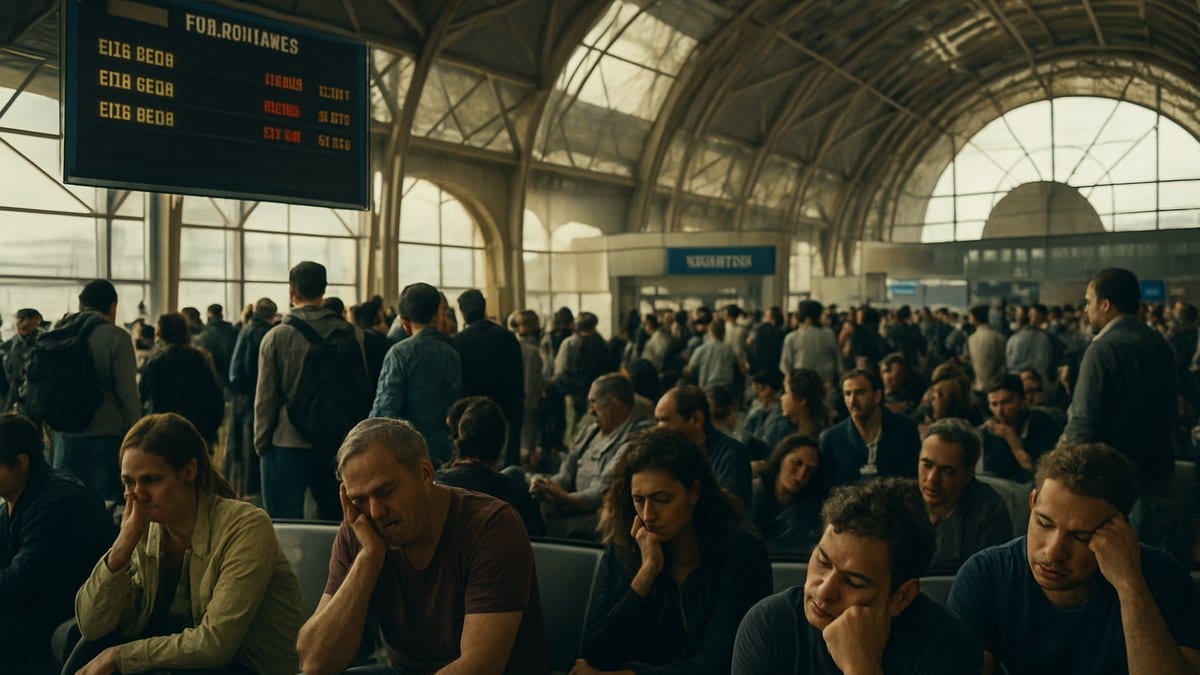
Cairo Becomes Flashpoint in Middle East Flight Turmoil
Recent operational data compiled by aviation trackers and travel industry reports indicate that Cairo has seen a sharp spike in flight disruption, concentrated on short and medium haul services linking Egypt with Gulf states, the Levant, and major European transit points. Within a narrow window of early April, at least 106 flights touching Cairo were either significantly delayed, diverted, or canceled as airlines struggled to navigate a patchwork of airspace closures and congested alternative corridors.
The bulk of the disruption has involved regional routes that normally move large numbers of workers, family visitors, and connecting passengers between Cairo and destinations such as Dubai, Abu Dhabi, Kuwait City, Doha, Riyadh, Jeddah, Amman, and Istanbul. Publicly available flight-status feeds show departure and arrival boards from Cairo populated with multi hour delays, aircraft swaps, and last minute schedule changes, reflecting the knock on effect of bottlenecks at neighboring hubs.
Travel advisories circulating across airline and agency channels describe Cairo as a critical, but strained, waypoint in a network already reshaped by the 2026 Iran conflict and rolling airspace restrictions. With several nearby countries limiting or suspending overflights, carriers have been routing more connections through Egyptian airspace, adding pressure to ground operations and increasing the likelihood that even minor timetable disruptions cascade into wider delays.
Industry analyses suggest that while Cairo continues to function as a major transit gateway between Europe, Africa, and the Gulf, the sudden concentration of traffic is testing airport capacity at peak hours. Check in counters, security lanes, and ramp operations are all operating close to their limits, which, in combination with aircraft and crew arriving late from other disrupted airports, has contributed to the tally of 106 affected flights on regional routes.
Regional Airspace Closures Drive Reroutes and Diversions
The current disruption wave is closely linked to airspace closures and restrictions associated with the ongoing Iran war and wider Middle East tensions. Aviation and economic briefings published in recent weeks describe how countries including Bahrain, Iraq, Israel, Kuwait, Qatar, Syria, and the United Arab Emirates have all limited or temporarily closed segments of their airspace, forcing airlines to redesign routings between Europe, Africa, and Asia.
These closures have effectively shifted traffic onto a smaller set of usable corridors, with Egypt emerging as one of the primary alternatives. Reports from aviation consultancies note that airlines are operating longer, more fuel intensive routes that skirt conflict zones and restricted areas. In practice, this has meant extended block times, tighter aircraft rotations, and increased risk of crews reaching duty time limits, especially on multi leg itineraries that depend on Cairo for regional connections.
Published coverage on the wider network impact points to several major hubs, including Dubai and Istanbul, recording hundreds of delays and dozens of cancellations on peak days in March. With aircraft arriving late into Cairo from these congested hubs, outbound regional flights have been pushed back or dropped from schedules, contributing to the count of 106 disrupted movements involving Cairo based routes.
In parallel, diversion data from Egypt shows that airports such as Cairo, Sphinx, Alexandria, Hurghada, Sharm El Sheikh, and Luxor have accepted an increasing number of rerouted international flights as neighboring countries temporarily closed their airspace. Each diverted arrival has required rapid ground handling, security screening, and in some cases passenger reaccommodation, further complicating resource planning at Cairo and other Egyptian airports.
Airlines Trim Schedules and Rework Gulf and Levant Networks
As disruption has persisted into April, airlines serving Cairo have begun adjusting schedules on key regional routes in an effort to stabilize operations. According to recent statements and timetable updates, Egypt based and foreign carriers have reduced or temporarily suspended services to certain Gulf and Levant destinations, particularly where airspace restrictions or congestion make on time operations difficult.
Earlier announcements from EgyptAir highlighted the suspension of flights from Cairo to several regional cities, including Dubai, Abu Dhabi, Sharjah, Beirut, Doha, Amman, Dammam, Bahrain, Baghdad, Erbil, and Kuwait, with only a gradual resumption of some services reported in March. These measures were described as precautionary steps to manage safety and operational reliability, but they have also concentrated demand onto the remaining flights, which are more vulnerable to disruption when bottlenecks appear at partner hubs.
Schedule changes are not limited to Egypt’s flag carrier. Low cost and full service airlines operating to and from Cairo have also reworked rotations, shifting frequencies between airports such as Istanbul, Kuwait City, Jeddah, and Dubai, or downgrading larger aircraft to smaller types. Aviation analysts note that such moves are designed to preserve core routes while limiting exposure to further last minute cancellations, yet they often leave passengers with fewer same day alternatives when irregular operations occur.
Separate reporting on European and Balkan markets shows related adjustments, including reductions on leisure routes operated by carriers such as Air Cairo between Egypt and Southeastern Europe. While these changes are not the main drivers of the 106 disruptions recorded at Cairo, they illustrate a broader pattern of airlines trimming network edges to protect their most profitable and operationally feasible services during a period of prolonged regional volatility.
Passenger Experience: Long Queues, Missed Connections, Uncertain Timelines
For passengers transiting Cairo during the disruption window, the operational challenges have translated into long queues at immigration and transfer desks, as well as crowded gate areas where departure times shift repeatedly. Accounts shared through travel forums and social media over recent weeks describe missed connections to Gulf and European cities, overnight stays arranged at short notice, and difficulty rebooking when multiple flights on the same route are delayed or canceled.
Travel advisers and consumer rights organizations have responded by urging passengers with upcoming itineraries through Cairo, Dubai, Istanbul, Kuwait City, and other affected hubs to monitor flight status closely and build additional buffer time into connections wherever possible. Guidance commonly recommends allowing extra hours for transfers through Cairo, especially for itineraries that mix different airlines on separate tickets, which can be more exposed to missed onward flights.
Some passengers have reported that ground handling and customer service desks at Cairo became overwhelmed during the peak of the disruption, with limited staff available to manage rebookings for several flights at once. While this picture varies by terminal and airline, the combined effect of high demand, airspace induced delays, and limited spare capacity has made it harder for travelers to obtain rapid solutions when schedules change at short notice.
Industry observers note that the concentration of 106 disrupted flights in such a short span serves as a reminder of how quickly regional shocks can ripple through global travel plans. Because Cairo functions both as an origin and a major transit point, knock on effects have extended well beyond the Middle East, affecting journeys between Europe, Africa, and Asia for days after the initial disruption spike.
Outlook: Continued Volatility for Cairo’s Regional Routes
Forecasts from aviation data providers and travel risk firms suggest that volatility is likely to persist in the near term, with Cairo remaining exposed to fresh waves of disruption as long as regional airspace restrictions and geopolitical tensions continue. While some Gulf and Levant routes have seen partial restoration of capacity since March, contingency schedules and adjusted routings leave limited slack in aircraft and crew availability.
Analysts emphasize that Cairo’s strategic position between Europe, Africa, and the Gulf means it will remain a key beneficiary of rerouted traffic whenever alternative corridors are constrained. At the same time, that role increases the likelihood that the airport will experience congestion spikes similar to the episode that produced 106 disrupted flights, particularly during busy holiday periods or if new airspace measures are introduced at short notice.
Travel industry commentary advises passengers to treat schedules on Cairo linked regional routes as subject to change, especially on itineraries that cross multiple affected countries. Booking earlier departures in the day, choosing longer transfer windows, and ensuring contact details are up to date in airline reservations are among the practical steps recommended to reduce the impact of any future disruption wave.
For now, the picture emerging from publicly available traffic data and on the ground reports is of a hub trying to absorb unprecedented operational pressures while maintaining its role as a bridge between continents. The 106 flight disruptions recorded on regional routes serve as a stark indicator of how fragile that balance remains in the current Middle East aviation environment.