

More news on this day
Travelers at Boston Logan International Airport faced mounting frustration on March 1 as a fresh wave of global aviation disruption triggered eight cancellations and at least 125 delays, snarling flights operated by Spirit, Emirates, JetBlue, American and other carriers on routes connecting the United States, Middle East, Europe, South Korea and beyond.
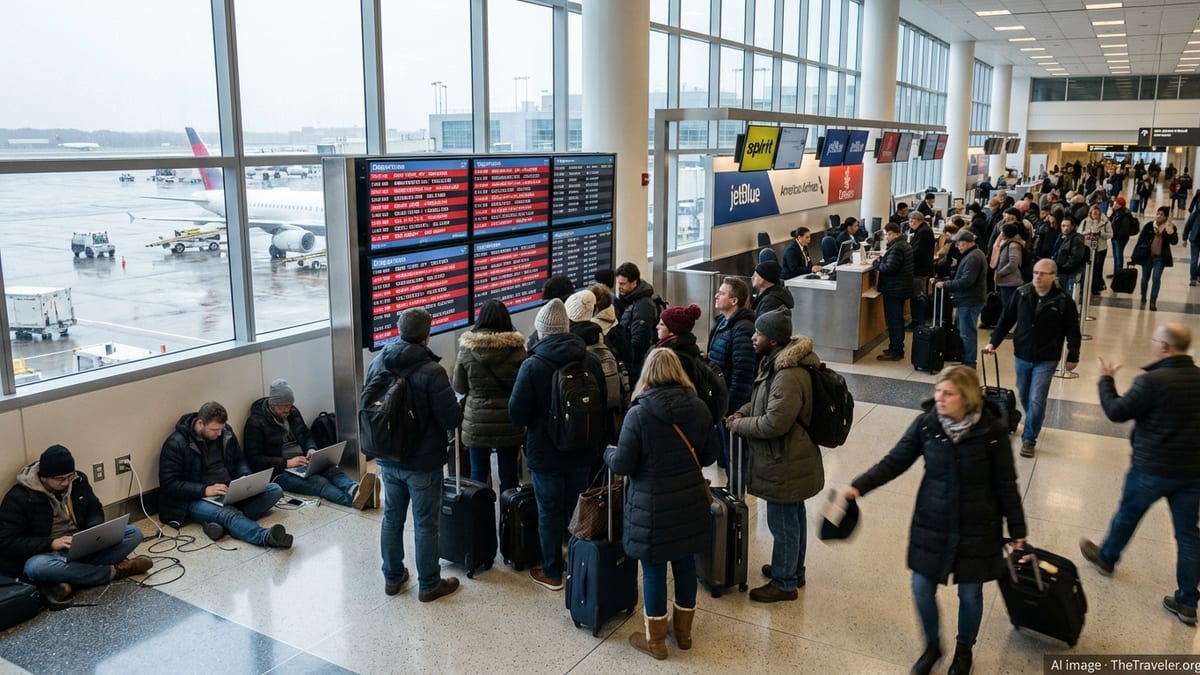
Ripple Effects From Middle East Airspace Closures Hit Boston
The latest bout of travel chaos at Boston Logan is unfolding against a backdrop of severe disruption across the Middle East, where airspace closures and airport shutdowns following recent attacks on Iran have forced thousands of cancellations and diversions. Long-haul flights that typically cross the region, including services linking the northeastern United States with hubs in the Gulf and onward to Asia, are being rerouted or grounded entirely.
Emirates, which relies on its Dubai hub to connect Boston with destinations across the Middle East, Africa and Asia, has suspended large portions of its schedule as operations into and out of the United Arab Emirates remain constrained. Passengers booked on Boston–Dubai services reported overnight holds, missed onward connections to cities such as Tel Aviv and Incheon, and limited rebooking options as seat availability tightened across alternative routings.
Airlines are juggling complex operational challenges, from securing new flight paths over remaining open corridors to repositioning aircraft and crew displaced by diversions. Industry analysts say Boston, as a major transatlantic and long-haul gateway, is particularly exposed when global route networks seize up, because a single disruption in the Middle East can cascade through multiple waves of departures and arrivals.
That knock-on effect has left some Boston-bound travelers stranded in European hubs including London, Paris and Frankfurt, while others have been re-routed through New York’s JFK or Chicago O’Hare, adding hours to journeys already stretched by weather and security complications.
Domestic Congestion Builds as JetBlue, American and Spirit Struggle
While international turmoil is amplifying the strain, much of the visible disruption at Boston Logan on March 1 is playing out on domestic routes. JetBlue, Logan’s largest carrier by market share, has been managing tightly packed schedules following a week of winter weather in the Northeast that left little slack in the system. Even minor operational hiccups are now triggering rolling delays across key routes to New York, Washington and Chicago.
Flights linking Boston with New York’s JFK and Washington Reagan National (DCA) have been among the most affected, with late-arriving aircraft and ground congestion leading to knock-on schedule slips. Passengers reported departure boards cycling between new estimated times as crews and aircraft were shuffled to cover priority routes and maintain at least partial connectivity for business and leisure travelers.
American Airlines and Spirit are experiencing similar pressures on their Boston operations, particularly on high-frequency services into major hubs like Chicago O’Hare (ORD) and connecting points throughout the Southeast. For cost-conscious travelers relying on ultra-low-cost carriers, limited interline agreements mean that when a flight is canceled, there are fewer options to be rebooked on other airlines, extending wait times as remaining seats quickly sell out.
Gate areas in Boston’s terminals were crowded with passengers perched on the floor near power outlets, juggling airline apps and text alerts in the hope of snagging newly released seats. Airport staff and airline agents worked through long queues as they reissued boarding passes, sought hotel accommodation for those forced to stay overnight, and fielded questions about compensation and refund rights.
Transatlantic and Asia Connections Disrupted via Key Hubs
The network implications of the disruption are also being felt across transatlantic and transpacific corridors that intersect with Boston. Flights to and from major European centers, including those providing onward links to Tel Aviv and other Middle Eastern destinations, are encountering extended ground holds, altered routings and creeping delays that can push late-night arrivals into the early hours of the morning.
For travelers bound for Israel, restrictions on Israeli airspace and the closure of key regional hubs have forced widespread rebooking. Some passengers who started their journeys from Boston or connected through Logan have been held in U.S. or European gateway cities while airlines awaited clarity on when and how routes to Tel Aviv could safely resume. In some cases, itineraries have been split over multiple days with interim overnight stops inserted mid-journey.
Eastbound connections to South Korea’s Incheon International Airport are feeling the impact as well. Routes that ordinarily cross the Middle East are being re-routed across more northerly or southerly tracks, adding time and fuel costs and, in some instances, provoking equipment swaps when aircraft reach crew duty limits. This has led to delays for Boston travelers connecting through partner hubs in Europe and North America on their way to or from Seoul.
With capacity stretched, airlines are prioritizing the restoration of their most commercially critical long-haul links, which can leave secondary connections and regional feeders more vulnerable to last-minute changes. For Boston passengers, that can translate into relatively stable departure times on a flagship transatlantic flight, but significant delays or cancellations on the shorter leg that gets them to that long-haul departure point.
Passengers Navigate Rights, Workarounds and Long Waits
As the disruptions mounted, many travelers at Boston Logan turned to airline customer service lines, mobile apps and social media channels in search of faster answers than they could obtain at crowded ticket counters. However, high call volumes and systemwide schedule changes meant that hold times stretched, and self-service tools sometimes lagged actual operational decisions.
Consumer advocates reminded passengers that in the United States, airlines must provide a refund if a flight is canceled and the traveler chooses not to rebook, regardless of the reason for the cancellation. For delays, policies vary by carrier and circumstance, so travelers on affected flights with American, JetBlue and Spirit were urged to carefully review their airline’s commitments regarding meal vouchers, hotel accommodation and rebooking options when disruptions are within the airline’s control.
Some passengers at Logan sought to bypass bottlenecks by rebooking through alternative airports, including New York’s JFK, Newark, Philadelphia and Washington Dulles, or by shifting to rail on shorter East Coast segments to protect onward international connections. Others opted to delay or cancel trips entirely, concerned that continued turbulence in Middle East airspace and lingering winter weather in the Northeast could lead to fresh waves of disruption in the days ahead.
Airport officials encouraged travelers to arrive early, remain attentive to gate-change announcements and verify their flight status repeatedly, particularly when connecting across regions affected by security events or severe weather. With Boston Logan functioning as both an origin and connecting point for diverse global itineraries, even a limited number of cancellations and more than a hundred delays can ripple across continents in unpredictable ways.