

More news on this day
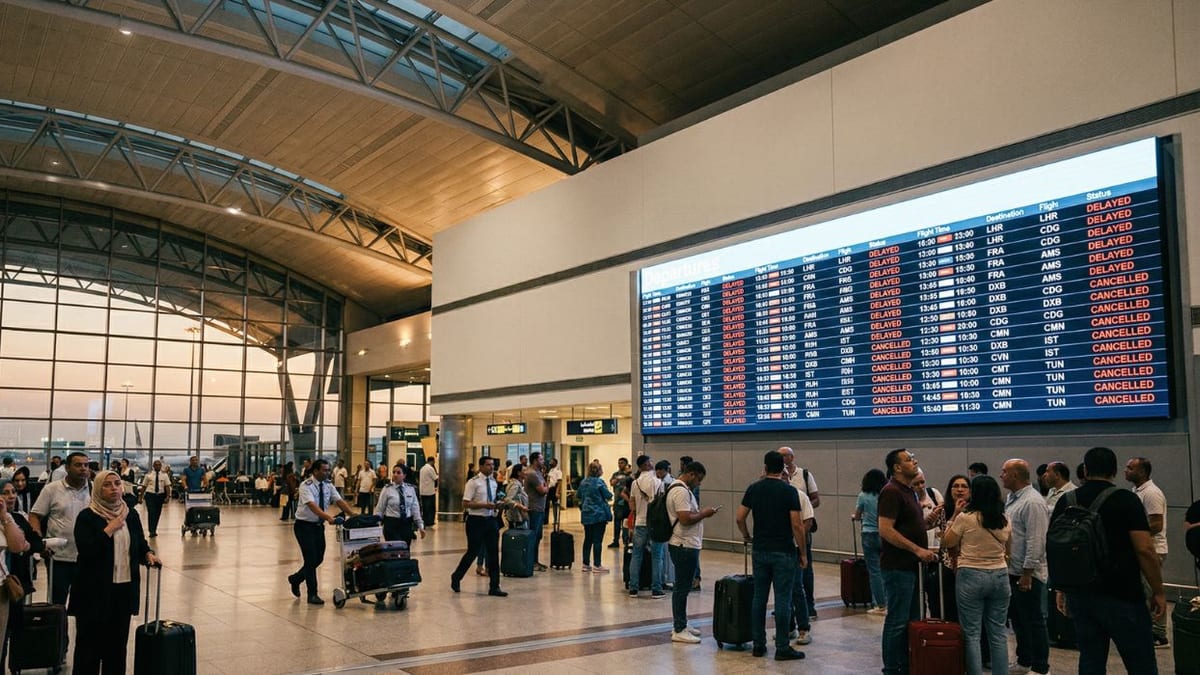
Severe disruption hit Cairo International Airport on April 11, 2026, as more than 100 delayed departures and arrivals rippled across key routes linking Europe, the Middle East and North Africa, stranding passengers and complicating long haul connections.
Get the latest news straight to your inbox!
Widespread Knock-On Disruption From Cairo Hub
Publicly available airport tracking data for April 11 indicated an unusually high number of delayed services at Cairo International Airport, affecting both departing and arriving flights throughout the day. The disruption was most visible on heavily used corridors connecting Cairo with major hubs in Europe, the Gulf and North African capitals, where schedule reliability is typically crucial for onward connections.
Information compiled from live flight monitoring platforms showed delays ranging from minor schedule slips of under an hour to extended hold ups of several hours on some services. Affected routes included popular links to cities such as London, Paris, Frankfurt, Istanbul, Dubai, Doha, Riyadh, Jeddah, Tunis and Casablanca, among others, amplifying the impact well beyond Egypt’s borders.
Because Cairo functions as a strategic transfer point between Africa, Europe and Asia, the wave of late departures quickly translated into missed connections and forced rebookings. Travelers on itineraries involving single ticket journeys through Cairo to European or Gulf destinations reported online that extended ground time in Cairo led to overnight stays or substantial rerouting.
Regional aviation observers noted that the volume of delayed flights on a single day was significantly higher than seasonal norms for Cairo at this time of year, making April 11 an outlier in what has otherwise been a gradually recovering schedule environment since the pandemic period.
Europe, Middle East and North Africa Routes Hit Hardest
Published coverage and live tracker snapshots highlighted that short and medium haul routes bore the brunt of the April 11 congestion. In Europe, services between Cairo and major hubs were among the most heavily delayed, complicating onward long haul departures to North America and other regions for passengers who rely on those connections.
In the Middle East, disruptions on routes to and from Gulf gateways, including Dubai and Doha, appeared to contribute to additional strain across airline networks that are tightly banked around peak connection waves. Flights within the wider Levant and Arabian Peninsula region experienced rolling knock on effects as late arriving aircraft and crews rotated through their schedules.
Across North Africa, key city pairs such as Cairo Tunis and Cairo Casablanca, along with services to other Maghreb and Sahel destinations, were reported with late departures or extended ground holds. Given the relatively limited daily frequency on some of these routes, even a single multi hour delay effectively removed a day’s connectivity for some travelers.
The combined effect across Europe, the Middle East and North Africa was a complex web of missed links. Airline operational updates and passenger posts on social media platforms referenced long queues at transfer desks in Cairo and in outstation airports as carriers attempted to reaccommodate customers on alternative flights.
Operational Strain and Passenger Experience
While a full operational picture of April 11 is still emerging, publicly available information suggests that the delays stemmed from a mix of factors including congested ground operations, tight aircraft rotations and broader regional scheduling pressures. Cairo’s role as Egypt’s primary international gateway and a transfer hub means that even modest disruption in one part of the system can rapidly cascade across the day’s program.
Travel forums and recent online discussions about passing through Cairo International Airport already describe a challenging environment for some passengers, particularly those navigating self arranged transfers or short connection times. Against that backdrop, the April 11 wave of delays intensified concerns about buffer times and contingency planning when using Cairo as a connecting point.
Accounts from recent months include reports of long lines at security and immigration, last minute boarding pass issuance and confusion around terminal transfers during peak hours. On a day when more than 100 flights ran late, these pre existing stress points likely became more pronounced, especially for travelers without airline protected connections or lounge access.
For passengers, the practical consequences ranged from missed holiday departures and business meetings to added accommodation costs and visa complications when involuntary stopovers became necessary. Travel insurance policies, fare rules and regional passenger rights frameworks determine whether travelers can reclaim some of these expenses, an issue that has become a recurring topic in online aviation communities.
What Travelers Connecting Through Cairo Should Expect
In light of the April 11 disruption, travel planners are advising greater caution for itineraries that rely on tight self arranged connections through Cairo International Airport. Guidance shared across traveler communities in recent weeks has emphasized leaving generous buffers between separate tickets, particularly on routes involving non alliance combinations or smaller regional carriers.
Passengers scheduled to fly through Cairo in the coming days are being urged by airline apps and third party trackers to monitor their flights closely on departure day. Many carriers serving Cairo push real time notifications of gate changes and delays through mobile apps, email or text message, and airport information screens provide the final reference for boarding times and stand assignments.
For those facing extended layovers due to delays, Cairo’s role as a large metropolitan gateway provides options to leave the terminal for nearby hotels or limited city exploration, subject to visa rules and time of day. Recent traveler reports, however, stress the importance of factoring in road traffic conditions between the airport and central districts, as well as allowing ample time to clear security on return.
Frequent visitors also highlight the value of pre arranging trusted ground transport, whether via reputable ride hailing services or hotel organized transfers, to reduce uncertainty during late night or early morning arrivals that may result from rolled over delays.
Airlines and Airport Under Pressure to Restore Stability
The scale of April 11’s delays has renewed scrutiny of operational resilience at Cairo International Airport and among the airlines using it as a hub. Industry analysts point out that Cairo is simultaneously managing growth in long haul services, regional connections and domestic traffic, all within infrastructure that has seen incremental rather than transformative expansion.
Published data on route launches shows that additional long haul links from Cairo to North American and Asian destinations are scheduled to enter service during 2026. This growth, combined with already dense regional flying, is likely to keep pressure on runway capacity, stands and terminal processes, particularly at peak connection banks.
Observers suggest that carriers and airport managers may need to further refine schedule spacing, ground handling coordination and contingency plans to prevent a repeat of such a high volume delay day. Even modest improvements in aircraft turnaround efficiency and passenger processing could have an outsized effect on maintaining on time performance during periods of strain.
For now, April 11 stands out as a reminder of how quickly disruption at a single strategic hub can affect travel patterns across three continents. As airlines adjust upcoming schedules and travelers weigh routing options for the busy summer season ahead, Cairo’s performance will remain under close watch from both the aviation industry and the growing number of passengers who rely on the airport as a gateway between Europe, the Middle East and North Africa.