

More news on this day
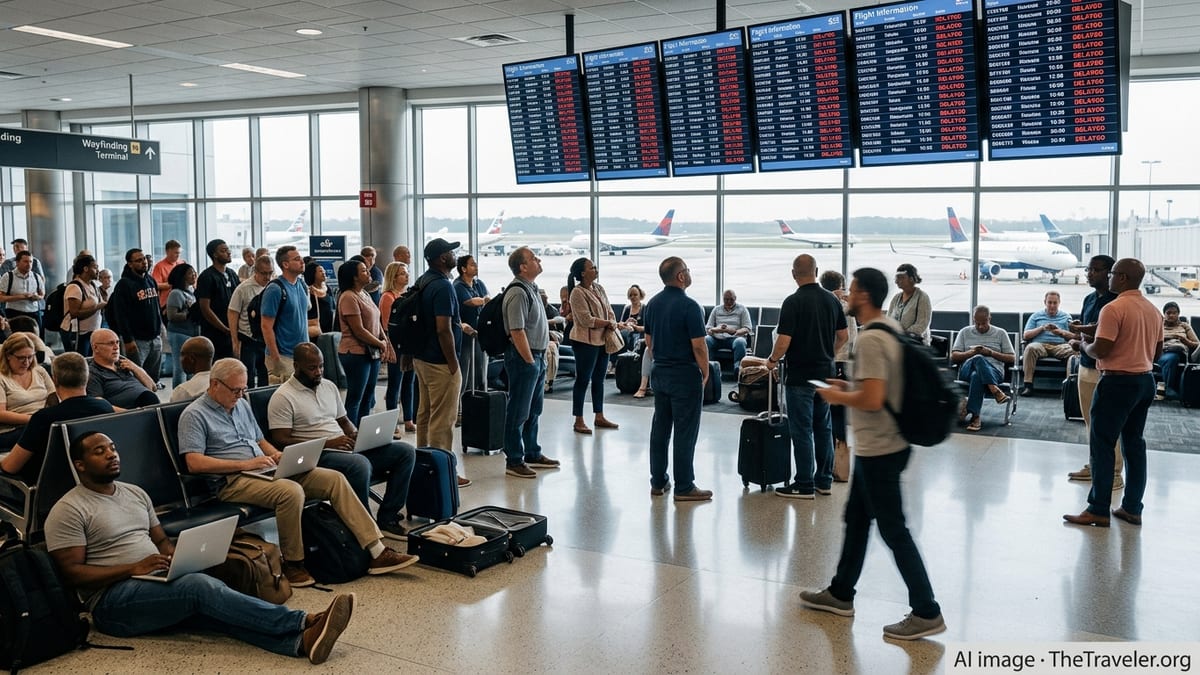
Travelers at Hartsfield-Jackson Atlanta International Airport faced widespread disruption as 194 flights were reported delayed and seven canceled, snarling connections to major U.S. hubs including New York, Chicago and Los Angeles and leaving many passengers temporarily stranded in the world’s busiest airport.
Get the latest news straight to your inbox!
Wave of Disruptions Across Key Domestic Routes
Publicly available flight-tracking data on Tuesday indicated a significant build-up of delays at Hartsfield-Jackson Atlanta International, with nearly 200 departures and arrivals running behind schedule and a smaller number canceled outright. The impact rippled quickly across some of the country’s busiest corridors, notably services linking Atlanta with New York-area airports, Chicago and Los Angeles.
The pattern of disruption meant passengers on both originating and connecting flights were affected. Many travelers passing through Atlanta for onward journeys to the Northeast, Midwest and West Coast experienced missed connections or extended layovers as departure times slid later into the day. Airports in New York and Chicago were among those showing knock-on schedule changes as aircraft and crews struggled to realign with their planned rotations.
Operational data shows that even a modest number of cancellations can compound the effect of delays at a hub of Atlanta’s size, where aircraft and passengers are tightly banked around peak connection windows. With hundreds of flights typically scheduled each day, a cluster of delayed operations can quickly cascade, leaving some travelers facing multiple rebookings before reaching their destinations.
While the majority of affected flights on Tuesday were delayed rather than canceled, the concentration of problems at a central hub increased the number of people stranded in the terminal and forced many to seek alternative routings through other cities or to postpone trips entirely.
Weather, Network Pressures and Federal Staffing Issues
Reports from aviation and travel outlets indicated that the disruption in Atlanta came against a backdrop of broader strain across the U.S. air travel system in late March. Parts of the country have been dealing with unsettled spring weather, including storms in some regions that have periodically reduced airport arrival rates and triggered ground delay programs. Even when conditions in Atlanta are relatively stable, weather issues along major routes can drive holding patterns, reroutes and late aircraft arrivals into the hub.
At the same time, airlines and airports are still working through the effects of a recent federal funding impasse that temporarily affected pay for Transportation Security Administration staff nationwide. National coverage in recent days has noted that TSA absences have eased after pay resumed, but the episode underscored how quickly staffing constraints can feed into longer security lines and tighter margins in already busy terminals.
In Atlanta, local news reports on Tuesday highlighted that checkpoint lines had shortened compared with the most severe scenes earlier in March, even as operational pressures remained. Industry analysts note that flight delays often reflect a combination of upstream factors, including aircraft positioning, crew scheduling limits and air traffic management decisions, not only conditions visible inside the terminal on a given day.
Observers also point to the wider context of a busy spring travel period, with strong demand returning across domestic networks. Airlines have been operating dense schedules through major hubs such as Atlanta, leaving less slack in the system when weather disturbances or technical issues arise.
Impact on Passengers and Airlines at the World’s Busiest Hub
Hartsfield-Jackson has long held the title of the world’s busiest airport by passenger numbers and functions as a primary connecting hub for flights across the United States and beyond. When disruptions such as Tuesday’s spike in delays occur, the consequences are magnified by the sheer volume of travelers funneling through its concourses.
Travel forums and social media posts from passengers on Tuesday described extended waits in gate areas and crowded seating zones as departure times shifted. Some travelers reported being rerouted through secondary hubs or placed on later flights to reach key destinations including New York, Chicago, Los Angeles and other large coastal and Midwest cities.
For airlines, a day with nearly 200 delays at a central hub can mean aircraft and crews finishing their rotations late into the night, as well as increased costs for fuel, staffing and passenger care. Carriers typically respond by adjusting schedules throughout the day, swapping aircraft where possible and consolidating lightly booked services, which can in turn lead to additional cancellations or time changes.
Airport contingency planning documents for Atlanta outline procedures for managing prolonged tarmac waits, diversions and irregular operations, including coordination with federal agencies and airlines to prioritize basic services for stranded passengers. Such measures are designed to limit the worst impacts, but they cannot fully eliminate inconvenience when weather and operational issues collide at scale.
Advice for Travelers Heading Through Atlanta
Travel industry guidance on Tuesday stressed the importance of preparation for anyone scheduled to pass through Hartsfield-Jackson while delays remain elevated. Passengers are widely encouraged to monitor flight status frequently on airline apps or departure boards and to allow additional time for connections, especially when traveling to or from congestion-prone hubs such as New York, Chicago, Los Angeles and Washington.
Analysts generally recommend that travelers with tight domestic connections in Atlanta consider moving to earlier flights when possible, particularly during busy morning and evening banks. For those with nonrefundable tickets, same-day confirmed or standby options may still provide more reliable itineraries than waiting on heavily delayed evening departures.
Consumer advocates also note that passengers affected by significant delays or cancellations should review airline policies on meal vouchers, hotel accommodations and rebooking options. While specific rules vary by carrier and the cause of disruption, travelers may be entitled to assistance, especially if cancellations are linked to controllable operational issues rather than severe weather.
For now, available information suggests that Atlanta’s delays are concentrated in a single day rather than a prolonged shutdown. Even so, the combination of recent national turbulence over federal staffing, seasonal weather and robust travel demand serves as a reminder that itineraries passing through major hubs can change rapidly, and that extra time, flexible plans and real-time updates remain essential tools for anyone flying through one of the busiest airports in the world.