

More news on this day
Thousands of air travelers across the United States are confronting long lines, missed connections and unexpected overnights in airport terminals as a wave of spring disruptions exposes how vulnerable the country’s aviation network remains, even when no single airline suffers a full-scale meltdown.
Get the latest news straight to your inbox!
Delays Mount Across Multiple Carriers and Hubs
Tracking data from early April shows a broad pattern of disruption scattered across the major U.S. airlines rather than centered on a single carrier. Publicly available flight-status tallies for April 3 indicate that more than 3,500 flights were delayed and hundreds canceled nationwide, affecting large network airlines along with major low cost and ultra low cost operators. Major hubs from Dallas and Chicago to Boston, Orlando and Las Vegas reported rolling queues of late departures, missed connections and full rebooking desks as the delays accumulated through the day.
Coverage by travel and consumer outlets describes passengers stranded overnight in cities they never intended to visit after missed onward flights and limited remaining seats left few immediate alternatives. While the raw number of cancellations has remained below the most dramatic winter-weather episodes of recent years, the sheer scale of delays has been enough to create gridlock in gate areas, congested taxiways and long waits for customer assistance at multiple airports.
Reports indicate that the disruption has been widely shared among the country’s biggest brands. Delta Air Lines, American Airlines, United Airlines, Southwest, Spirit and Frontier have all appeared prominently in daily delay statistics, reflecting how tightly interconnected airline schedules are within the national aviation system. When pressure rises at a few busy hubs, it increasingly spills across carriers and regions.
Severe Weather and FAA Constraints Tighten the System
Spring storms have been a key trigger in the latest wave of problems. In the final days of March, severe thunderstorms, rapid snowmelt and flash flooding swept across several high-volume corridors, producing more than 3,000 delays and well over 100 cancellations in a single day, according to delay tallies cited by aviation blogs and travel-law sites. Those weather systems disrupted traffic at major hubs including New York, Chicago and Atlanta, leaving aircraft and crews out of position for days afterward.
Additional pressure has come from targeted federal airspace and airport restrictions. At Chicago O’Hare, a ground stop tied to strong storms earlier this week temporarily halted many arrivals and departures, forcing airlines to hold or reroute flights and compounding delays across the Upper Midwest and beyond. In San Francisco, the Federal Aviation Administration has reduced the number of hourly arrivals because of runway work and safety concerns, limiting that airport’s ability to absorb schedule irregularities and recover quickly when inbound flights run late.
Transportation statistics and industry analyses show that these kinds of “national aviation system” constraints, which include air traffic control capacity and airport congestion, now account for a significant share of U.S. delays. Even when conditions at a traveler’s departure airport appear calm, weather systems and traffic management decisions hundreds of miles away can quietly stack up minutes and hours across the network.
Operational Strains and Staffing Gaps Add Fuel
Behind the immediate triggers, operational and staffing challenges are amplifying the disruption. Publicly available summaries of recent Department of Transportation data indicate that a large portion of late arrivals and cancellations in the United States are classified as either airline-controlled or linked to late-arriving aircraft, reflecting maintenance issues, tight scheduling and the ripple effects of earlier delays.
Travel and consumer guidance sites have highlighted continuing shortages in key roles, particularly among regional airline crews, ground handlers and some air traffic control facilities. When storms or airspace restrictions force schedule changes, limited spare staff and aircraft give airlines less flexibility to swap planes, call in reserve crews or add extra sections to move stranded passengers. The result is that relatively modest shocks can still lead to long recovery times.
Industry-facing research has also pointed to evolving security and screening procedures as a growing contributor to congestion at some high-volume airports, particularly during peak morning and evening waves. More intensive checks can extend the time needed to move passengers to gates, tightening the window for on-time departures and increasing the odds that boarding starts late even when the aircraft and crew are ready.
Regional Hotspots Illustrate a National Problem
Recent disruption snapshots from individual airports underline how local events can cascade nationwide. In Texas, tracking data compiled by travel publications for April 1 showed nearly 400 delays and several cancellations across Dallas, Houston and San Antonio, with American Airlines, Southwest and United all affected. Analysts noted that the combination of high demand, connecting traffic and storm-related congestion turned routine afternoon thunderstorms into an all-day headache for passengers throughout the region.
Similar patterns emerged in late March at San Diego and Raleigh-Durham, where clusters of delays and a smaller number of cancellations involving multiple carriers created knock-on effects for flights across the country. Passengers bound for destinations as far-flung as the Midwest and the East Coast found themselves stuck when regional departures were grounded, illustrating how quickly constraints at one airport can undermine carefully timed connection banks elsewhere.
These local bottlenecks feed back into national statistics. With many large U.S. airlines relying on complex hub-and-spoke systems, the cancellation of a single inbound flight can wipe out onward options for dozens of travelers, especially when aircraft are already heavily booked for the spring travel season.
Travelers Shoulder the Burden as System Adjusts
For travelers, the latest stretch of disruptions has reignited questions about what they can reasonably expect when flights fall apart. Consumer advocates note that in the United States, airlines generally are not required to offer compensation when weather or broader aviation system issues are at fault, although many carriers provide meal vouchers, hotel rooms or flexible rebooking in more severe cases. When a delay or cancellation is within an airline’s control, such as a crew or maintenance issue, customer-service commitments can be stronger.
Public guidance from transport regulators and travel experts increasingly encourages passengers to build larger buffers into their plans, particularly when connecting between flights or heading to major events and cruises. Early-morning departures, nonstop routes when available and flexible tickets are often recommended as ways to reduce exposure to cascading delays, though these strategies can add cost.
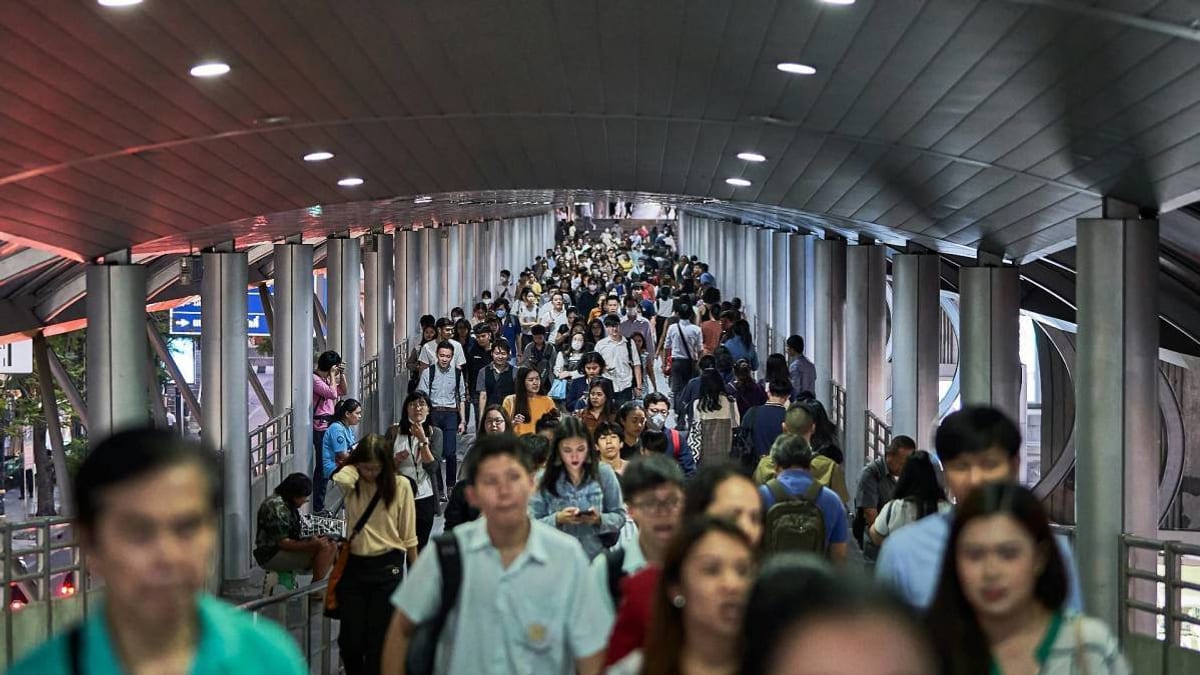
The crowded scenes in terminals this week suggest that the U.S. aviation system is still adjusting to demand that has rebounded strongly from the pandemic, while infrastructure, staffing and air traffic capacity remain constrained in key places. Until those structural issues ease, even routine spring storms and localized ground stops are likely to continue leaving travelers stranded far from home, regardless of which airline’s logo is on their boarding pass.