

More news on this day
Hundreds of passengers were left stranded or facing long delays in London as widespread disruption at Heathrow and Gatwick airports led to 590 delayed services and 26 cancellations, affecting major international routes and putting pressure on airlines including British Airways, Delta Air Lines, EasyJet and others.
Get the latest news straight to your inbox!
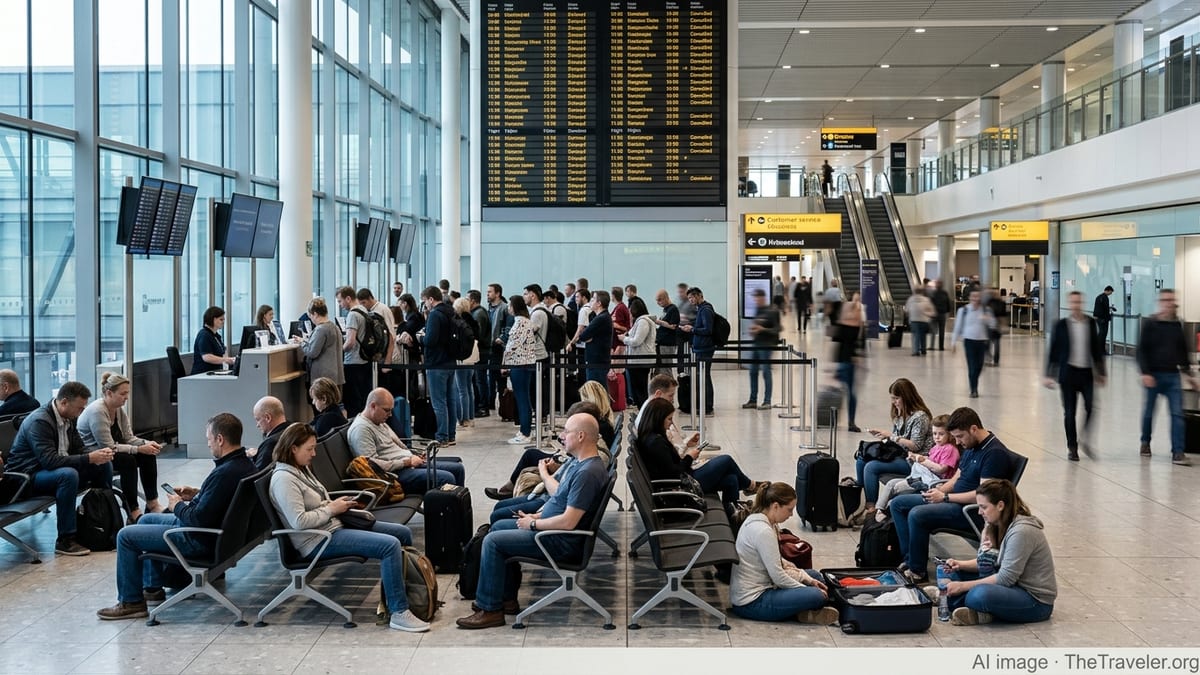
Severe Operational Disruption Across London’s Two Busiest Airports
Published airport and airline data indicate that London’s Heathrow and Gatwick airports experienced a sharp spike in disruption, with a combined total of around 590 delayed flights and 26 cancellations over the course of the day. The knock-on effect has been felt across terminals, with departure boards dominated by late-running services and gaps where flights have been removed from the schedule.
Heathrow, the United Kingdom’s busiest hub, has seen the largest share of delayed traffic, reflecting its dense long-haul schedule and high aircraft movements. Gatwick, a key base for European and leisure carriers, has also reported substantial delays, particularly on short-haul and point-to-point services that typically run on tight turnaround times.
Reports from UK aviation monitoring services and live departure boards show that delays have ranged from modest timetable slippages of 30 to 45 minutes to multi-hour waits that effectively wipe out much of a travel day for affected passengers. The scale of the disruption has led to crowded terminals, overwhelmed seating areas and pressure on airport food, retail and lounge facilities.
While the precise blend of causes varies by flight, publicly available information indicates a mix of adverse weather in parts of Europe and North America, air traffic control restrictions, and aircraft and crew being out of position as contributing factors. Once early rotations fall behind schedule, subsequent services can quickly cascade into wider disruption across both airports.
Global Routes to New York, Paris, Dubai and Beyond Affected
The disruption has not been confined to domestic or regional services. Key long-haul and European trunk routes linking London with cities such as New York, Paris and Dubai have been among those affected, complicating travel plans for business travellers, families and transit passengers connecting onwards to other destinations.
Transatlantic flights between London and New York, traditionally among the world’s busiest and most time-sensitive routes, have experienced notable departure and arrival delays. Even relatively small shifts in schedule on these flights can cause missed connections in both directions, forcing passengers to be rebooked on later departures or alternative routings through other hubs.
Short-haul services between London and major European cities including Paris have also been disrupted, affecting a high volume of day-return and weekend trips. For many travellers, these routes underpin both business itineraries and short breaks, and delays of several hours can effectively curtail planned meetings or reduce already brief stays.
Flights linking London with Middle Eastern hubs such as Dubai, which serve as gateways to Asia, Africa and Australasia, have likewise reported significant delays. When long-haul services depart late from London, the impact often extends beyond the immediate flight, as onward passengers may miss late-night or early-morning connections, prolonging their journeys well into the following day.
British Airways, Delta, EasyJet and Others Under Strain
The disruption has rippled across multiple carriers that operate extensive networks out of Heathrow and Gatwick. British Airways, the primary tenant at Heathrow and a major operator at Gatwick, has been heavily affected, with a number of its short- and long-haul services recording substantial delays. As the airline relies on tight connections through its London hubs, even a limited number of late arrivals and departures can generate wider schedule challenges.
US-based Delta Air Lines, which operates transatlantic flights into and out of London, has reported knock-on effects where delayed inbound aircraft from North America have in turn delayed their outbound return legs. Similar patterns have been visible across other North American carriers serving London, contributing to congestion in peak transatlantic travel windows.
At Gatwick, EasyJet and other European low-cost and leisure airlines have seen their point-to-point networks squeezed by late-running aircraft and limited spare capacity. These carriers typically use high aircraft utilisation to keep fares competitive, which means there is less slack in the system to absorb disruptions when they occur.
Publicly available airline advisories have encouraged passengers to check their flight status frequently, make use of mobile apps and self-service tools to rebook where eligible, and arrive at the airport with extra time in case of security or boarding delays. Travellers with tight connections have been particularly advised to allow additional buffer time or consider alternative routings where possible.
Passengers Face Long Queues, Missed Connections and Overnight Stays
The most visible impact of the day’s disruption has been in passenger experience at Heathrow and Gatwick. Reports from travellers and live images of terminals show long check-in and customer service queues as passengers seek rebooking options, accommodation, and revised onward connections.
For some, delays of several hours have resulted in missed long-haul departures or last flights of the day to regional destinations, pushing rebooked departures into the following morning. This in turn has led to increased demand for hotel rooms near the airports and in central London, as travellers attempt to secure overnight accommodation at short notice.
Families with young children, older travellers and those with mobility challenges have faced particular difficulties navigating extended waits in crowded departure areas. Seating near departure gates and in public waiting zones has been at a premium, while food and beverage outlets have experienced sustained demand well beyond typical peak periods.
Although airlines and airports provide information screens and announcements, the volume of affected flights has made it challenging for some passengers to obtain personalised updates. Many have turned to mobile devices to refresh flight status pages, monitor gate changes and track incoming aircraft in real time, underscoring the importance of digital tools during major travel disruptions.
What Travellers Should Know for Upcoming London Departures
With schedules still recovering from the disruption, travellers planning to depart from or arrive into Heathrow or Gatwick in the coming hours are being advised by publicly available guidance to treat departure times as subject to change and to monitor flight status closely. Even as conditions gradually improve, aircraft and crews may remain out of position, meaning irregular operations can persist beyond the initial day of disruption.
Industry observers recommend that passengers allow extra travel time to reach the airport, particularly during early morning and evening peaks when road and rail services into London’s airports are at their busiest. Arriving earlier than usual for check-in and security may help reduce the risk of missing a flight that boards earlier than anticipated once a new slot becomes available.
Travellers connecting through London to other international destinations should pay special attention to minimum connection times and, where possible, consider longer layovers to build in a buffer against potential delays. Those with non-flexible hotel or tour reservations at their final destination may also wish to review the change and cancellation terms of their bookings in case onward plans need to be adjusted.
As operations are restored, airlines are expected to prioritise re-accommodating disrupted passengers and stabilising core routes such as London to New York, Paris and Dubai. However, with nearly 600 flights delayed or cancelled in a short window, residual effects on aircraft rotations and crew schedules may continue to be felt across London’s air travel network for at least another travel day.