

More news on this day
Paris Charles de Gaulle Airport, one of Europe’s busiest hubs, is facing a sweeping operational breakdown that has triggered widespread flight cancellations, diversions and long delays, throwing spring travel plans for thousands of passengers into uncertainty.
Get the latest news straight to your inbox!
A Sudden Breakdown at Europe’s Second-Busiest Hub
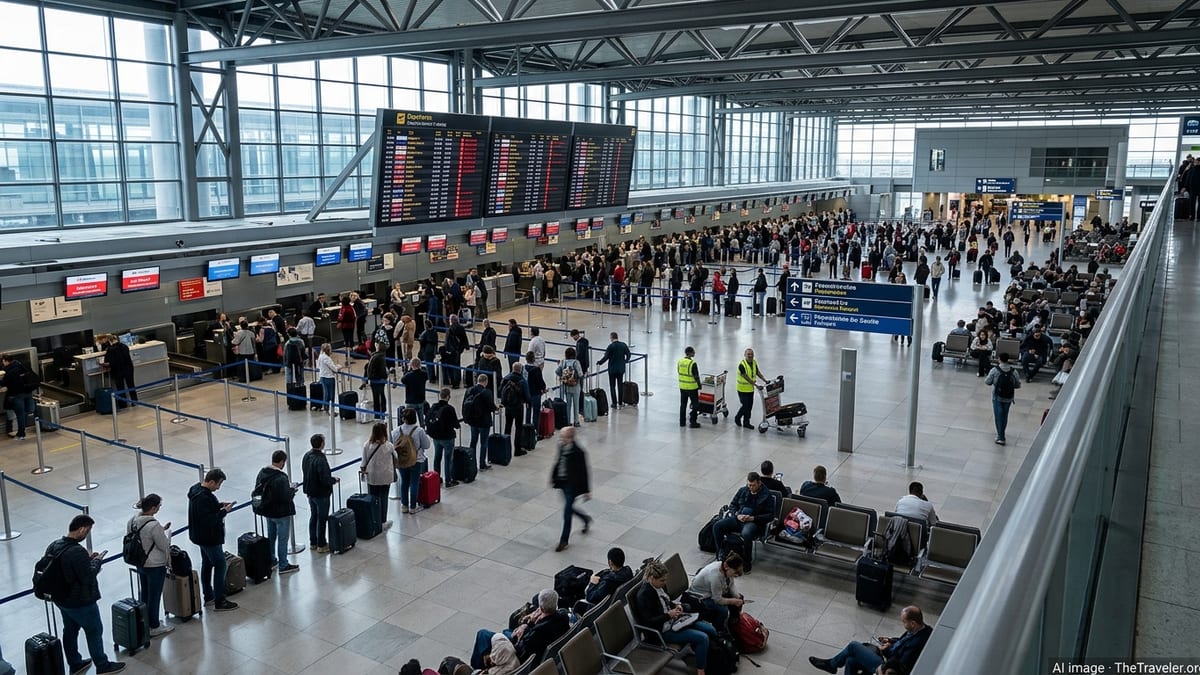
Reports emerging on March 28 indicate that Paris Charles de Gaulle Airport is contending with a cascading disruption affecting multiple terminals and airlines at the height of the weekend travel rush. Available flight-tracking data and passenger accounts describe clusters of delayed departures, missed connections and diversions into and out of the French capital, with disruption building through the day.
While detailed operational data continues to evolve, publicly available information shows irregular operations concentrated on long-haul and connecting traffic, including services linking Europe with North America, the Middle East and Asia. As delays compound, even flights that remain technically “on schedule” are facing gate changes, elongated ground times and last-minute crew or aircraft substitutions.
The timing is particularly sensitive. Late March marks the ramp-up to the busy spring and early summer travel period in Europe, with airlines increasing frequencies and leisure travelers beginning to return in force after the winter lull. Capacity at Charles de Gaulle, already running close to pre‑pandemic levels, leaves limited slack in the system when a major disruption emerges.
Information from recent passenger experiences at the airport already pointed to congestion, longer queues and occasional infrastructure strain, especially at security and passport control. The latest breakdown is magnifying those existing pressure points, turning tight connections into missed flights and extending airport stays from a few hours to overnight layovers.
How the Disruption Is Hitting Travelers Today
The most immediate impact for travelers is a wave of flight delays and missed connections radiating across the network. Published coverage and live tracking show late arrivals into Paris that are too delayed to maintain onward connections, forcing airlines to rebook passengers on later departures or, in some cases, the following day. For some long-haul itineraries, this is turning a manageable transfer into a layover of 12 hours or more.
Travelers transiting through Charles de Gaulle without the documents needed to enter the Schengen area are particularly vulnerable, as they may be restricted to the international transit zone. Publicly available accounts describe passengers unexpectedly facing day‑long waits airside after missing onward flights, relying on airport lounges, paid rest pods or terminal seating while they await rebooking.
On the landside, the disruption is causing bottlenecks at check‑in, bag drop and security. Past reports have already described security screening at Charles de Gaulle as prone to long, unevenly managed queues; today’s wave of delayed and rescheduled flights appears to be intensifying those issues, with passengers directed between terminals, encountering repeated document checks and contending with crowded waiting areas.
Ground transport links are feeling the strain as well. Charles de Gaulle depends heavily on the RER B suburban rail line and a network of buses and coaches to move passengers to and from central Paris and suburban hotels. Recent maintenance work and intermittent weather‑related issues on the rail corridor have already complicated airport access. Replacement buses and rerouted services can add significant time to journeys, a factor that becomes critical when travelers are trying to salvage tight connections or reach hotels after late‑night arrivals.
Storm Systems, Rail Works and Systemic Strain
The latest problems at Charles de Gaulle are unfolding against a broader backdrop of strain on European transport systems this season. The current 2025–26 European windstorm cycle has already produced several intense weather systems affecting France and neighboring countries, with previous storms bringing flight cancellations, diversions and temporary rail and road closures across the region.
While the present disruption is not yet tied definitively to a single weather event, recent storm activity has highlighted how quickly conditions can deteriorate at major hubs when strong winds or heavy precipitation coincide with peak travel periods. Even when runways remain open, ground handling, de‑icing and aircraft rotations can slow sharply, triggering the kind of rolling delays and aircraft‑availability problems now visible in Paris.
At the same time, ongoing rail works in the Île‑de‑France region are periodically reducing capacity on key links such as the RER B line serving the airport. Maintenance closures on certain weekends and overnight periods have already required passengers to rely on replacement buses between the city and Charles de Gaulle. When airside operations falter on the same day that surface transport is constrained, the combined effect can magnify the disruption for travelers trying to reach or leave the airport.
These overlapping factors underscore the vulnerability of Europe’s busiest hubs to multi‑layered shocks. Charles de Gaulle has largely recovered in terms of passenger volumes, but infrastructure expansion has lagged earlier ambitions, and the system leaves little margin when weather, maintenance and airline scheduling problems converge.
What Passengers Can Expect in the Coming Days
In the short term, travelers booked through Paris Charles de Gaulle should expect continued knock‑on delays, even if the immediate causes of the disruption are resolved quickly. Aircraft and crews are likely to remain out of position into the following operating day, which can mean altered departure times, downgauged aircraft or consolidations of lightly booked services.
Published airline advisories indicate that many carriers are applying standard disruption policies, allowing free rebooking on alternative dates or routes when seats are available. However, capacity at the end of March is already tight on popular transatlantic and intra‑European links, and alternative routings via other hubs may involve additional connections or overnight stays. Travelers who have not yet started their trip may wish to explore voluntary changes while more options remain open.
Those who must travel through Charles de Gaulle in the next 24 to 48 hours are likely to face dense crowds at check‑in and security, along with extended queues at airline service desks as passengers seek rebooking assistance. Self‑service tools and airline mobile apps remain important for monitoring gate changes and revised departure times, though travelers should be prepared for information to update frequently as the situation evolves.
Hotel availability around the airport may tighten if irregular operations continue into the night. In previous disruption events, nearby properties have filled quickly with displaced passengers and crew, pushing some travelers either into central Paris or into longer waits airside. Those concerned about an overnight delay but still outside the airport may want to secure flexible accommodation in advance.
How to Protect Your Trip If You Are Flying via CDG
For travelers with upcoming itineraries routed through Paris Charles de Gaulle, the latest disruption is a reminder to build more resilience into travel plans during a volatile season. Longer connection times at major hubs can provide an important buffer when security waits, aircraft rotations or rail transfers take longer than expected. Where possible, selecting itineraries with at least two to three hours between flights at Charles de Gaulle can reduce the risk of missed onward segments.
Passengers should also review the conditions of carriage and disruption policies of the airline operating each segment of their trip. Publicly available guidance from airlines serving Charles de Gaulle outlines how delays, missed connections and cancellations are handled, including when meal vouchers, hotel stays or rebooking on partner carriers may be offered. Understanding these rules in advance can help travelers act quickly if a flight status changes with little warning.
Travel insurance and credit card protections may provide additional safeguards. Many policies include coverage for significant delays, missed connections and necessary overnight stays when a journey is disrupted for reasons beyond the traveler’s control. With recent months showing repeated episodes of congestion and irregular operations at large European hubs, verifying the scope of that coverage before departure is increasingly important.
Finally, real‑time awareness is essential. Monitoring flight status on both airline and airport channels, checking rail and road conditions between Paris and Charles de Gaulle, and allowing extra time at each step of the journey can help reduce the risk that today’s disruption turns into a personal travel crisis. As Europe’s spring travel season accelerates, passengers transiting the French capital will need to stay flexible and informed to navigate a hub that is once again under heavy strain.