

More news on this day
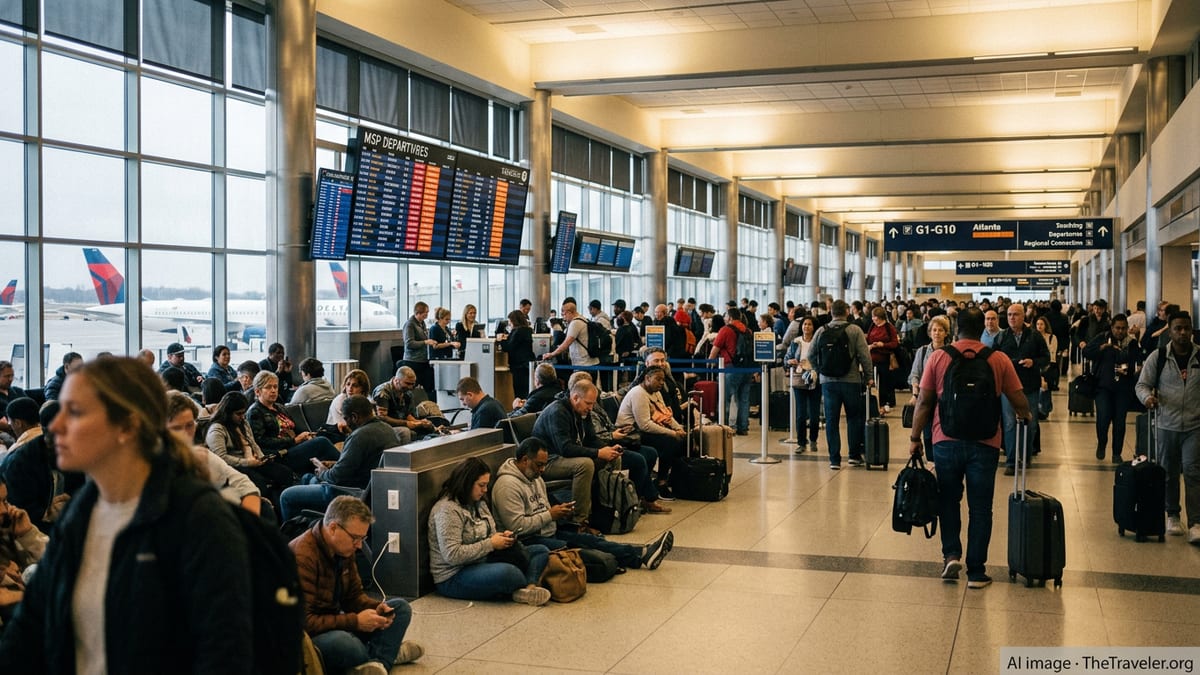
Thousands of air travelers from South Korea, Costa Rica and across the United States found their plans upended this weekend as a fresh wave of disruption at Minneapolis–Saint Paul International Airport led to 189 flight delays and 80 cancellations, sending shockwaves through routes linking Incheon, Guanacaste and Atlanta.
Spring Break Rush Meets Fragile Flight Networks
The latest turmoil hit just as Minneapolis–Saint Paul International Airport moved into the first major weekend of the 2026 spring break travel season, a period officials had already warned would stretch capacity and test airline resilience. With passenger volumes climbing and schedules tightly packed, relatively localized weather and operational issues quickly cascaded across airline networks.
Flight tracking data on Saturday showed departure and arrival boards at Minneapolis–Saint Paul dominated by delayed and scrubbed services, as carriers struggled to reposition aircraft and crew after a week of weather disruptions in Chicago and the broader Midwest. Travelers reported rolling departure estimates, repeated gate changes and late night cancellations that left them searching for scarce hotel rooms and rebooked seats.
For many, the frustration was sharpened by the sense of déjà vu. In recent weeks airports from Chicago Midway to Chicago O Hare and several East Coast hubs have battled their own waves of mass delays and cancellations, straining aircraft availability and schedules before the spring peak truly began. Those lingering imbalances collided with a busy travel weekend at Minneapolis–Saint Paul and produced yet another round of turbulence for passengers.
Global Itineraries Snagged from Incheon to Guanacaste
The impact of the Minneapolis–Saint Paul disruption extended far beyond Minnesota. Incheon in South Korea, Guanacaste in Costa Rica and Atlanta in the United States all saw passengers arriving to learn that their onward connections via Minneapolis had been significantly delayed or dropped from the schedule entirely.
Incheon bound and originating travelers described missed transpacific links and downline connections after Minneapolis departures to and from major hubs were pushed back or canceled. For long haul customers, a missed evening departure from Minnesota often meant an unplanned overnight stay and a full day lost from already tightly timed business or vacation itineraries.
In Costa Rica, passengers in Guanacaste reported crowded check in halls and long lines at airline counters as staff worked to reroute guests whose northbound flights were no longer able to feed into Minneapolis connections. Some were offered alternate journeys through other U.S. hubs, while others accepted later departures by a day or more in exchange for firmer seat guarantees.
Atlanta, one of the world’s busiest airports and a key connecting point for flights into and out of Minneapolis–Saint Paul, also felt the strain. Travelers described a growing number of Minneapolis bound flights posting significant delays, with aircraft arriving late from previous segments or awaiting crew who had exceeded legal duty time limits. In a few cases, aircraft were reassigned to cover other high priority routes, leaving Minneapolis services canceled outright.
Weather, Crew Positioning and a Week of Compounding Trouble
Behind the latest numbers lies a complex mix of causes. Weather systems earlier in the week had already slowed operations at major Midwestern airports, forcing airlines to trim schedules, absorb rolling delays and juggle crew rosters. When hail and thunderstorms brushed key hubs and low ceilings reduced arrival rates at several Eastern and Midwestern airports, those disruptions reverberated through the weekend.
Airlines operating through Minneapolis–Saint Paul were left with aircraft out of position and crew members approaching or exceeding federally mandated duty time limits. When these constraints collide with crowded spring break schedules that leave little slack in the system, carriers often face difficult choices between further delays or preemptive cancellations designed to reset operations.
Infrastructure constraints at some airports have compounded the effect. Limited runway capacity during peak periods, ongoing construction and tight gate availability can all increase ground congestion, lengthen taxi times and reduce the number of takeoffs and landings airlines can safely schedule in a given hour. As a result, even relatively short weather disruptions can leave a long trail of late departures and missed connections during busy travel windows.
Industry analysts note that such episodes underscore how closely connected global aviation networks have become. A single bottleneck in the U.S. Midwest now routinely surfaces hours later on departure boards in Asia, Central America and Europe, as delayed aircraft and passengers ripple through multi leg itineraries.
Airlines Offer Waivers as Passengers Scramble
As delays and cancellations mounted, airlines serving Minneapolis–Saint Paul moved to soften the impact by issuing limited travel waivers. These policies typically allow affected passengers to change travel dates or reroute through alternative hubs without standard change fees, and sometimes without paying fare differences for a narrow window of new dates and eligible city pairs.
For travelers departing from Incheon, Guanacaste and Atlanta, those waivers became a crucial tool to salvage trips. Some passengers opted to accept early morning or late night departures through different U.S. connecting points, trading convenience for a higher likelihood of reaching their final destination on the same day. Others chose to push trips back by twenty four hours or more, particularly in cases where hotel or tour arrangements could be rescheduled.
Still, the relief was uneven. Not all routes enjoyed flexible rebooking options, and seats on alternative flights quickly filled as the scope of the disruption became clear. Families traveling together for spring break, as well as large tour groups, faced particular challenges securing rebooked itineraries that preserved group integrity, leading some to split between different flights or even separate travel days.
Airport customer service desks and call centers were soon swamped, with hold times stretching and in person lines snaking down concourses. Travel advisers recommended using airline mobile apps, social media direct messages and official text channels in addition to traditional phone lines to secure changes as quickly as possible.
What Travelers Should Do Now
With residual delays expected to continue into the next operational day, passengers scheduled to fly through Minneapolis–Saint Paul, Incheon, Guanacaste or Atlanta have been urged to treat their itineraries as fluid. The most important step, travel experts say, is to monitor flight status early and often through official airline channels, rather than relying solely on third party apps or generic airport displays.
Travelers are also being advised to arrive at airports earlier than usual, particularly during morning and late afternoon peaks when rebooked passengers swell crowds at security checkpoints and boarding gates. Those with tight connections may want to explore earlier departures or longer layovers, especially on complex international itineraries that require clearing immigration and customs along the way.
For trips that cannot be easily postponed, travel insurance with robust trip delay and missed connection coverage can offer financial relief for unexpected hotel stays, meals and rebooked segments. Credit card benefits may provide similar protection, though terms vary widely and often require travelers to document delays carefully and keep receipts.
Finally, passengers are encouraged to build contingency time into onward plans, including cruise departures, group tours and time sensitive events. As the latest disruption at Minneapolis–Saint Paul demonstrates, a single day of heavy delays and cancellations at a major hub can send ripples of travel dismay from the concourses of Atlanta to the beaches of Guanacaste and the departure halls of Incheon.