

More news on this day
Hundreds of passengers were left stranded at Ronald Reagan Washington National Airport in recent days after a regional air-traffic systems problem led to widespread flight cancellations and delays across the Washington, D.C. area.
Get the latest news straight to your inbox!
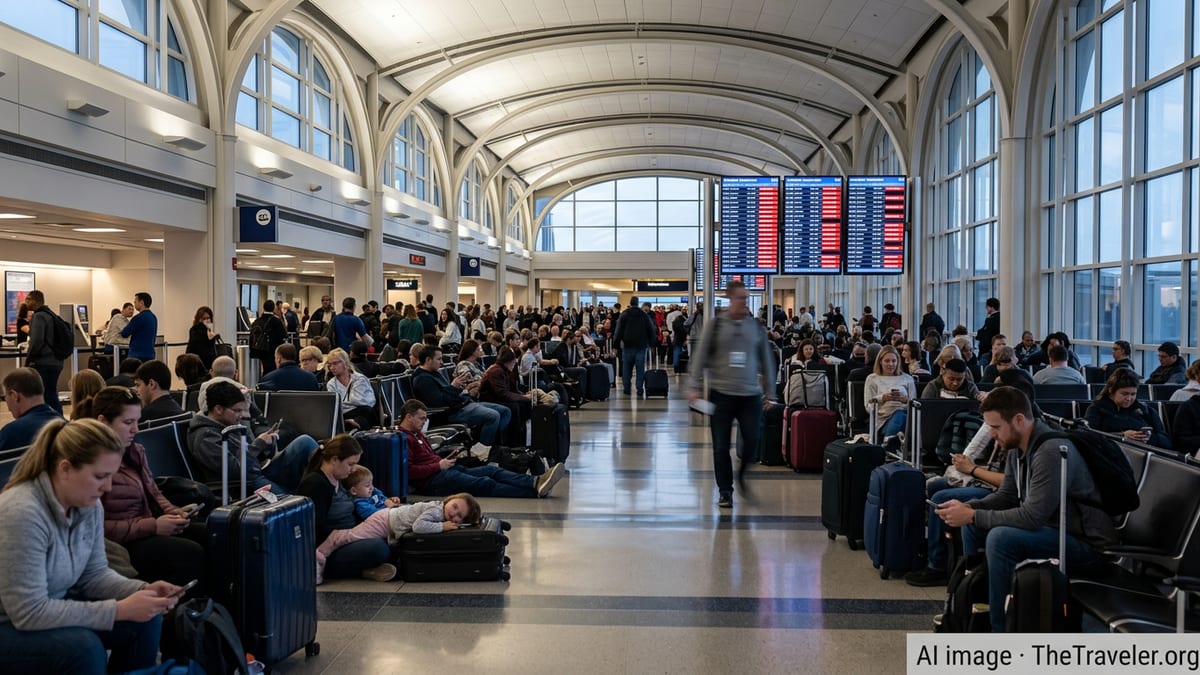
What happened at Reagan National
Publicly available information indicates that a technical issue affecting the air-traffic control system that manages the Washington region triggered a ground stop that halted takeoffs and sharply limited landings at Reagan National. The disruption cascaded through airline schedules, leading to numerous cancellations and significant delays as aircraft and crews were left out of position.
Passenger accounts shared online describe aircraft being held at gates, flights returning to terminals after boarding, and last-minute cancellations as the outage unfolded. Travelers bound for Reagan National reported diversions to other airports and extended waits on the tarmac while airlines and air-traffic managers worked through the backlog.
Because Reagan National operates with tight capacity and a dense schedule of short-haul flights, even a relatively brief interruption can quickly ripple outward. When departures are paused, arriving flights may be diverted, and the knock-on effect often stretches well beyond the initial outage window as planes and crews struggle to get back on schedule.
The disruption comes on top of a winter marked by multiple large-scale storms and other operational challenges across the United States, leaving many travelers particularly sensitive to fresh delays and cancellations.
How many flights and travelers were affected
Initial tallies from flight-tracking data and media coverage point to hundreds of affected flights across the Washington-area airports over the course of the disruption, with Reagan National among the hardest hit because of its role as a key hub for domestic traffic along the East Coast.
At Reagan National, departure boards showed clusters of cancellations on key routes to major hubs in the Northeast and Southeast, along with a wave of delays extending several hours. For many travelers, this meant missed connections, overnight stays, and the need to rebook on already crowded flights in the days that followed.
Passenger reports suggest long lines at airline service desks and crowded gate areas as schedules unraveled. Some travelers reported being rebooked two or more days out, while others were offered rerouting through alternate airports such as Washington Dulles, Baltimore/Washington, or out-of-region hubs, depending on available seats.
Given Reagan National’s proximity to downtown Washington and its heavy use by business and government travelers, the timing of the disruptions also had an outsized impact on meetings, events, and time-sensitive trips.
What stranded passengers can do now
For travelers whose flights were cancelled at Reagan National, the fastest way to confirm new plans is typically through airline mobile apps or websites, where same-day and next-day options are often posted before they are visible at airport counters. Many carriers also allow free same-day changes when disruptions are caused by system outages or airspace restrictions.
Publicly available guidance from consumer advocates suggests that passengers should document their disruption, including flight numbers, cancellation notices, and any out-of-pocket expenses such as meals and lodging. This record can be useful when requesting compensation, travel credits, or reimbursement where airline policies allow.
Travel insurance, where purchased, may offer additional protection for extended delays, overnight stays, or missed connections. Policies vary significantly, so travelers are encouraged to review coverage details, particularly clauses related to air-traffic control problems and system outages.
For those with time-sensitive plans, looking at alternative airports in the region can improve the odds of moving sooner. Limited seats may be available from Washington Dulles or Baltimore/Washington, or from cities within train distance if travelers can reposition by rail or car to catch an earlier departure.
What to know if you are flying soon
While operations at Reagan National typically resume once the underlying issue is resolved, schedules can remain fragile for several days as airlines reposition aircraft and crews. Travelers with upcoming flights into or out of the airport may see schedule changes, aircraft swaps, or tighter connection times even after the main disruption has passed.
Travel experts often recommend that passengers monitor flight status closely in the 24 hours before departure and again on the day of travel. Early-morning flights are sometimes less affected by residual delays, but in the aftermath of a large-scale outage, any part of the day can see shifting departure and arrival times.
Allowing extra time at the airport can help absorb unexpected changes, especially if security lines grow as multiple delayed flights converge. Packing essential medications, chargers, and a change of clothes in carry-on luggage is also widely advised, in case checked bags become separated during rebookings or diversions.
Travelers connecting through Reagan National should pay particular attention to minimum connection times. When possible, choosing longer layovers or nonstop flights during rebooking can reduce the risk of missing onward connections while the system remains under stress.
Policy context and the growing strain on air travel
Reagan National has long operated under strict capacity, slot, and perimeter rules designed to balance demand with safety and noise considerations in a tightly constrained urban setting. As traffic has grown, the margin for error during disruptions has narrowed, making any extended interruption more likely to cause widespread cancellations.
Recent seasons have also underscored how vulnerable the broader U.S. air-travel system is to overlapping pressures, including severe weather, staffing constraints, and aging infrastructure. When a regional hub like the Washington airspace experiences a systems issue, the impact can extend far beyond local airports, affecting itineraries across the country.
Industry analysts note that as airlines run fuller schedules with high seat occupancy, rebooking options become more limited when things go wrong. This dynamic is keenly felt at constrained airports like Reagan National, where there is little spare gate or runway capacity to absorb unexpected surges once flights resume.
For travelers, the latest disruption at Reagan National serves as another reminder of the value of flexible itineraries, real-time alerts, and contingency planning, particularly during busy travel periods or seasons known for operational challenges.