

More news on this day
Canada’s air travel network is grappling with fresh disruption as Montréal–Trudeau International Airport reports 79 delayed departures and 20 cancellations, with regional operators such as Jazz Aviation, mainline carrier Air Canada, Endeavor Air and several other airlines struggling to keep schedules on track.
Get the latest news straight to your inbox!
Heavy Disruptions Ripple Through Montréal–Trudeau
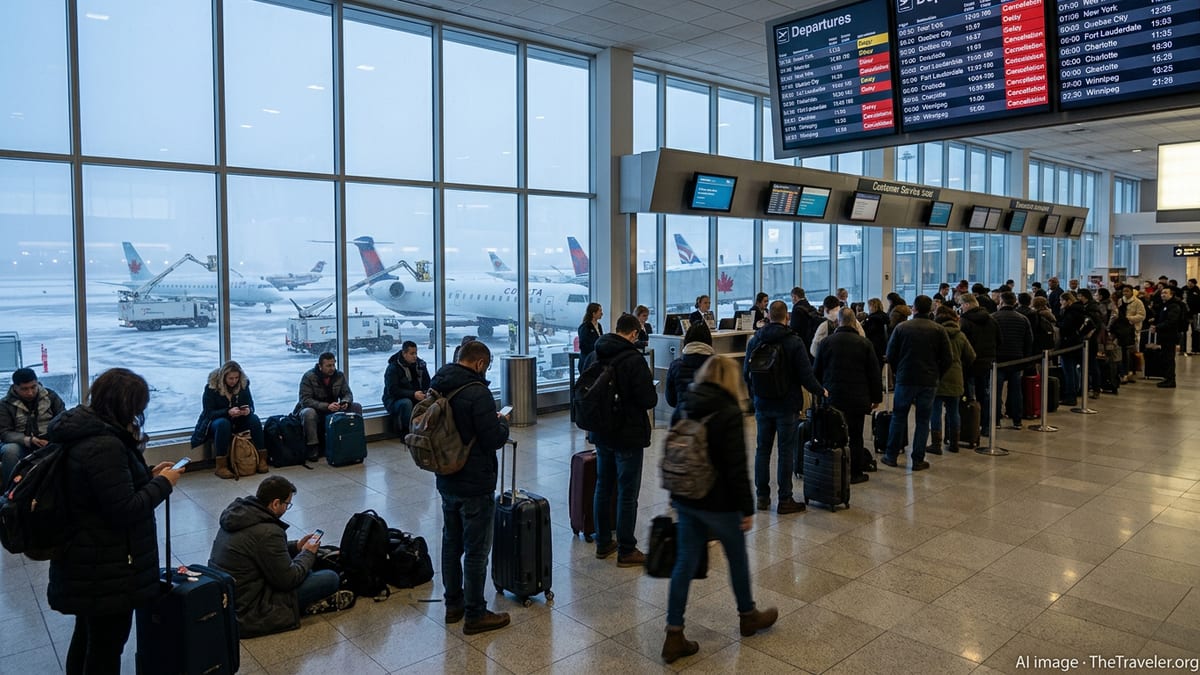
Operational data published on Tuesday indicates that Montréal–Trudeau International Airport is again facing a wave of irregular operations, with 79 flights delayed and 20 cancelled over the course of the day. The figures cover a mix of domestic, transborder and international services, affecting thousands of passengers at one of Canada’s busiest hubs.
The latest disruptions are concentrated among regional and feeder services, many of them operated under major-brand banners such as Air Canada Express and Delta Connection. Jazz Aviation, which flies on behalf of Air Canada, features prominently among the affected flights, alongside Endeavor Air services linked to Delta and other North American regional carriers connecting Montréal with U.S. and Canadian cities.
Publicly available airport departure boards and flight-tracking platforms show knock-on effects accumulating throughout the day as aircraft and crews fail to return to their scheduled rotations on time. The result is a rolling pattern of late departures, gate changes and last-minute cancellations that has left long lines at check-in desks and customer service counters.
Travel forums and social media posts from passengers at the airport point to extended waiting times, stressed connections and uncertainty over onward travel. Some travelers report being rebooked on later flights or rerouted through Toronto Pearson and other hubs as airlines attempt to clear backlogs.
Weather, Congestion and Network Strain Combine
The disruption at Montréal–Trudeau comes as Canada’s commercial aviation system is already under seasonal pressure. Recent weeks have brought a mix of winter-like weather episodes, including freezing rain and snow in parts of Quebec and Ontario, forcing airlines to implement de-icing programs and ground-handling safety protocols that inevitably slow operations.
Industry analyses of Canadian and U.S. on-time performance over the past months have highlighted how quickly localized weather or runway constraints can cascade into widespread delays. When aircraft start the day behind schedule on early-morning sectors, that lag can propagate across multiple flights, particularly for regional jets that operate several short hops daily.
Regional carriers such as Jazz Aviation and Endeavor Air are especially exposed to these ripple effects because they operate dense schedules with limited spare capacity. When one aircraft is held at a congested airport or faces an extended ground stop, subsequent flights on that same jet often depart late or are consolidated, sometimes resulting in outright cancellations.
Operational bulletins and public travel advisories in recent weeks have also underscored the strain on ground operations, from ramp staffing to baggage systems. Any slowdown on the ground can quickly translate into longer turnaround times, complicating efforts to recover after an initial disruption.
Air Canada, Jazz and Endeavor Services Particularly Affected
The current wave of delays and cancellations at Montréal–Trudeau has had a disproportionate impact on services marketed by Air Canada and Delta via their regional partners. Flights sold under the Air Canada brand but operated by Jazz Aviation, using smaller regional jets, account for a significant share of today’s irregular operations.
Publicly available information on Jazz Aviation’s schedule shows that the carrier is responsible for a large portion of short-haul flights linking Montréal with other Canadian cities and nearby U.S. destinations. When those rotations are disrupted, options for quick re-accommodation are limited, particularly on routes with only a handful of daily frequencies.
Endeavor Air, which operates as Delta Connection, has also seen Montréal-linked services caught in the turbulence of broader network challenges. Delays on feeders to and from U.S. hubs can leave travelers stranded mid-journey, especially when minimum connection times are already tight and evening bank flights are heavily booked.
Larger mainline aircraft operated directly by Air Canada are not immune either. Data from Canadian and U.S. transport regulators over recent seasons have documented recurring punctuality issues at major hubs, and Montréal is frequently cited alongside Toronto as an airport where winter weather, air traffic control constraints and ground congestion regularly converge.
Passenger Frustration Highlights Ongoing Reliability Concerns
Today’s disruption at Montréal–Trudeau adds to a pattern of reliability concerns that has dogged Canadian air travel in recent years. Travelers have taken to online platforms to describe missed holidays, shortened trips and unplanned overnight stays caused by repeated delays and cancellations, particularly during peak winter travel periods.
Consumer advocates point to Canada’s Air Passenger Protection Regulations, which set out compensation and care standards for certain types of disruptions. However, determining eligibility often depends on whether a delay is attributed to airline-controlled issues, such as crew or maintenance, or to external factors like severe weather or air traffic control restrictions.
Publicly available guidance from regulators and airlines emphasizes that passengers should keep all documentation, including boarding passes and receipts for meals or hotels, when flights are significantly delayed or cancelled. Travelers are generally encouraged to check their flight status before heading to the airport and to consider flexible rebooking options when weather advisories or operational alerts are issued.
The recurrence of large-scale delays at major Canadian hubs has also spurred wider debate about infrastructure investment, staffing resilience and airline scheduling practices. Analysts note that tight turnarounds, ambitious schedules and growing demand can leave little margin for recovery when unexpected events strike, making days like the current one at Montréal–Trudeau increasingly familiar to frequent flyers.
What Travelers Through Montréal Should Do Now
For passengers scheduled to travel through Montréal–Trudeau in the coming hours, publicly available travel advisories recommend building in extra time for check-in, security screening and border formalities. With numerous flights already showing late departures, timelines for baggage drop-off and gate closure may shift with little notice.
Aviation experts generally advise checking flight status directly with the airline’s digital channels and signing up for notifications, as departure boards at the airport can lag behind schedule changes. When disruptions are widespread, call centers and in-person customer service desks often face long queues, making self-service rebooking tools particularly valuable.
Travelers with tight connections, especially on international itineraries involving U.S. preclearance or onward long-haul flights, may wish to explore earlier departures or alternative routings where possible. Those whose trips are time-sensitive, such as cruises, events or tours, frequently opt to arrive a day early in the destination city during periods of heightened disruption risk.
While airlines serving Montréal–Trudeau work to stabilize their operations after today’s wave of delays and cancellations, the episode serves as another reminder that Canadian air travel remains vulnerable to a combination of weather, congestion and network complexity. For passengers, preparation, flexibility and an understanding of their rights continue to be the most effective tools in navigating an increasingly unpredictable travel environment.