

More news on this day
Hundreds of passengers were left stranded at Vancouver International Airport as a wave of disruptions involving Jazz, Pacific Coastal Airlines, Air Canada, WestJet and other carriers triggered at least 23 flight cancellations and 109 delays, snarling travel across Western Canada and key transborder routes.
Get the latest news straight to your inbox!
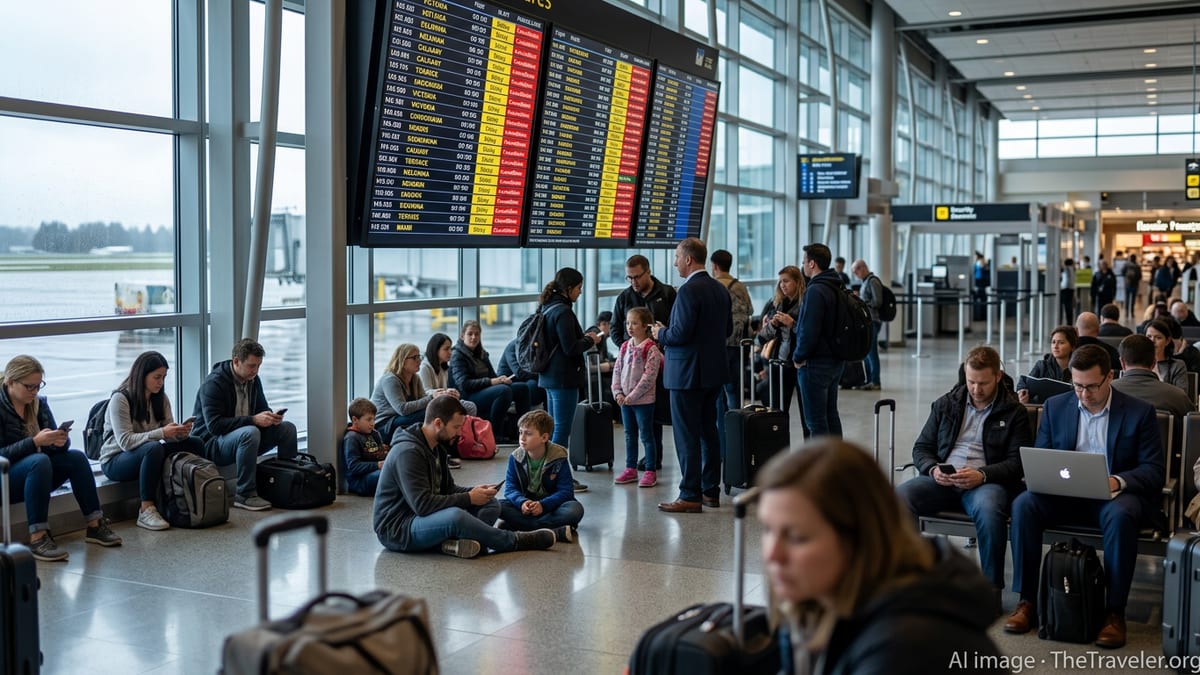
Ripple Effect Across Western Canada and Beyond
Operational data and airport tracking boards on Monday indicated that Vancouver International Airport was experiencing an unusually high volume of schedule disruptions, with dozens of departures and arrivals either cancelled outright or facing significant delays. The impact extended across a mix of regional and mainline services, affecting both domestic connections and international routes.
Flights operated by Jazz and Pacific Coastal Airlines, which provide crucial regional links for British Columbia, were among those heavily affected. Cancellations and rolling delays on these carriers disrupted short-haul routes to communities that rely on frequent shuttle-style services, contributing to crowding at gates and customer service desks as travellers sought alternative options.
Mainline carriers Air Canada and WestJet also reported a series of affected services, amplifying the disruption. Publicly available tracking information showed multiple flights either delayed by several hours or cancelled, with knock-on effects for passengers connecting onward to other Canadian cities or to the United States.
The latest disruption at Vancouver comes against the backdrop of a busy schedule at the hub, which supports a dense network of domestic and U.S. flights, including frequent links to major cities such as Calgary, Toronto and Miami. The high level of interconnection means that operational strain in Vancouver can quickly cascade across multiple airports.
Key Routes to Victoria, Kelowna, Calgary and Terrace Hit Hard
Among the most affected corridors were the short but vital hops between Vancouver and other British Columbia destinations, particularly Victoria, Kelowna and Terrace. Public schedules show that these routes are typically served by a combination of Jazz, Pacific Coastal Airlines, Air Canada and WestJet, with dozens of flights per week under normal conditions.
On Monday, disruptions to this regional web were evident. Reports from passengers and live departure boards pointed to cancellations on shuttle-style services, forcing travellers to contend with rebookings later in the day or even the following morning. For some, the loss of a single frequency meant missed business appointments, medical visits or onward flights.
Connections to Calgary, a major Western Canadian hub, were also affected. Calgary-bound services form a key part of the flow through Vancouver, feeding domestic and international networks. Operational issues in Vancouver, combined with winter-weather sensitivities in the interior and Prairies, made this corridor particularly vulnerable to delay.
In northern British Columbia, Terrace flights are a lifeline for residents who depend on air travel for access to larger centres. Delays and cancellations on this route left passengers with few immediate alternatives, heightening frustration as they monitored departure screens for updates on revised departure times.
Transborder Routes Including Miami Also Disrupted
The wave of delays and cancellations was not confined to domestic traffic. Data from published route information shows that Vancouver maintains several non-stop links to U.S. destinations, including Miami, alongside other major American hubs. Disruptions to these services complicated travel plans for leisure and business passengers heading south.
Travellers booked on Vancouver to Miami flights reported extended waits and schedule changes, with some facing missed cruises, tours or tight connections in Florida and beyond. For others, long-haul itineraries involving multiple legs through Vancouver and U.S. gateways were thrown into disarray as departure times shifted repeatedly.
Air Canada and WestJet typically share a substantial portion of Vancouver’s transborder market, while regional partners and codeshare arrangements provide additional connectivity. When disruptions cascade through this network, rebooking becomes more complex, particularly during busy travel periods when alternate seats are limited.
According to publicly available travel advisories, passengers on affected Miami and other U.S.-bound routes were encouraged to monitor their bookings closely and to check in online as early as possible, in order to secure updated itineraries and avoid unnecessary time spent in check-in lines at the terminal.
Operational Strain, Weather and Air Traffic Constraints
The exact combination of factors behind Monday’s disruption at Vancouver included a mix of operational strain and broader constraints that have challenged Canadian aviation in recent seasons. Published coverage of recent events has highlighted how staffing pressures, aircraft repositioning needs and tight turnaround times can all magnify the impact of even minor schedule changes.
Weather remains a recurring variable for Western Canada’s air network. Low cloud, fog, heavy rain or snow in coastal and interior regions can quickly limit capacity on popular routes such as Vancouver to Victoria or Kelowna, forcing airlines to consolidate flights or adjust departure sequences. When such measures occur across multiple carriers at once, cancellations and multi-hour delays become more likely.
Air traffic management issues have also been cited in previous episodes of disruption at Vancouver, where airspace and runway capacity are tightly managed during peak banks of departures and arrivals. When flow restrictions or ground delays are introduced, airlines may be required to stretch their schedules, leading to missed connections and overnight stranding for some passengers.
Industry observers note that these structural pressures can interact with each other in ways that are difficult for travellers to anticipate. A delay on a regional inbound flight, for example, can remove a critical aircraft or crew from later rotations, ultimately resulting in a cancellation on an unrelated route hours later.
Travellers Seek Alternatives Amid Cancellations and Delays
As cancellations mounted and departure boards filled with yellow and red status updates, travellers at Vancouver International Airport turned to a variety of strategies to salvage their plans. Publicly available guidance from airlines and consumer groups suggests that affected passengers often start by using carrier apps and websites to rebook, avoiding long queues at staffed service counters.
Some travellers sought to reroute through other hubs such as Calgary, Toronto or Seattle, hoping to bypass congestion in Vancouver. Others looked at alternative modes of transport for shorter domestic routes, including ferries between Vancouver and Victoria or long-distance bus and car travel to interior cities like Kelowna.
Recent enforcement actions and updated passenger-protection rules in Canada have increased attention on compensation and refund entitlements. Consumer advocates encourage passengers who experience long delays or outright cancellations to keep records of boarding passes, receipts and communication with airlines so they can pursue claims where regulations apply.
With forecasts indicating that operational pressures and variable weather conditions may continue through the late winter travel period, travellers using Vancouver International Airport in the coming days are being advised, according to multiple travel advisories and news reports, to build extra time into itineraries, monitor flight status frequently and prepare contingency plans for critical journeys.