

More news on this day
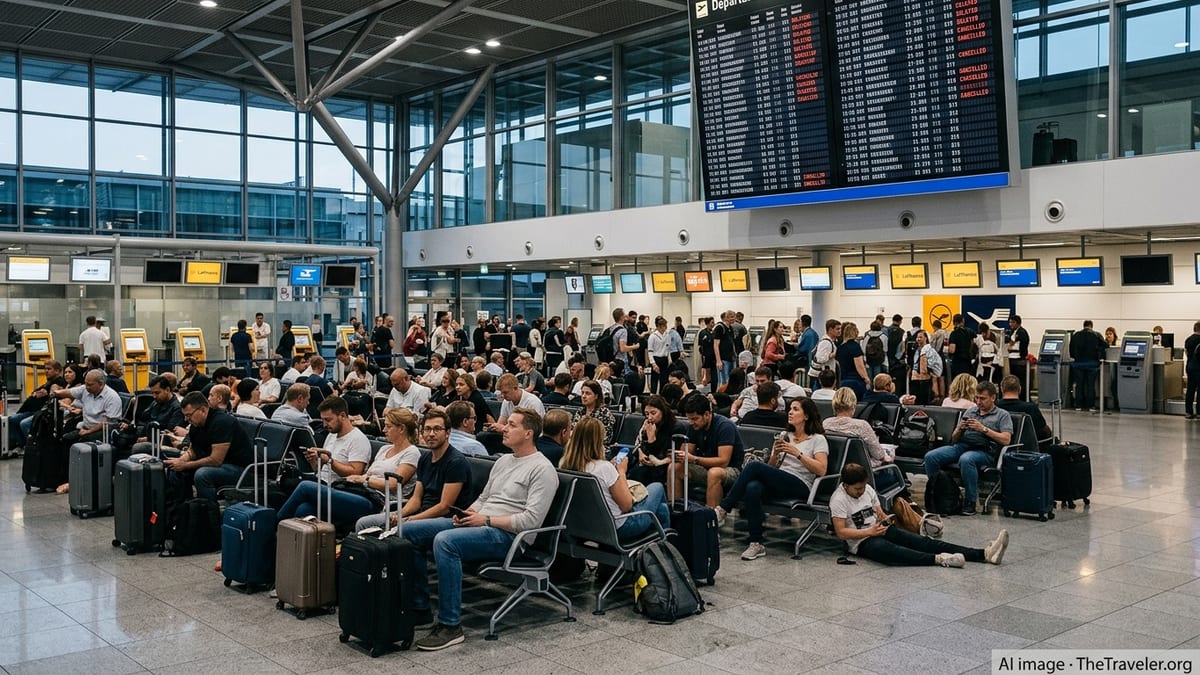
Hundreds of air passengers were left stranded on Sunday at Frankfurt and Munich airports in Germany after a wave of operational disruptions delayed at least 214 flights and canceled three more, affecting routes across North America, Europe and domestic German destinations.
Widespread Delays Hit Two of Europe’s Busiest Hubs
Frankfurt Airport and Munich Airport, both central hubs within Europe’s aviation network, experienced significant schedule disruption as delays built through the day. Publicly available flight-tracking data showed 214 departures and arrivals running behind schedule at the two airports combined, with three flights canceled outright, forcing passengers to rebook or wait for alternative connections.
The disruption affected a mix of long haul and short haul services, including transatlantic links to North America, intra-European routes and domestic connections within Germany. With both airports functioning as key transfer points, relatively small numbers of cancellations still triggered extensive knock-on delays as aircraft and crews fell out of position.
Reports from German and international media outlets described crowded terminals, long lines at rebooking counters and passengers attempting to rearrange journeys using airline apps as well as on-site support desks. In some instances, travelers reported missed onward connections and overnight stays after late-arriving aircraft could no longer meet curfews or crew duty-time limits.
By late afternoon, schedules remained heavily compressed, with available information indicating that many flights were operating, but with extended departure and arrival times that complicated tight connections and onward rail or bus travel plans.
Lufthansa, EasyJet and Other Carriers Face Knock-on Effects
The majority of affected flights involved major European carriers that rely on Frankfurt and Munich as key nodes. Public schedules showed Germany’s flag carrier Lufthansa bearing a significant share of the disruption at both hubs, reflecting the airline’s dense network of feeder and long haul services through these airports.
Low cost airlines such as EasyJet also reported delays on selected routes, particularly on services linking German hubs with other European cities. Additional carriers operating transatlantic and regional flights, including other European network airlines and North American partners, experienced secondary impacts when aircraft rotations and shared codeshare schedules were disrupted.
Operational data and media coverage suggested a combination of factors behind the irregular operations, including aircraft arriving late from earlier legs, crew scheduling challenges and tight turnaround windows at busy gates. Once delays reached a certain threshold, airlines began trimming a small number of flights from the schedule, resulting in the three cancellations that left passengers seeking rebooking options.
Because both Frankfurt and Munich serve as major transfer centers, disruptions to one bank of flights quickly influenced later departures. Aircraft that arrived significantly behind schedule could not be turned around in time for planned connections, leading to cascading delays even for flights not initially affected.
Transatlantic, European and Domestic Routes Disrupted
The irregular operations had clear geographic reach. Flight logs and airport information indicated that transatlantic services to cities in North America, including major hubs in the United States and Canada, experienced late departures or arrivals, sometimes by several hours. These delays risked causing missed domestic connections in North America for travelers originating in Germany or connecting via Frankfurt and Munich.
Within Europe, flights to and from major capitals and regional centers, including destinations in France, Italy, Spain and Central and Eastern Europe, also encountered schedule changes. Passengers heading to popular weekend and business destinations reported extended waiting times at gates and tight margins for catching rail services after landing.
Domestic German routes were similarly affected, especially services linking Frankfurt and Munich with cities such as Berlin, Hamburg and Düsseldorf. For some travelers, delayed domestic legs meant missed international departures, prompting complex rerouting via alternative hubs or overnight stays near the airports.
Observers noted that recent weather-related and operational challenges across parts of Europe and North America have left airlines and airports working with limited slack in their systems. When one hub experiences disruption, aircraft and crew are often already stretched, limiting the ability to quickly restore normal patterns.
Passenger Experience and Consumer Rights in Focus
As queues formed at transfer desks and customer service counters, passenger experiences varied widely depending on ticket type, connection length and airline policies. Some travelers were able to secure same day rebookings or rerouting via alternative airports, while others faced overnight delays or longer waits for available seats on subsequent flights.
According to publicly available guidance, travelers departing from or arriving into the European Union are covered by the bloc’s air passenger rights framework, which sets out entitlements in cases of long delay, cancellation or denied boarding. The level of support and potential compensation depends on the length of the delay, the distance of the flight and the reason for the disruption, with severe weather and certain extraordinary circumstances treated differently from operational or scheduling issues.
Consumer organizations routinely advise passengers to retain documentation of boarding passes, booking confirmations and receipts for meals or accommodation when flights are heavily delayed or canceled. In situations such as the disruptions in Frankfurt and Munich, such records may later help travelers pursue reimbursements or compensation if regulations apply.
Travel experts also highlight the importance of monitoring airline apps and airport departure boards closely during periods of irregular operations, checking in early, and considering longer connection times when traveling through major hubs where even modest disruptions can ripple across multiple banks of flights.
Outlook for Schedules and Travel Planning
By Sunday evening, available data indicated that operations at both Frankfurt and Munich were gradually stabilizing, though with many flights still operating off their original scheduled times. Airlines worked to reset aircraft rotations and crew schedules so that early morning departures on Monday could depart closer to plan.
However, residual delays are likely to continue for some time as carriers reposition aircraft and accommodate stranded or rebooked passengers. Travelers scheduled to pass through the two German hubs over the coming day have been urged in public advisories and media reports to verify flight status frequently and to allow additional time for connections.
Analysts note that recent episodes of disruption at European hubs illustrate the pressures on an aviation system still balancing strong demand with tight capacity, ongoing staffing constraints in some areas and the continuing influence of weather and geopolitical factors on global air traffic flows.
For travelers planning itineraries that rely on Frankfurt or Munich as key transfer points, the latest disruptions serve as a reminder to build in buffers where possible, consider flexible tickets when schedules are mission critical, and familiarize themselves with air passenger rights in case future journeys are affected by similar large scale delays and cancellations.