

More news on this day
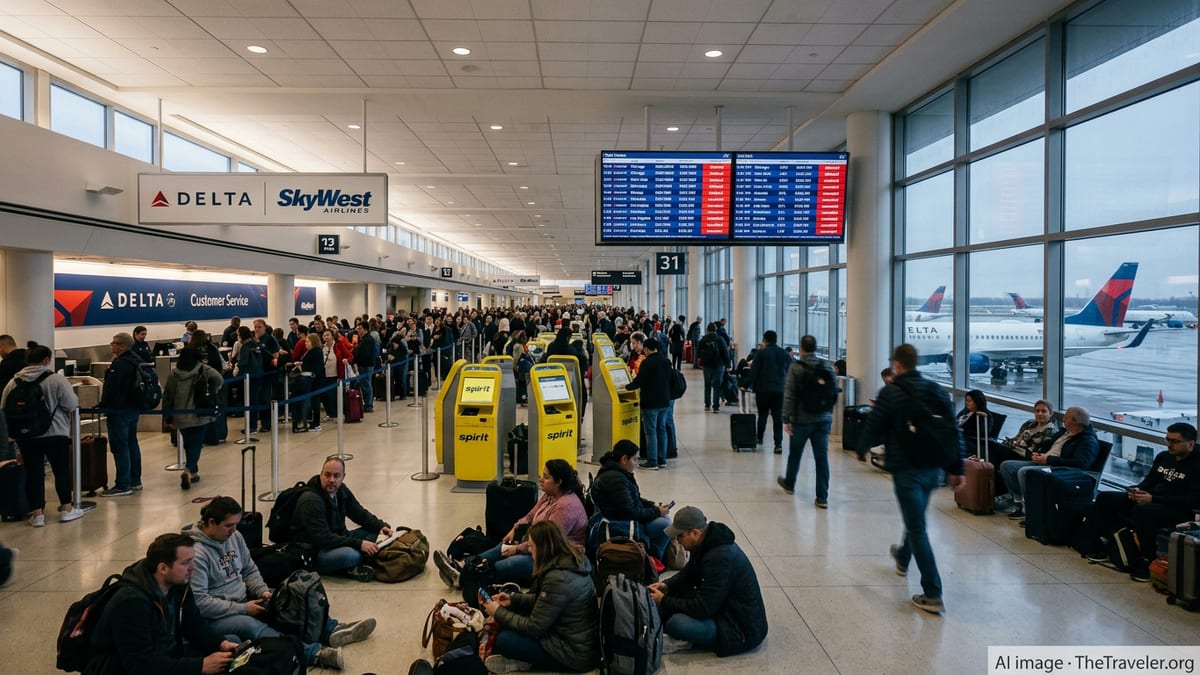
Hundreds of travelers were left stranded at Detroit Metropolitan Wayne County Airport on Sunday as a fresh wave of flight disruptions rippled across one of the Midwest’s busiest hubs, with publicly available tracking data indicating at least 20 cancellations and roughly 150 delays affecting departures and arrivals on multiple airlines.
Get the latest news straight to your inbox!
Detroit Hub Hit by Another Day of Disruptions
Detroit Metropolitan Wayne County Airport, a major connecting hub for domestic and international traffic, experienced a difficult operational day on March 22, with data from widely used flight-tracking services showing around 20 flight cancellations and more than 140 delays by late afternoon. The disruptions affected both arriving and departing services, stranding passengers in terminals and forcing many to arrange last-minute changes to their itineraries.
Delta Air Lines, which maintains a large hub at Detroit, appeared to account for a significant share of the schedule changes, while low-cost carriers such as Spirit Airlines and major domestic operators including Southwest Airlines were also listed among the affected airlines. Travelers reported rolling delays that stretched for hours before some services were ultimately cancelled, contributing to long lines at customer-service counters and crowded seating areas around the gates.
Public dashboard information from aviation analytics platforms indicates that the cumulative impact of the cancellations and delays has disrupted the tightly timed wave structure that typically underpins hub operations. Once early services are pushed back or dropped, subsequent rotations can be affected as aircraft and flight crews fall out of position, creating a cascading effect throughout the day.
Airport information pages emphasize that Detroit Metro itself is officially open and operational, but the day’s statistics underscore how quickly normal operations can be strained when multiple airlines face overlapping weather or staffing challenges across their networks.
Key Routes to New York, London and Toronto Affected
The disruption has been particularly visible on several of Detroit’s busiest business and leisure routes. Flights to New York area airports, including LaGuardia and John F. Kennedy, showed a cluster of delays and a handful of cancellations, according to live departure boards and third-party tracking sites. These routes are heavily used by corporate travelers and weekend visitors, amplifying the impact of even relatively small schedule cuts.
Transatlantic services have not been immune. One of Detroit’s flagship long-haul links, the route to London, saw extended delays and aircraft swaps noted on public tracking tools. Even when flights remained scheduled to operate, revised departure times and shifting equipment assignments added uncertainty for passengers with tight onward connections in Europe or back in the United States.
Regional international links also experienced strain. Flights between Detroit and Toronto, an important cross-border business and leisure corridor, recorded multiple delayed departures and arrivals. Similar issues appeared on services to major U.S. hubs such as Chicago and Atlanta, where congestion and weather-related constraints elsewhere in the country have been contributing to a volatile operating environment throughout March.
For travelers bound for popular leisure destinations, including Cancun and other sun markets, the disruptions translated into hours of additional waiting at the gate or in security and check-in queues. Published coverage of broader network conditions this month highlights how storms and strong systems across North America have left many carriers with limited spare aircraft and crews, leaving little margin when local conditions tighten.
Weather, Crewing and Network Knock-On Effects
The latest round of issues at Detroit is unfolding in the wake of a series of significant late-winter storms that have swept across large parts of the United States and Canada in recent weeks. Meteorological summaries show that the March 13 to 17 storm complex brought blizzard conditions, ice and severe weather to parts of the Midwest and Great Lakes region, disrupting road and air transport and prompting thousands of flight cancellations nationwide. Those events placed pressure on airline schedules that has continued into the following days.
Operational analyses note that even when the immediate weather clears, airlines can require several days or more to fully restore normal rotations. Aircraft may still be out of their planned locations, while some pilots and flight attendants may be displaced or approaching duty-time limits, resulting in further last-minute cancellations. Detroit’s role as a connecting hub means that disruptions upstream in other cities can translate into delayed or cancelled departures even when local skies appear relatively calm.
Publicly available commentary from aviation analysts has frequently pointed to crew availability as a lingering vulnerability in the system, particularly during shoulder seasons when irregular operations collide with already tight staffing. On days like Sunday, a combination of recovering from earlier storms, pockets of low visibility or wind, and heavy traffic flows through hubs such as Atlanta, Chicago and New York can converge to create widespread challenges for airlines trying to keep to published schedules.
In this context, the 20 cancellations and roughly 150 delays recorded at Detroit Metro form part of a broader national pattern of elevated disruption, rather than an isolated local incident. The cumulative effect for travelers, however, is experienced one missed connection or unexpectedly long layover at a time.
Impact on Passengers Inside the Terminals
Inside Detroit’s McNamara and Evans terminals, the operational statistics translated into a difficult day for passengers. Social media posts and informal accounts described concourses dotted with travelers stretched out on seats and floors, surrounded by carry-on luggage and wrapped in airline-provided blankets as they waited for rebooked flights. Long lines formed at both traditional customer service counters and self-service kiosks as travelers attempted to secure alternative connections.
Families heading to and from school breaks and spring vacations were particularly affected, with delays to sun destinations such as Cancun and Florida adding stress to carefully planned holidays. Business travelers connecting between major centers like New York, Toronto, Chicago and London faced the prospect of missed meetings or truncated trips as schedules slipped by hours.
Airport operations pages emphasize that services such as food outlets and retail remain open to assist stranded passengers, but crowding can become an issue during peak disruption. Reports indicate that some Detroit-area hotels near the airport began to fill with displaced travelers who were unable to secure same-day departures, repeating a pattern seen during recent major storm events when large numbers of passengers were forced to overnight near the airport.
Travelers posting publicly about the situation have highlighted both frustrations and occasional bright spots, such as successful same-day rebookings or proactive rerouting through alternative hubs when space becomes available. Overall, however, the picture from Detroit on Sunday has been one of uncertainty and extended waits.
What Travelers Can Do as Disruptions Continue
Aviation and consumer-travel advisories commonly recommend that passengers facing conditions like those at Detroit Metro on Sunday monitor their flight status closely through airline apps and airport information pages. Same-day schedule changes can occur repeatedly, particularly when aircraft and crews are being shifted around to recover disrupted networks, so relying solely on printed boarding passes or early-morning information can leave travelers unprepared.
Travel experts often advise allowing extra layover time when connecting through weather-sensitive hubs during late winter and early spring, especially on itineraries involving multiple domestic links before an international flight. In periods of widespread disruption, routes to New York, Chicago, Toronto and Atlanta can all experience concurrent strain, which may make long-haul departures to destinations such as London or Cancun more vulnerable to knock-on delays.
Public information from consumer agencies also suggests that travelers familiarize themselves with airline policies on rebooking, vouchers and refunds in the event of cancellations or significant delays. While specific entitlements vary by carrier and reason for disruption, understanding the options ahead of time can help passengers make quick decisions about whether to accept later connections, request different routings or seek overnight accommodation.
With Detroit Metro playing a central role in linking the Midwest to major cities across North America and overseas, any day marked by dozens of cancellations and well over a hundred delays sends a clear signal that the broader air travel system remains sensitive to late-season storms and tight staffing. For now, publicly available forecasts and operational data suggest travelers may continue to face an unsettled period as airlines work to stabilize schedules across their networks.