

More news on this day
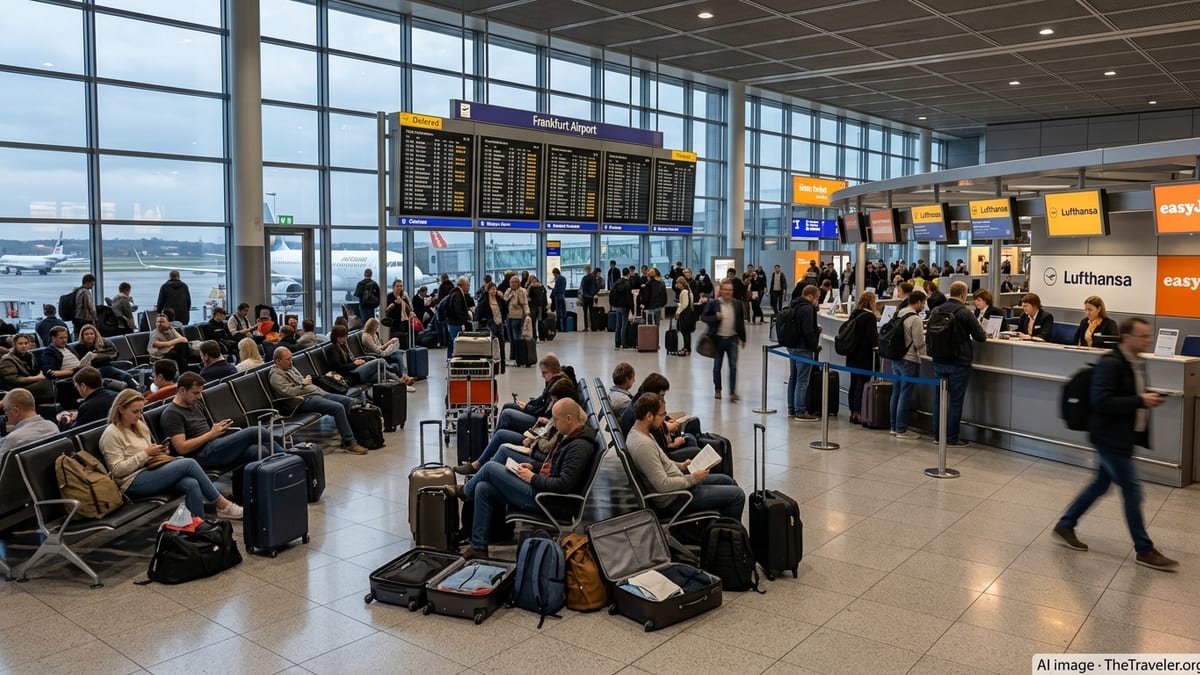
Hundreds of air travelers were left stranded at Germany’s two busiest southern hubs on Sunday as flight-tracking data showed 214 delays and three cancellations at Frankfurt and Munich international airports, disrupting operations for airlines including Lufthansa, EasyJet and several other European carriers.
Get the latest news straight to your inbox!
Widespread Delays Hit Germany’s Key Air Hubs
Frankfurt Airport and Munich Airport, two of Europe’s most important aviation gateways, experienced a fresh wave of operational disruption that rippled across multiple airlines and route networks. Publicly available tracking data indicated that a combined 214 flights were delayed and three were canceled across the two hubs over the course of the day, leaving departure boards dominated by late departures and revised arrival times.
The disruptions affected a mix of short-haul and long-haul services, with congestion building through the afternoon as delays cascaded from earlier rotations. Industry monitoring platforms showed that airlines were forced to adjust schedules repeatedly, with aircraft and crew out of position feeding into further knock-on delays at both airports.
Frankfurt, home base for Lufthansa and one of Europe’s primary intercontinental hubs, reported the highest concentration of affected flights. Munich, which also serves as a major hub for Lufthansa and a key transfer point for leisure and business traffic into central and eastern Europe, saw mounting delays as aircraft arriving late from other European cities struggled to keep to turnaround times.
Lufthansa, EasyJet and Other Carriers Face Operational Strain
The disruption was most visible for carriers that rely heavily on tight connections through Frankfurt and Munich. Publicly accessible schedules showed numerous delayed departures on Lufthansa’s network, particularly on routes feeding into and out of its long-haul banks. Delays on inbound narrow-body aircraft from across Europe contributed to late departures on onward services, including transatlantic flights.
Low-cost and point-to-point operators, including EasyJet and other European carriers, also reported delayed turnarounds as ground operations coped with a backlog of aircraft on the apron and at gates. While only a small number of flights were fully canceled, the volume of delayed departures created significant uncertainty for passengers planning onward travel from both German hubs.
According to published coverage and live flight feeds, some services operated with extended departure holds as crews waited for connecting passengers or final baggage loads from previously delayed sectors. In several cases, aircraft pushed back well after their scheduled departure times, resulting in the late arrival of the same aircraft at their next destination and further compounding the day’s disruption.
Transatlantic, European and Domestic Routes All Affected
The impact extended well beyond Germany’s borders. Frankfurt’s role as a primary gateway to North America meant that delays on feeder flights from across Europe and within Germany affected transatlantic departures. Passengers traveling to major hubs in the United States and Canada encountered late departures, missed connections and extended waiting times as schedules were adjusted.
Within Europe, flights linking Frankfurt and Munich to key capitals and regional cities experienced rolling delay notifications. Services to destinations in France, Italy, Spain, the United Kingdom and Scandinavia were among those displaying revised departure times, limiting the ability of travelers to make same-day connections or business meetings. Domestic services within Germany, particularly links to cities such as Berlin, Hamburg and Düsseldorf, were also caught in the disruption cycle.
While only three flights were reported as outright cancellations, the pattern of delays proved highly disruptive to travelers with tight itineraries. Many passengers arriving late into Frankfurt and Munich from other European or domestic points were unable to board their originally booked long-haul flights and had to be rebooked onto later services, often involving overnight stays or significant rerouting via other hubs.
Hundreds of Passengers Stranded and Rebooked
As the day progressed, terminal crowds grew at both airports, with publicly shared images and reports showing long lines at transfer and rebooking desks. Passengers whose flights were severely delayed or canceled faced hours of uncertainty as airlines worked through backlogs to reassign seats on later departures. Those with long-haul connections were among the hardest hit, particularly travelers heading to North America who depend on limited daily frequencies.
Airport information displays reflected a high concentration of flights departing more than an hour behind schedule, and in some cases significantly longer. This contributed to clusters of travelers waiting near departure gates and customer service counters, with many left searching for alternative connections through other European hubs such as London, Paris or Amsterdam once it became clear that original itineraries could not be maintained.
According to widely available passenger-rights guidance in the European Union, travelers experiencing long delays or cancellations may be entitled to assistance such as meals, accommodation and, in some circumstances, financial compensation. In practice, however, the process of securing support often depends on passengers navigating airline procedures and understanding whether the disruption falls under compensable categories.
Ongoing Vulnerability of German Hubs to Disruptions
The latest operational difficulties highlight the ongoing vulnerability of major German hubs to days of concentrated disruption, whether triggered by weather, staffing constraints, technical issues or knock-on effects from international events. Recent seasons have seen Frankfurt and Munich repeatedly cited in independent analyses as among the European airports with notable levels of delays and schedule volatility, particularly during peak travel periods.
Aviation analysts note that the highly interconnected nature of hub operations means that even a relatively small number of canceled flights can have an outsized impact when paired with a large volume of delays. Once aircraft and crew rotations are disrupted in the morning and early afternoon, it can take many hours for schedules to stabilize, leaving passengers stranded well into the evening.
With the spring and summer travel seasons approaching, the latest incident is likely to renew scrutiny of how airlines and airports in Germany plan for irregular operations, manage passenger care and communicate rapidly changing schedules. For travelers with upcoming itineraries through Frankfurt or Munich, publicly available advice continues to emphasize monitoring flight status closely, allowing extra connection time and preparing contingency plans in case disruption strikes again.