

More news on this day
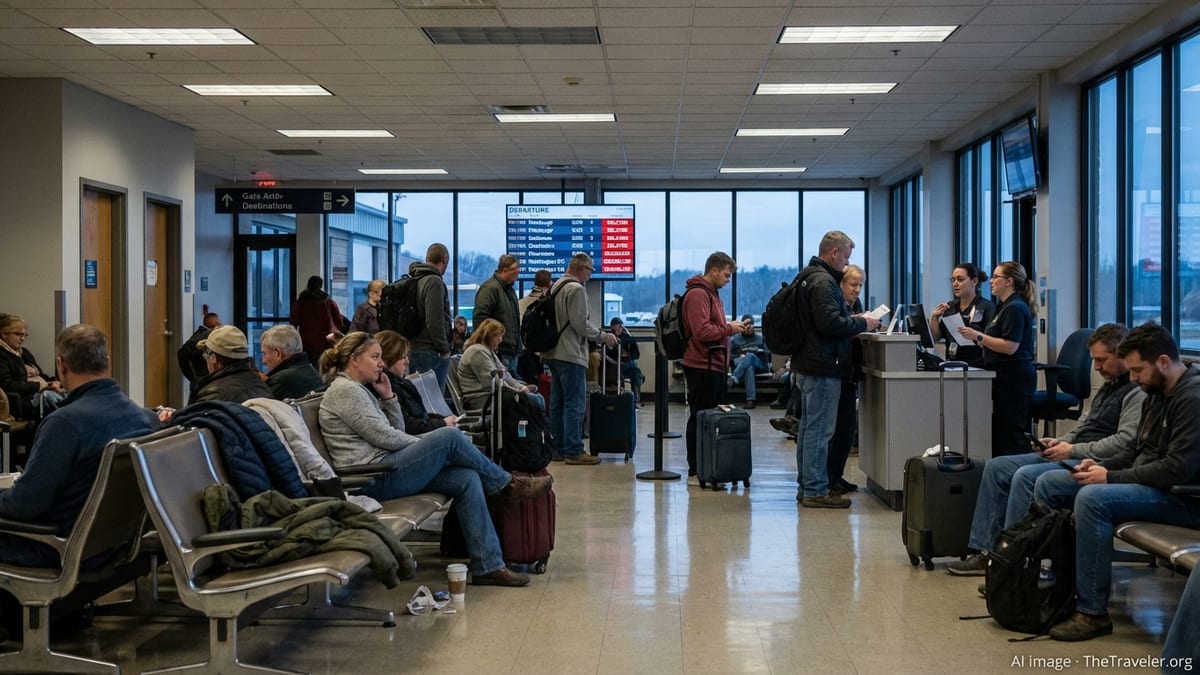
Hundreds of passengers were stranded at North Central West Virginia Airport on Sunday after three flights were delayed and three cancelled, triggering a fresh wave of disruptions for American Airlines, Piedmont Airlines and other regional carriers on routes linking smaller West Virginia communities with major hubs in Charleston, Pittsburgh, Baltimore and the Washington DC area.
Chain Reaction at a Small but Strategic Regional Airport
The disruption unfolded at North Central West Virginia Airport, a regional gateway that connects Clarksburg and Bridgeport to larger East Coast hubs. While the airport handles a fraction of the traffic seen at major metropolitan fields, its role in linking rural travelers to the broader U.S. air network meant that even a small number of affected flights had an outsized impact.
Airport and airline data showed three departures delayed and three cancelled across the day’s schedule, stranding and inconveniencing hundreds of travelers. Most of the affected services were operated under the American Eagle banner, including flights handled by Piedmont Airlines and other American Airlines regional partners. With limited daily frequencies and few alternative carriers, passengers quickly ran out of easy rebooking options.
Because regional airports like North Central West Virginia often rely on single-carrier dominance for key routes, any operational issue can cascade rapidly. A mechanical check, crew scheduling constraint or air-traffic-related slowdown at a major hub can translate into hours of uncertainty for travelers waiting in a small terminal hundreds of miles away.
The situation at North Central West Virginia Airport echoed a broader pattern of winter and operational disruptions that have affected U.S. aviation in recent weeks, as airlines balance tight staffing, heavy regional jet utilization and increasingly complex national airspace constraints.
Flights to Charleston, Pittsburgh, Baltimore and Washington DC Affected
The six impacted flights were primarily tied to critical feeder routes between North Central West Virginia and major East Coast cities. Passengers bound for Charleston, Pittsburgh, Baltimore and the Washington DC region reported missed connections, abandoned weekend plans and last minute scrambles for ground transportation and overnight accommodations.
For many travelers, the disruptions did not end in Clarksburg. Delayed morning departures meant missed afternoon and evening connections onward to destinations across the Midwest, South and Northeast. Others who were headed into North Central West Virginia found themselves marooned at larger hubs, unable to secure a replacement regional flight back to West Virginia on the same day.
In Pittsburgh and Baltimore, the impact showed up as gaps in the regional arrival and departure boards, with passengers arriving from other parts of the country only to learn that their short hop into North Central West Virginia had been scrubbed. At Washington-area airports, travelers on regional American Eagle services reported crowding at customer service counters as agents tried to rebook passengers on limited remaining seats.
Charleston, another vital link in West Virginia’s air network, also felt the knock-on effects. With connecting seats scarce, some travelers opted to book rental cars or shared rides to cover the multi hour drive between the two cities rather than wait for uncertain rebookings.
American Airlines and Piedmont Regional Operations Under Strain
American Airlines and its regional affiliate Piedmont Airlines bore the brunt of Sunday’s disruption at North Central West Virginia Airport, according to preliminary flight data. Piedmont, which operates many of American’s smaller regional jets under the American Eagle brand, has been a linchpin for connecting smaller Appalachian communities with larger hubs.
Regional carriers such as Piedmont operate on tight turn times and carefully balanced crew schedules. When a single inbound aircraft arrives late due to weather, air traffic congestion or maintenance checks at a hub like Charlotte, Pittsburgh or Washington, the delay often ripples through subsequent legs. In Sunday’s case, at least some of the delayed and cancelled flights appeared linked to upstream issues in the broader American network.
Industry analysts note that regional operations have been under particular stress this season, with airlines still contending with pilot shortages, high utilization of smaller jets and a national airspace system that leaves little margin for error. When the network is already stretched, even a modest disruption can translate into cancelled rotations rather than risk extended duty times for flight crews.
While American and Piedmont typically work to swap aircraft and crews to protect smaller markets, options at North Central West Virginia Airport are limited by infrastructure and schedule density. Once the cancellations were confirmed, stranded passengers had to compete for scarce seats on later departures from other nearby airports or accept next day itineraries.
Passengers Face Long Waits, Limited Alternatives and Rising Costs
For the hundreds of affected travelers, the operational details mattered less than the immediate reality of long lines, uncertainty and extra expense. With three flights cancelled outright and three others delayed significantly, the small terminal quickly filled with passengers seeking information from already stretched gate and ticketing staff.
Some travelers reported queuing repeatedly at the same counters as evolving aircraft and crew assignments forced further adjustments to departure times. Others relied on airline apps that were slow to update or displayed conflicting information compared with the airport’s departure boards, compounding frustration.
Accommodation and ground transportation became pressing issues as evening approached. North Central West Virginia Airport does not have the extensive on site hotel and transit networks common at major hubs, leaving passengers to secure last minute rooms at nearby properties or arrange long rides to homes and relatives scattered across the region. For those whose flights were technically delayed rather than cancelled, policies on hotel vouchers and meal credits were applied inconsistently, depending on the cause recorded by the airline.
Families with small children, elderly travelers and passengers on tight budgets were among the hardest hit. Some chose to abandon their trips entirely, while others cobbled together complex itineraries involving bus services, one way car rentals or rideshares to larger airports in Pittsburgh or Washington in hopes of catching alternative flights the following day.
Wider Context of Weather, Airspace Pressure and Government Constraints
The disruption at North Central West Virginia Airport did not happen in isolation. In recent weeks, U.S. airlines have faced a mix of winter storms, air traffic control staffing challenges and federal schedule reductions that have led to widespread cancellations and delays across the country. Major hubs from Charlotte to New York and Toronto have all experienced days of heavy disruption this winter, pushing carriers to trim schedules and prioritize resilience over pure capacity.
Industry observers say that regional airports often bear the brunt of these pressures. When airlines are forced to reduce flights or reassign aircraft due to a storm or a temporary ground stop at a large hub, smaller communities are frequently among the first to lose service for the day. The three cancellations at North Central West Virginia Airport fit this pattern, as carriers sought to preserve core trunk routes between larger cities while cutting less profitable regional segments.
At the same time, the federal government’s ongoing budget uncertainty has affected air traffic control staffing levels and prompted temporary schedule caps at some of the country’s busiest airports. These constraints can translate into longer ground holds, new routing requirements and slower recovery once weather systems pass, all of which ripple outward into the regional network.
Aviation analysts warn that as airlines continue to rely on regional partners like Piedmont, PSA and SkyWest to serve smaller markets, the vulnerability of those communities to national level shocks is likely to remain high unless carriers build more slack into aircraft and crew schedules.
Airport and Airline Response as Disruption Unfolded
North Central West Virginia Airport staff worked with airline station managers on Sunday to manage crowding, communicate rolling updates and assist passengers with rebooking and ground transport. Public address announcements and display boards were used throughout the afternoon, although many travelers said they still felt they were getting information in fragments.
Customer service teams for American Airlines and Piedmont, both at the airport and through call centers, faced heavy demand as passengers attempted to switch to earlier flights from other airports, change destinations or secure refunds. With regional flights from nearby airports also heavily booked due to broader winter disruptions, same day alternatives were scarce.
Airport officials urged passengers with travel planned for later in the day or early Monday to check flight status frequently before departing for the terminal and to allow extra time for security and check in. They also encouraged travelers with flexibility to consider rebooking for midweek departures, when loads and weather patterns can be more manageable.
Local authorities and tourism organizations monitored the situation closely, aware that reliable air links are crucial for both business and leisure travel in North Central West Virginia. For visitors who had been planning to connect through Charleston, Pittsburgh, Baltimore or Washington to reach the region, the day’s events served as a reminder of the delicate logistics that underpin modern air travel to smaller markets.
What Stranded Travelers Can Do When Flights Collapse
Travel experts say passengers caught in situations like Sunday’s should act quickly but strategically. The first priority is to secure a confirmed alternative, whether that is a rebooked flight on the same carrier, a routing through a different hub or a seat out of a nearby airport within driving distance. Calling the airline’s customer service line or using its mobile app while standing in the airport queue can double the chances of finding an acceptable option.
Where cancellations are attributed to controllable factors such as crew or maintenance issues, travelers may be entitled to meal vouchers, hotel stays or reimbursement for some incidental expenses, depending on airline policy. Keeping receipts and documenting conversations with airline staff can help when filing claims after the fact. If the cause is recorded as weather or air traffic control, compensation is typically more limited, although carriers may still offer goodwill gestures.
For those forced to stay overnight, securing accommodation early is critical in smaller markets where hotel supply is limited. Travelers able to share rides to larger hubs like Pittsburgh or Washington sometimes have better luck finding flights the following day, though this adds cost and complexity. Travel insurance that covers delays and missed connections can help soften the financial blow, but coverage terms vary widely and often require proof of airline documented disruption.
Consumer advocates also recommend that passengers consider building longer connection windows into itineraries that rely on regional links, especially during winter. While this may mean more time in terminals, it can provide a vital buffer when small schedule changes snowball into missed onward flights.
Implications for Small Community Air Service
The events at North Central West Virginia Airport highlight the fragile nature of small community air service in an era of tight airline economics and recurring operational shocks. For cities like Clarksburg and Bridgeport, a handful of daily flights on regional jets often represent the only practical means of same day travel to national and international destinations via hubs such as Charlotte, Washington, Pittsburgh or Baltimore.
When those flights are disrupted, residents and businesses lose more than convenience. Medical appointments, business meetings, university schedules and tourism itineraries can all be thrown off, eroding confidence in the reliability of local air links. Over time, repeated disruptions can push some travelers to drive directly to larger airports, undermining passenger numbers and jeopardizing the viability of the very routes their communities depend on.
Regional stakeholders have long argued that maintaining robust air service to smaller markets requires coordinated investment and planning from airlines, airports, local governments and federal agencies. That can include incentives for carriers, infrastructure improvements at regional airports and stronger protections for essential routes when national level disruptions force difficult scheduling choices.
For now, the hundreds of travelers stranded at North Central West Virginia Airport serve as a vivid reminder of how quickly a routine travel day can unravel when a small regional node in the national air system suffers a handful of delayed and cancelled flights, and how far the consequences can spread across cities from Charleston and Pittsburgh to Baltimore and Washington DC.