

More news on this day
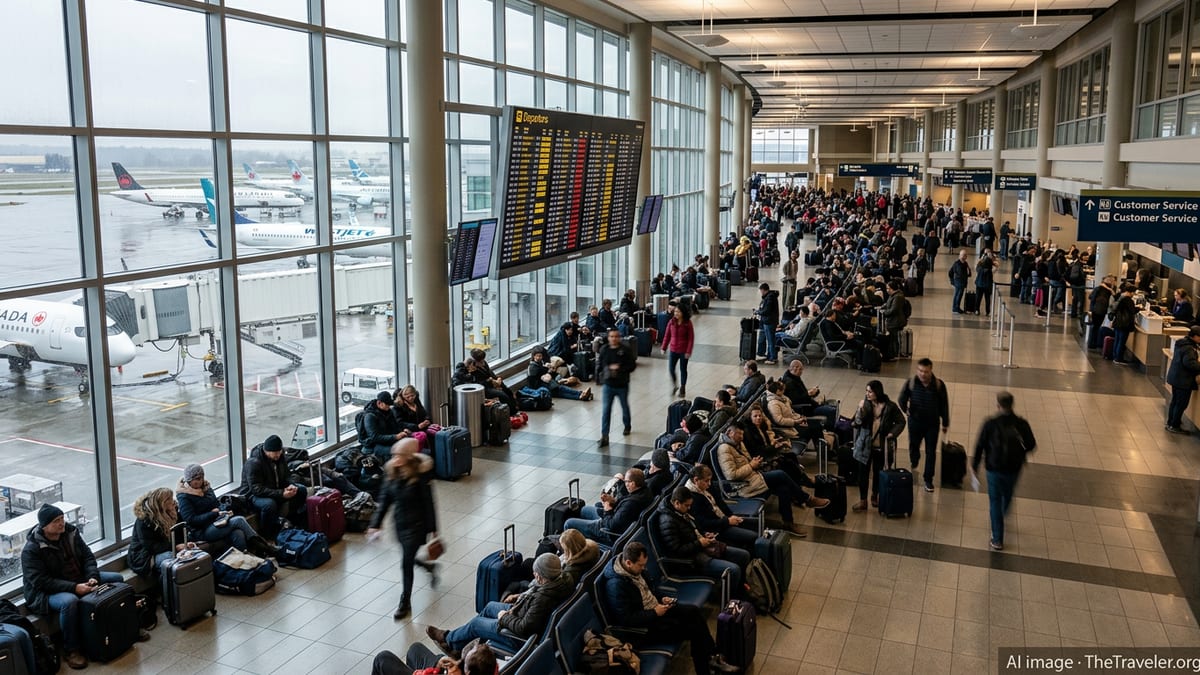
Hundreds of passengers were left stranded at Vancouver International Airport after a fresh wave of disruptions led to 23 flight cancellations and 109 delays on key domestic and transborder routes, affecting services operated by Jazz, Pacific Coastal Airlines, Air Canada, WestJet and other carriers.
Get the latest news straight to your inbox!
Operations Snarled Across Western Canada Hub
Vancouver International Airport, one of Canada’s busiest hubs, saw its departure and arrival boards fill with yellow and red alerts as the latest round of disruptions unfolded. Publicly available information from flight-tracking platforms and airport data indicates that at least 23 scheduled departures or arrivals were cancelled and more than 100 flights were delayed over the course of the day.
The ripple effects were felt most strongly on heavily used regional corridors linking Vancouver to Victoria, Kelowna, Calgary and Terrace, as well as on a transborder connection to Miami. The pattern of cancellations and rolling delays meant that even flights still operating often departed hours behind schedule, complicating connections and onward journeys.
The cancellations affected a mix of mainline and regional services, including flights marketed by Air Canada and WestJet and operated in part by affiliates such as Jazz Aviation, along with independent regional carrier Pacific Coastal Airlines. This blend reflects the way Vancouver functions as a central node for Western Canada, where short-haul turboprop services feed into longer domestic and international routes.
Observers of the Canadian aviation sector note that such concentrated disruption at a large hub can quickly cascade through the system, as aircraft and crews scheduled to operate multiple legs in a single day are forced out of sequence. Even where aircraft remain available, crews may time out under duty rules if delays stack up across several sectors.
Key Routes to Victoria, Kelowna, Calgary and Terrace Hit Hard
Routes between Vancouver and major British Columbia cities such as Victoria and Kelowna appeared among the most affected, with multiple cancellations and long delays reported on shuttle-style services that ordinarily see frequent frequencies throughout the day. These routes are essential for business travellers, government workers and residents moving between the Lower Mainland and Vancouver Island or the Okanagan.
Farther north, connections to Terrace in northwestern British Columbia, a region with limited alternative transport options, were also disrupted. In communities that depend on scheduled air links for medical travel, work rotations and access to larger centres, even a small number of cancellations can leave travellers facing overnight stays or multi-stop rebookings.
Flights linking Vancouver with Calgary, another major Western Canada hub, experienced delays that complicated cross-country and international connections. Travellers with itineraries continuing on from Calgary to other Canadian cities or overseas destinations were particularly vulnerable to missed connections and last-minute changes.
Data from recent route brochures and airline schedules underscores the strategic importance of these corridors, which collectively account for hundreds of weekly flights in normal operations. When disruption strikes on such high-frequency routes, schedule resilience can help soften the blow, but concentrated cancellations still leave many travellers without same-day alternatives.
Transborder Journeys to Miami and Beyond Disrupted
While much of the impact was felt within Western Canada, the disruption also stretched into transborder travel, including connections from Vancouver to Miami. Vancouver functions as a launch point for Canadian travellers heading to winter sun destinations, cruises and onward flights throughout the southern United States, Caribbean and Latin America.
According to published schedule information, Miami is typically served from Vancouver several times per week, often via major Canadian carriers using widebody or narrowbody jets. When a departure is significantly delayed or cancelled on such a route, re-accommodating passengers is more complex than on shorter domestic segments, as seat availability on alternative services can be limited, particularly during peak travel periods.
The knock-on effect extended to connecting passengers who had begun their journeys in smaller Western Canadian markets such as Victoria, Kelowna or Terrace. For those travellers, a missed Vancouver or Calgary connection to Miami or other U.S. gateways can mean a full-day or multi-day delay, along with the added logistical challenges of rebooking accommodation, transfers and cruise embarkations.
Travel commentary in recent months has highlighted how tightly timed multi-leg itineraries through Vancouver leave little room for error when weather, air traffic control constraints or operational challenges arise. A disruption on the first short regional leg can easily cascade into the loss of a carefully planned long-haul journey.
Regional Carriers and Major Airlines Under Strain
The pattern of cancellations and delays at Vancouver involved a cross-section of carriers. Jazz Aviation flights under the Air Canada Express banner, Pacific Coastal Airlines’ regional services and mainline operations by Air Canada and WestJet all featured on lists of affected departures and arrivals. Other airlines with smaller schedules at the airport also saw delays as congestion built.
Publicly available information suggests that airlines have been juggling a mix of factors, including crew availability, aircraft rotations and external constraints such as air traffic management and weather along certain corridors. While individual carriers may manage their operations differently, the concentration of delays across multiple brands indicates systemic stress on the airport’s schedule.
Over the past several seasons, Canadian travellers have reported a pattern of recurring delays on short-haul routes into and out of Vancouver, including frequent late departures on Victoria and Kelowna flights. Online travel forums and social media posts describe travellers building in long buffers to safeguard connections, or opting for alternative routings through other hubs when possible.
The latest wave of disruptions at Vancouver appears to fit into this broader context of operational strain in Canada’s air network, where tight schedules and high demand leave airlines with limited flexibility when something goes wrong. The involvement of both regional and mainline operators at Vancouver reinforces how intertwined their operations have become.
Travellers Face Long Lines, Rebookings and Uncertain Timelines
For passengers on the ground, the statistics on cancellations and delays translated into long queues at check-in desks and service counters, frequent boarding gate announcements and a day marked by uncertainty. Travellers reported using airline apps, public flight-tracking websites and airport display boards to monitor rapidly changing departure times.
Many affected passengers sought same-day rebookings on alternative flights to Victoria, Kelowna, Calgary and other destinations, only to find remaining seats scarce on peak departures. Some travellers turned to nearby airports or alternate transport options, including ferries between Vancouver and Vancouver Island, when short-haul flights were repeatedly postponed.
Consumer advocates in Canada have noted that under national air passenger protection rules, travellers may be eligible for compensation or refunds depending on the length and cause of delays and cancellations. However, understanding specific entitlements often requires careful review of each situation, and processing claims can take time.
As operations gradually stabilise after acute disruption at a hub like Vancouver, residual delays can persist for hours or even into the next day as aircraft and crews are repositioned. For travellers planning upcoming journeys through the airport, publicly available guidance commonly recommends checking flight status frequently, allowing extra time for connections and considering travel insurance that covers delays and cancellations.