

Malaysia’s year is punctuated by a steady rhythm of festivals, races, and cultural celebrations that can transform a good trip into a truly memorable one. Whether you are drawn by vivid religious rituals in limestone cave temples, world music in the rainforest, or patriotic parades in the capital, planning your visit around the country’s biggest events helps you experience Malaysia at its most energetic and expressive.
Why Malaysia’s Event Calendar Matters For Travelers
Malaysia does not have a single peak festival season. Instead, its multicultural calendar spreads major events across the year, with different communities observing their own religious and cultural milestones. For visitors, that means there is almost always something important happening somewhere in the country, from state-backed tourism campaigns to grassroots cultural festivals. Aligning your itinerary with these moments can offer deeper insight into Malaysian life than sightseeing alone.
At the same time, these events can affect practical travel logistics. Popular festivals may push up hotel prices, fill long distance buses and domestic flights, or cause traffic congestion and road closures in city centers. On the other hand, they also bring extended public transport hours, special late night food markets, and temporary attractions such as light shows and pop up performance spaces. Understanding roughly when and where the biggest gatherings occur will help you decide whether to dive into the crowds or plan around them.
Malaysia’s tourism authorities and state governments increasingly use major events to promote domestic and international travel, especially in the lead up to Visit Malaysia Year 2026. That means more structured programs, better visitor information, and in many cases enhanced security and crowd management. For independent travelers, this creates opportunities to participate in festivals that once felt more parochial, while still requiring a respectful attitude toward local customs and religious observances.
Because exact dates shift year to year, particularly for festivals that follow the lunar or Islamic calendar, travelers should always confirm timing closer to departure. However, the broad patterns remain consistent. Hindu Thaipusam typically falls in January or early February, Chinese New Year follows a similar window, Hari Raya Aidilfitri marks the end of Ramadan, and Malaysia’s National Day is fixed on 31 August. Planning by season, rather than by exact day, is the most reliable way to build an event focused itinerary.
Thaipusam at Batu Caves and Beyond
Thaipusam is one of Malaysia’s most visually arresting religious festivals, observed mainly by the Tamil Hindu community. The focal point for visitors is usually Batu Caves, just north of Kuala Lumpur, where hundreds of thousands of devotees gather each year. Pilgrims walk in colorful processions carrying offerings, known as kavadi, up the long staircase that leads to the main temple inside the limestone hill. Many observe vows involving fasting and abstinence in the weeks beforehand, and the atmosphere on the day itself is both intense and deeply devotional.
For travelers, Thaipusam offers a chance to witness a living religious tradition at scale, with drumming, chanting, and clouds of incense enveloping the temple complex from before dawn until late at night. It is also physically demanding for participants, and visitors should take care not to disrupt the flow of pilgrims. Dress conservatively, avoid obstructing staircases or shrines for photographs, and be sensitive when photographing close up rituals, especially those involving body piercings or acts of penance.
While Batu Caves is the most famous focal point, Thaipusam is also observed in cities such as Penang and Ipoh, each with its own distinctive local character. In George Town, processions weave through heritage streets lined with shophouses, while in Ipoh they move between historic temples. If you prefer a somewhat less overwhelming experience than Batu Caves at its peak, these alternative locations can provide similar spiritual depth with slightly smaller crowds.
Because Thaipusam follows the Tamil calendar, its date shifts each year but usually lands in late January or early February. Accommodation around Kuala Lumpur, particularly near Batu Caves and in centrally located districts, often books out well in advance. If you want to attend, secure your lodging early, use rail services to avoid traffic gridlock on festival days, and consider arriving before dawn to see the first processions in relatively cooler temperatures.
Chinese New Year in Kuala Lumpur and Penang
Chinese New Year is celebrated across Malaysia, reflecting the country’s significant Chinese communities, and is one of the liveliest periods of the year in cities such as Kuala Lumpur, Penang, Johor Bahru, and Malacca. The festival generally falls between late January and mid February, closely aligned with Thaipusam season, and marks the start of the lunar year. The celebrations last for about fifteen days, with the first two days designated as public holidays nationwide.
Kuala Lumpur’s Chinatown around Petaling Street and the surrounding districts come alive with lanterns, lion dance troupes, and family reunions. Shopping malls and public spaces stage cultural performances, drumming shows, and decorative displays featuring the zodiac animal of the year. Many Chinese businesses close for at least the first day or two, which can give central streets an unusual quiet at certain hours, even as celebratory noise spills out from temples and community halls.
In George Town, Penang, Chinese New Year is layered onto an already rich heritage environment. Clan houses and temples host prayers and performances, while the narrow streets of the old town see lion dances visiting shopfronts to bring luck. The atmosphere is particularly vivid in the evenings, when lanterns illuminate the historic shophouses and families gather for meals at home or in busy restaurants. Visitors who stay in or near the heritage zone can often step straight into the festivities simply by walking out of their hotel.
Travelers should be prepared for a mix of bustle and temporary closures. Intercity transport is heavily used as people return to their hometowns, so booking buses, trains, and flights ahead of time is essential. Many smaller eateries and shops close on the first days of the festival, but large malls, hotel restaurants, and tourist oriented venues usually remain open. If your main goal is shopping or moving frequently between cities, Chinese New Year can be inconvenient. If your focus is cultural immersion, however, it is one of the most rewarding times of year to be in Malaysia.
Hari Raya Aidilfitri and the Islamic Festive Season
Hari Raya Aidilfitri, known elsewhere as Eid al Fitr, marks the end of the fasting month of Ramadan and is one of Malaysia’s most important religious celebrations. It follows the Islamic lunar calendar, so the exact date moves forward by roughly ten to eleven days each year, cycling through different seasons over time. In the weeks leading up to Hari Raya, bazaars selling traditional clothing, home decorations, and seasonal sweets spring up in cities and towns, creating a layered festive build up long before the public holiday itself.
On the morning of Hari Raya, Muslims attend special prayers at mosques, then begin a day focused on family visits, forgiveness, and feasting. Many urban residents travel back to their hometowns in a migration known locally as balik kampung, leaving business districts quieter than usual while highways and major bus routes become heavily congested. For visitors, this can translate into two contrasting experiences: serene city streets in places like central Kuala Lumpur, and crowded transport infrastructure nationwide just before and after the holiday.
Although Hari Raya is primarily a family and community occasion, travelers may be warmly welcomed into open house events hosted by hotels, community groups, or occasionally by local families themselves. These gatherings offer the chance to try festive dishes such as ketupat, rendang, and various kuih sweets, often accompanied by traditional music and dance. Modest dress is important, and visitors should follow local etiquette, such as removing shoes before entering homes and accepting at least a small portion of food or drink when offered.
Increasingly, Malaysia’s tourism bodies highlight the broader Islamic festive season as a draw for Muslim and non Muslim visitors alike. Campaigns such as Islamic Tourism Month, typically held around August, bundle halal travel packages, mosque tours, and cultural programs into a coherent schedule across the country. Even if your visit does not coincide precisely with Hari Raya, you may find exhibitions, culinary events, and lectures that offer a structured introduction to Malaysia’s Muslim heritage and contemporary faith practices.
National Pride: Hari Merdeka and Other Civic Celebrations
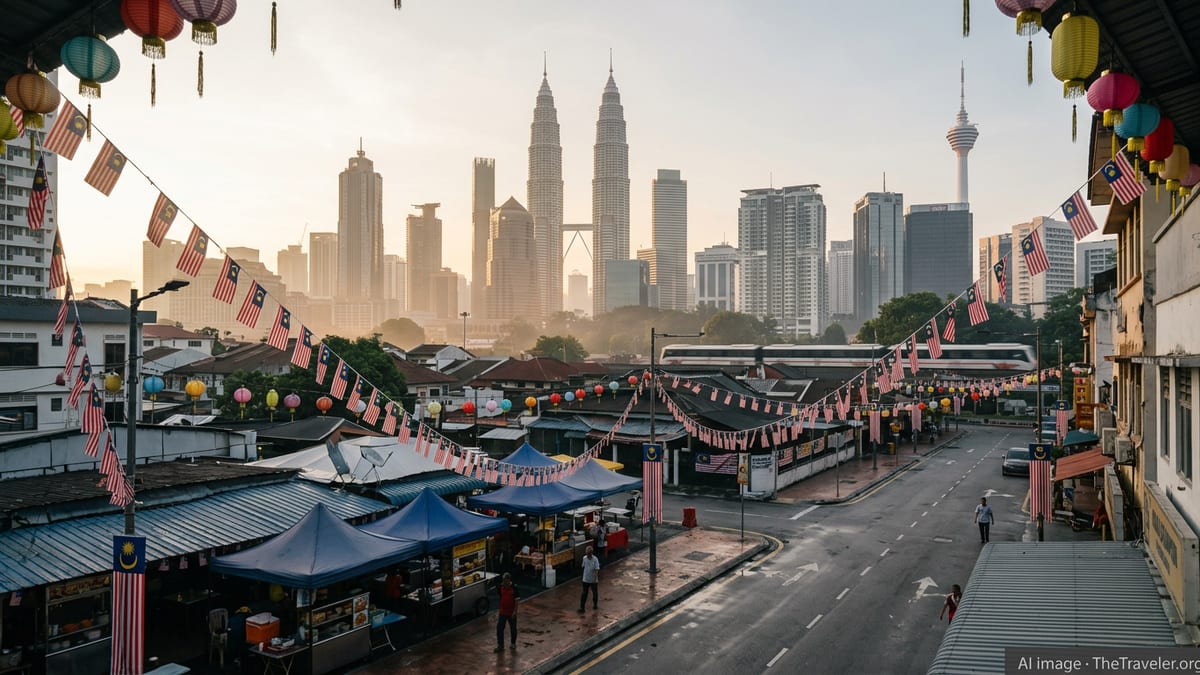
Hari Merdeka, or National Day, is fixed on 31 August and commemorates the independence of the Federation of Malaya in 1957. The centerpiece of the celebrations is usually a grand parade held in or near Kuala Lumpur, featuring marching bands, military units, school contingents, and themed floats. Streets around the parade route are often closed, and spectators line the sidewalks from early morning, waving flags and dressed in national colors. For travelers, joining the crowd offers a vivid sense of how Malaysians express patriotism in a modern, multicultural context.
The run up to National Day typically includes weeks of smaller events, such as concerts, exhibitions about Malaysia’s history, and flag raising ceremonies in government complexes and schools. Buildings across the country, from office towers to small shops, display the Jalur Gemilang flag, and public squares often host nighttime performances. Because 31 August is a public holiday, it is wise to plan accommodation and local transport in Kuala Lumpur well in advance if you want to be close to the parade or evening fireworks.
Another key civic observance is Malaysia Day on 16 September, marking the formation of Malaysia in 1963 with the inclusion of Sabah, Sarawak, and initially Singapore. While sometimes quieter than National Day, it is especially significant in East Malaysia, where official events underscore the role of Borneo states in the federation. If you are traveling in Sarawak or Sabah around mid September, look out for cultural showcases, state level parades, and special programs in museums or civic centers.
Together, these civic celebrations offer a different dimension of Malaysian life than religious festivals. They emphasize unity in diversity, national achievements, and a shared future, themes that are often highlighted in speeches and media coverage. For visitors, they provide an opportunity to observe how public institutions and ordinary citizens interact, as well as a chance to see central areas of cities dressed up with flags, banners, and temporary viewing stands. Allow extra time for security checks and detours, especially around high profile venues where senior leaders are present.
Arts and Culture: George Town Festival and Borneo Cultural Events
Malaysia’s creative scene has grown steadily over the past decade, and nowhere is this more evident than at George Town Festival in Penang. Established in 2010 and usually held around July or August, this multi week arts celebration transforms George Town’s UNESCO listed streets into open air galleries and performance venues. Theater, dance, installation art, photography, and community projects spill out from heritage shophouses, warehouses, and public squares, blurring the boundary between everyday life and curated culture.
For travelers, George Town Festival is a chance to experience Penang beyond its already famous food reputation. Programs often highlight regional voices and collaborations across Southeast Asia, alongside international acts. Tickets for headline shows can sell out quickly, but many events, including street installations and community workshops, remain free or low cost. Because activities are dispersed across the compact historic core, it is easy to spend days wandering between venues, pausing at cafes and hawker centers along the way.
On the island of Borneo, Sarawak and Sabah host their own marquee cultural gatherings. The Rainforest World Music Festival, held near Kuching in Sarawak, is among the best known. Set against the backdrop of tropical forest, it brings together musicians from Malaysia and around the world for workshops by day and concerts by night. The audience is a mix of locals and international visitors, many of whom combine the festival with trips to nearby national parks or longhouse stays upriver.
Another highlight is the Borneo Cultural Festival in Sibu, Sarawak, which showcases the traditions of Dayak, Malay, Chinese, Melanau, and other communities through dance, music, and food. While less internationally publicized than the Rainforest World Music Festival, it offers a concentrated look at Borneo’s diversity in a single urban space. Visiting during these festivals typically requires advance planning for accommodation and internal flights, as regional cities see a surge in visitors and domestic tourism.
Motorsport and Major Sporting Events
Malaysia has long punched above its weight in motorsport, thanks largely to the Sepang International Circuit near Kuala Lumpur. While Formula One races ended there in 2017, Sepang remains a major venue for two wheel and regional car racing. The headline event today is the Malaysian MotoGP round, which regularly draws large crowds of enthusiastic fans. In recent seasons, MotoGP has returned to a calendar slot that typically falls in the second half of the year, although specific dates can shift and should be checked close to travel time.
Attending MotoGP at Sepang is a very different experience from city based festivals. The circuit lies about an hour’s drive from central Kuala Lumpur and close to the main international airport, so logistics often involve a combination of trains, shuttle buses, and rideshare services. On race weekend, traffic around the circuit can be heavy, but the atmosphere is electric, with fans arriving on motorcycles, cars, and organized tours. For many visitors, combining a few days in Kuala Lumpur with race attendance offers an ideal mix of urban exploration and high speed sport.
Beyond motorsport, Malaysia hosts a range of endurance and running events that attract international participants. The Penang Bridge International Marathon, for example, allows runners to cross one of the world’s most recognizable sea bridges, with distances ranging from full marathon to shorter fun runs. Staged at night or in the early hours of the morning to avoid daytime heat, it creates dramatic views of the illuminated span and the coastline. Similarly, various triathlons, cycling tours, and trail runs in states like Sabah and Pahang draw athletes who want to test themselves in tropical conditions.
Because these events involve road closures and early starts, travelers should be aware of their dates even if they are not participating. Staying in the wrong part of town on race day can complicate transfers to airports or tourist sites. On the other hand, if you are an active traveler, planning your visit around a race can be a powerful motivator and a social gateway to meeting locals and fellow visitors with similar interests.
Planning Tips: Seasons, Weather, and Visit Malaysia 2026
Malaysia’s equatorial climate means it is warm and humid year round, with regional monsoon patterns affecting rainfall more than temperature. This has two implications for event planning. First, outdoor festivals and parades often proceed rain or shine, with only extreme weather prompting changes. Second, visitors should be prepared for sudden downpours and strong sun, whether they are standing in a parade crowd, exploring an arts festival, or spending a day at a motorsport circuit.
Light, breathable clothing, a compact umbrella or rain poncho, and comfortable footwear are essential if you are following processions or walking between venues. Hydration is critical, especially during midday events. Many festivals deliberately schedule key activities in the early morning or evening to avoid peak heat, but impromptu wandering during the day is often part of the experience. Build in time to rest at cafes, malls, or air conditioned museums, which can offer welcome breaks between outdoor segments.
The years leading up to Visit Malaysia Year 2026 have seen tourism authorities sharpen their focus on signature events. Federal and state campaigns highlight cultural festivals, sporting milestones, and niche gatherings such as Islamic Tourism Month and state level arts fairs. For travelers, this translates into more comprehensive event calendars, better promotion in English, and in many cases bundled travel packages that tie together flights, hotels, and festival access. If you prefer a more independent style of travel, official calendars can still serve as a planning backbone even if you book everything yourself.
Finally, remain flexible. Dates for some events, particularly religious observances, may be announced or confirmed only a few months out, and last minute changes are not unheard of when public health, weather, or national priorities shift. If attending a specific festival is central to your trip, consider building a generous time window around it, ideally arriving a few days early and staying beyond the main event. That way you can enjoy both the build up and the slower aftermath, when locals return to their routines and you can experience the same places in a quieter mood.
The Takeaway
Planning a trip to Malaysia around its major events is about more than catching a parade or a concert. It is an opportunity to see how different communities share public space, express identity, and negotiate tradition in a fast changing country. From the intense devotion of Thaipusam at Batu Caves to the urban creativity of George Town Festival and the roar of MotoGP at Sepang, each gathering reveals a different facet of the national story.
The trade off is complexity. Crowds, higher prices, and occasional disruptions to transport are part and parcel of traveling at these peak moments. With honest preparation, however, those challenges are manageable. Choosing where to be and when, booking key elements in advance, and staying culturally sensitive will help ensure that the energy of Malaysia’s festivals enriches your journey rather than overwhelming it.
Whether you time your visit to coincide with a specific celebration or simply remain open to what is happening while you are there, paying attention to Malaysia’s event calendar will deepen your experience. It encourages you to move beyond checklist sightseeing and instead participate, even briefly, in the shared moments that Malaysians themselves look forward to all year.
FAQ
Q1. When is the best time of year to visit Malaysia for major events?
The most eventful periods tend to cluster between January and September, when Chinese New Year, Thaipusam, Hari Raya Aidilfitri, Hari Merdeka, and many arts and music festivals usually fall. However, exact dates shift year by year, especially for religious holidays that follow lunar or Islamic calendars.
Q2. How far in advance should I book hotels for big festivals like Thaipusam or MotoGP?
For very popular events such as Thaipusam at Batu Caves, Chinese New Year in Penang, or MotoGP at Sepang, it is wise to book accommodation three to six months in advance if you want the most convenient locations and wider choice of properties.
Q3. Will public transport still run during major parades and processions?
Yes, but routes and schedules may be adjusted. In Kuala Lumpur and Penang, rail services typically run as normal or with extra capacity, while some bus routes are diverted to avoid road closures. Always check local announcements and allow extra time to move around.
Q4. Are religious festivals in Malaysia open to non Muslim and non Hindu visitors?
In general, yes. Visitors of all backgrounds are welcome to observe and, in some cases, participate in public aspects of festivals, provided they dress modestly, respect restricted areas, and follow local guidance around photography and behavior in sacred spaces.
Q5. What should I wear if I plan to attend festivals at temples or mosques?
Opt for modest, breathable clothing that covers shoulders and knees. At mosques, you may be asked to wear additional coverings provided on site. Comfortable footwear is important, as you will likely walk and stand for long periods and may need to remove shoes before entering certain areas.
Q6. Do major events significantly increase travel costs in Malaysia?
Prices for hotels and some flights often rise around peak festivals and major sports events, especially in areas close to venues. Daily costs for food and local transport typically remain reasonable, but budgeting a bit more for accommodation during these periods is sensible.
Q7. Is it safe to attend very crowded events as an independent traveler?
Large Malaysian festivals are generally well managed, but common sense precautions apply. Keep valuables secure, stay hydrated, know where exits and quieter side streets are, and follow police or marshal instructions if crowds become very dense or if weather conditions change suddenly.
Q8. How can I find up to date event dates before I book my trip?
Check Malaysia’s national and state tourism portals, local tourism board announcements, and official social media channels for major festivals, races, and arts events. Dates for religious holidays are often published as public holiday calendars well in advance.
Q9. Are there family friendly events suitable for children?
Yes. Many festivals, such as Chinese New Year celebrations, National Day parades, and cultural performances at George Town Festival or Borneo events, are family friendly. Be prepared for heat, noise, and crowds, and plan rest breaks to keep children comfortable.
Q10. Can I combine multiple major events in a single trip?
With careful planning, it is possible. For example, a journey in late January or early February might capture both Thaipusam and Chinese New Year, while a visit around late August could combine Hari Merdeka with arts festivals or sporting events. Build in enough time between locations to account for busy transport periods.