

More news on this day
U.S. hotels reported stronger performance in the week ending March 21 as a dense calendar of sports tournaments, entertainment showcases and large-scale meetings drove demand in key markets, lifting occupancy, average daily rate and revenue per available room above recent weeks.
Get the latest news straight to your inbox!
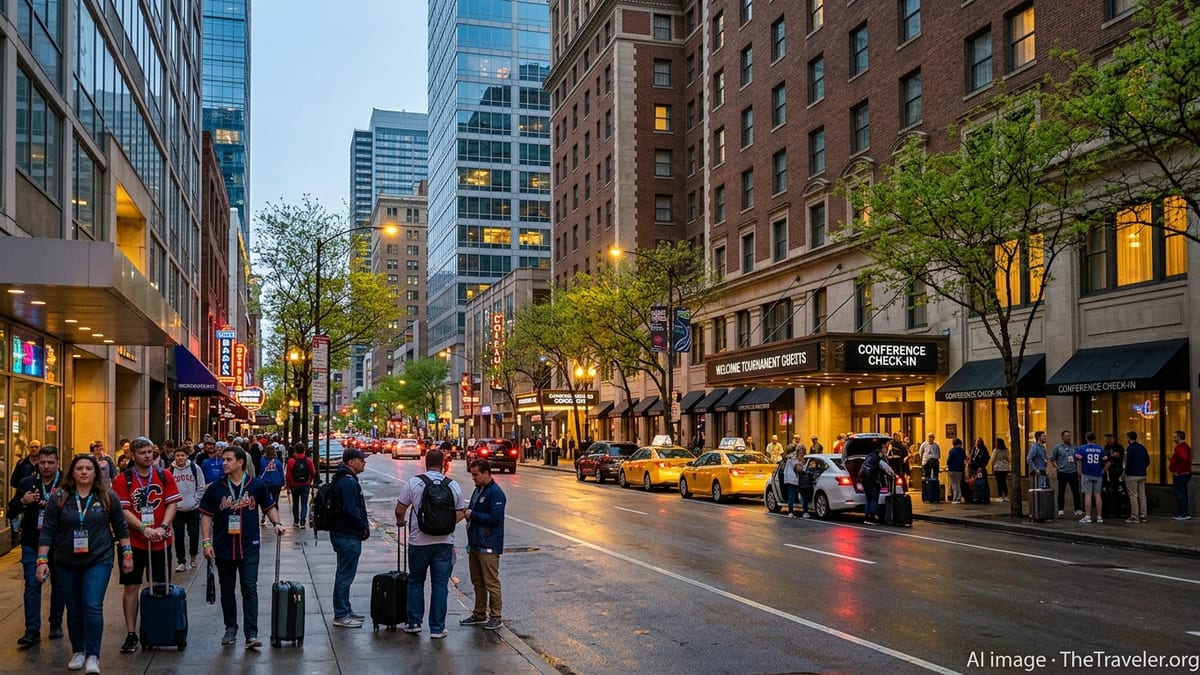
Event Travel Gives National Metrics a Spring Bump
Publicly available industry data for the seven days ending March 21 indicate that U.S. hotel metrics improved from earlier in the month, continuing a gradual firming that began in the first half of March. Occupancy is reported to have edged higher week over week, supported by both weekend leisure travel and midweek group and corporate demand tied to major events.
Average daily rate, or ADR, also advanced as hotels in high-demand cities were able to hold pricing and, in some cases, apply modest surcharges around major gatherings. Revenue per available room, or RevPAR, which blends occupancy and rate, showed the strongest gains, signaling that the improvement is broad-based rather than driven solely by discounting to fill rooms.
Industry commentary suggests that the pattern fits a broader 2026 trend in which event-driven travel is compensating for more uneven transient business demand. Markets hosting large sports, entertainment and convention business captured a disproportionate share of room-night growth during the third week of March.
The week ending March 21 also fell at a seasonal sweet spot: ahead of the Easter holiday period but firmly within the spring break window for many U.S. school districts and universities. That timing added another layer of leisure demand, particularly in warm-weather and coastal destinations.
Sports Tournaments and Wrestling Cards Fill Rooms
Sports-related travel was a primary engine of hotel demand heading into March 21. The 2026 Players Championship, held March 12 to 15 at TPC Sawgrass in Ponte Vedra Beach, Florida, continued to influence shoulder-night bookings as fans, media and support staff extended stays before returning home or moving on to additional tournaments. Hotels across the Jacksonville and northeast Florida coastal strip reported solid group and transient activity surrounding the event.
Professional wrestling also played a role in tightening availability in select markets. All Elite Wrestling’s Revolution pay-per-view, staged on March 15 at Crypto.com Arena in Los Angeles, attracted out-of-town spectators who typically combine the event with broader city visits. According to published coverage of the show schedule, the card drew thousands of attendees, many of whom booked weekend packages in downtown and greater Los Angeles, supporting higher ADR levels around the arena corridor.
Looking ahead from the week ending March 21, anticipation surrounding late-March combat-sports and wrestling events in markets such as the New Orleans area and other regional hubs encouraged some advance group block activity during the third week of the month. Operators in these cities have reported that event calendars are increasingly important in shaping both short-term booking curves and rate strategy.
College and youth sports tournaments, while smaller in profile, further boosted occupancy in secondary and tertiary markets. Basketball, baseball and soccer competitions tied to spring schedules typically generate strong weekend compression in suburban and highway corridor hotels, helping to balance softer midweek demand from traditional corporate accounts.
Entertainment Festivals and Meetings Support Urban Gateways
Major entertainment and cultural gatherings in March continued to underpin performance in gateway and sunbelt cities. In Miami, preparations for late-March electronic music events and the Ultra Music Festival, scheduled for March 27 to 29 at Bayfront Park, contributed to an earlier pickup in bookings during the week ending March 21. Travelers often arrive days ahead of large festivals, and publicly available information shows that many hotels in downtown and Miami Beach leveraged minimum-stay requirements and premium pricing closer to festival dates.
Across the convention landscape, a slate of March trade shows and professional conferences in Las Vegas, Seattle and other hub cities ensured steady weekday base business. Events such as large-scale retail and sourcing shows in Las Vegas and niche professional gatherings in major convention hotels created compressed dates in which citywide occupancy approached or exceeded prior-year levels, supporting rate strength.
Entertainment-related demand also intersected with meetings and incentive travel, particularly in coastal California and Florida. Corporate groups aligned retreats and customer events with marquee concerts, sports fixtures and cultural programming to enhance itineraries, which in turn sustained elevated midweek ADR in select full-service and luxury properties.
Market updates from several visitor and convention bureaus highlight that this combination of meetings, entertainment and leisure travel is creating a more balanced demand mix than in the immediate post-pandemic recovery, when leisure travel dominated. That diversification helped stabilize hotel performance in the week ending March 21, even in the face of uneven corporate transient trends.
Spring Break, Sunbelt Demand and the Two-Speed Market
Spring break dynamics were another defining feature of the week. Coastal and resort markets across Florida, the Gulf Coast, Southern California and parts of the desert Southwest reported robust bookings from families and student travelers. Publicly reported data and local tourism updates point to particularly strong performance in beach communities, where extended-stay patterns and higher weekend rates pushed RevPAR well above national averages.
At the same time, analysts continue to describe a two-speed hotel market for 2026. Urban and resort destinations tied to major events and leisure travel are outperforming, while some interior and smaller corporate-dependent markets are seeing softer occupancy and more rate sensitivity. During the week ending March 21, this divergence remained visible: properties near key event venues captured meaningful rate premiums, while hotels in less event-driven locations relied more heavily on discounts and promotions to protect occupancy.
Forward-looking commentary indicates that, as of March, average daily rates across the United States were tracking several percentage points above 2025 levels, while overall paid occupancy was modestly lower year over year. RevPAR has gradually moved into positive territory on a national basis, a trajectory supported by weeks like that ending March 21, when event calendars are dense.
For travelers, this environment has produced notable price gaps between high-demand event markets and more typical business destinations. For operators, it has reinforced the value of revenue management strategies that are tightly keyed to local calendars rather than broad national trends.
Outlook: Event Calendars Take Center Stage for 2026
Looking beyond the week ending March 21, publicly available forecasts and booking data suggest that event-driven travel will remain a defining theme for U.S. hotels through the remainder of 2026. Large-scale sports, music festivals and cultural showcases scheduled for late March and April are already influencing room pricing and availability in several host cities.
Industry analyses note that forward event calendars are essentially acting as a stabilizer for hotel performance, offsetting pockets of weakness in traditional business travel and helping to sustain ADR growth. Markets able to attract recurring tournaments, festivals and conventions are positioned to maintain higher baseline occupancy and to capitalize on compression nights when demand significantly exceeds supply.
For hoteliers, the performance gains seen in the week ending March 21 highlight the importance of aligning sales, marketing and revenue strategies around major demand generators. For travelers, the same trend underscores the value of early booking and flexible dates, particularly when planning trips to cities that double as hosts for marquee events.
As the spring travel season progresses, the pattern that emerged in mid-March is likely to repeat: weeks anchored by major events are expected to show outsize improvements in occupancy, ADR and RevPAR, while quieter stretches in the calendar may reveal the underlying softness in segments not directly tied to gatherings and spectacles.