

More news on this day
Air travelers across Germany are facing a new wave of disruption this week as Gulf Air, Qatar Airways, Lufthansa and several other major carriers cancel dozens of flights, severing or thinning connections to Paris, Doha, London, Stockholm, Tel Aviv and multiple hubs across Europe and the Middle East.
Get the latest news straight to your inbox!
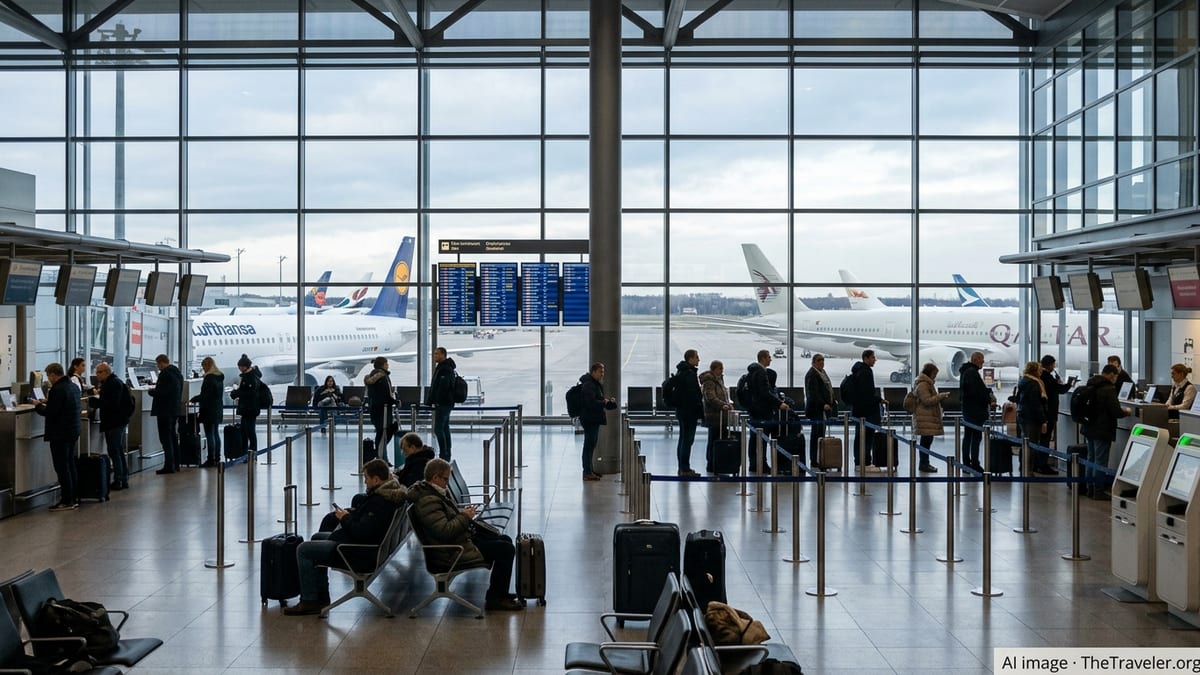
Germany’s Hubs Hit by Multi-Airline Cancellations
Germany’s main international gateways, including Frankfurt, Munich, Berlin Brandenburg, Düsseldorf and Hamburg, are reporting clusters of cancellations and short-notice schedule changes affecting both European and long haul services. Publicly available airport and airline information shows that services operated by Gulf Air, Qatar Airways, Lufthansa and other European carriers have been particularly impacted on routes linking Germany with France, the United Kingdom, Scandinavia and the eastern Mediterranean.
On Monday and Tuesday, departures to major capitals such as Paris, London, Stockholm and Tel Aviv saw a noticeable rise in canceled or heavily delayed services, especially on flights involving connections through Gulf hubs. Travelers transiting Germany on their way to Doha and onward to Asia and Africa are also experiencing missed connections or prolonged layovers as reduced schedules ripple through the network.
Industry data and operational updates indicate that while core domestic routes within Germany remain relatively resilient, the most affected segments are cross-border flights that rely on tightly timed connections at congested hubs. For many passengers, this has translated into last minute rebookings, overnight stays and extended journeys across alternative routings via Amsterdam, Zurich, Vienna or Istanbul.
Despite the growing number of cancellations, German airports continue to operate, but with thinner schedules and a greater degree of uncertainty. Travelers are being urged by airlines and airports to arrive early, monitor their itineraries closely and prepare for potential changes even after check in.
Pressure From Strikes, Airspace Restrictions and Weather
The latest disruption does not stem from a single cause, but from several overlapping pressures on the aviation system. In Germany, recent labor actions by flight and ground staff have already reduced operational flexibility for home carriers, forcing selective cancellations and tighter staffing across key bases. These domestic constraints are now colliding with wider regional challenges.
In the Gulf region, ongoing security concerns and temporary airspace restrictions have significantly complicated routings between Europe and Doha. Publicly available information from aviation authorities and published news coverage indicate that air navigation around Qatar has been operating on a restricted basis in recent weeks, limiting the number of standard commercial flights and forcing airlines such as Qatar Airways and Gulf Air to trim or consolidate services.
Seasonal winter weather has added another layer of strain. Earlier storms across northern and central Europe led to ground handling backlogs and aircraft displacement, leaving some airlines with aircraft and crews out of position. Even as weather has improved, the knock-on effects are still being felt in the form of sporadic cancellations at German airports whenever schedules come under renewed pressure.
Operational summaries from European air traffic bodies show that major hubs including London Heathrow, Paris Charles de Gaulle and Frankfurt have all seen elevated levels of disruption tied to a combination of Middle East tensions, weather and airline specific issues. The result is an unstable operating environment in which seemingly minor delays can trigger wider schedule resets across multiple carriers.
Routes to Paris, Doha, London, Stockholm and Tel Aviv Most Affected
The pattern of cancellations emerging over the past several days points to particular stress on a handful of strategic routes. Connections between German airports and Paris, London and Stockholm have been trimmed as airlines prioritize aircraft and crew for the most in demand departures and long haul links. For some travelers, this has meant moving from non stop flights to itineraries involving extra stops or changes of airport.
Links from Germany to Doha are under especially close scrutiny as capacity remains constrained on services into the Qatari capital. Reports from affected passengers and booking platforms show that many Germany Doha flights have either disappeared from schedules or are listed as canceled with short notice, forcing rebookings via alternative Gulf or European hubs wherever seats are available.
Flights between Germany and Tel Aviv have also seen irregular disruption as airlines adjust to evolving security and airspace conditions in the wider region. While some services continue to operate, available information suggests that frequencies have been reduced on certain days, leaving fewer options for both point to point travelers and those connecting onwards to other destinations.
Travelers relying on early morning and late evening departures are being hit hardest, as airlines often target off peak services for cancellation in order to safeguard mid day banked connections. Those holding separate tickets for onward journeys via Paris, London or Doha are particularly vulnerable to missed connections when the first leg from Germany is withdrawn or significantly delayed.
What Travelers Through Germany Should Expect This Week
For passengers scheduled to fly into or out of Germany over the coming days, industry and consumer reports converge on one key message: expect change. Even tickets that appear confirmed in airline apps may be subject to adjustment as carriers continue to refine their operations in response to staff availability, airspace permissions and shifting demand.
Many airlines, including Gulf Air, Qatar Airways and Lufthansa, have activated special rebooking or waiver policies covering travel dates in late March. Publicly accessible advisories describe options such as free date changes, rerouting via alternative European or Gulf hubs and, in some cases, refunds for unused portions of tickets when flights are canceled. The precise options vary by carrier and fare type, so travelers are being encouraged to review conditions line by line.
At airports, passengers should anticipate longer queues at check in and transfer desks, as well as at general service counters where travelers seek assistance after missed connections. With some airline call centers and chat services experiencing high demand, same day changes may be easier to arrange in person at the airport than remotely, particularly for complex itineraries involving multiple airlines.
Rail and long distance bus operators have reported a modest uptick in bookings from travelers opting to complete shorter intra European segments by land rather than risk additional flight disruption. While these alternatives will not suit every itinerary, they are emerging as a practical option for journeys between Germany and neighboring countries such as France, the Netherlands, Belgium, Denmark, the Czech Republic and Poland.
Practical Tips for Navigating the Disruptions
Given the fluid situation, travelers are being advised by consumer advocates and travel industry observers to take a more hands on approach to their journeys than usual. That begins with frequent checks of booking references directly on airline websites or apps, where schedule changes typically appear before they are reflected on third party platforms or printed itineraries.
Where possible, passengers with imminent travel dates are being encouraged to verify the status of every segment of their journey, not just the initial leg from a German airport. In the current environment, a long haul sector via Doha, London or Paris may be more at risk than a short domestic hop within Germany, and early awareness of changes can significantly expand rebooking options.
Travelers with flexibility are increasingly opting to move their trips by a few days to dates where airlines show more stable schedules, or to reroute via hubs that currently appear less constrained. For journeys that must proceed as planned, having basic contingencies in mind, such as an overnight stay near a hub airport or a backup rail connection, can reduce the stress of on the day changes.
With airlines continuing to adjust operations in response to events in the Gulf region, labor issues and lingering winter impacts, disruptions are likely to persist in the short term. For now, anyone planning to pass through Germany’s airports on their way to Paris, Doha, London, Stockholm, Tel Aviv or other major hubs should be prepared for a more unpredictable travel experience than usual.