

More news on this day
Travelers across the United States faced fresh disruption on Friday as more than 40 flights operated by Qatar Airways, Delta Air Lines, Spirit Airlines, Lufthansa, British Airways and other carriers were cancelled or heavily delayed across major hubs including Atlanta, Dallas, Chicago, Los Angeles, Orlando, Charlotte, Las Vegas and New York, affecting key international routes to Doha, London, Frankfurt, San Francisco, Toronto and beyond.
Get the latest news straight to your inbox!
Wave of Cancellations Hits Major US Hubs
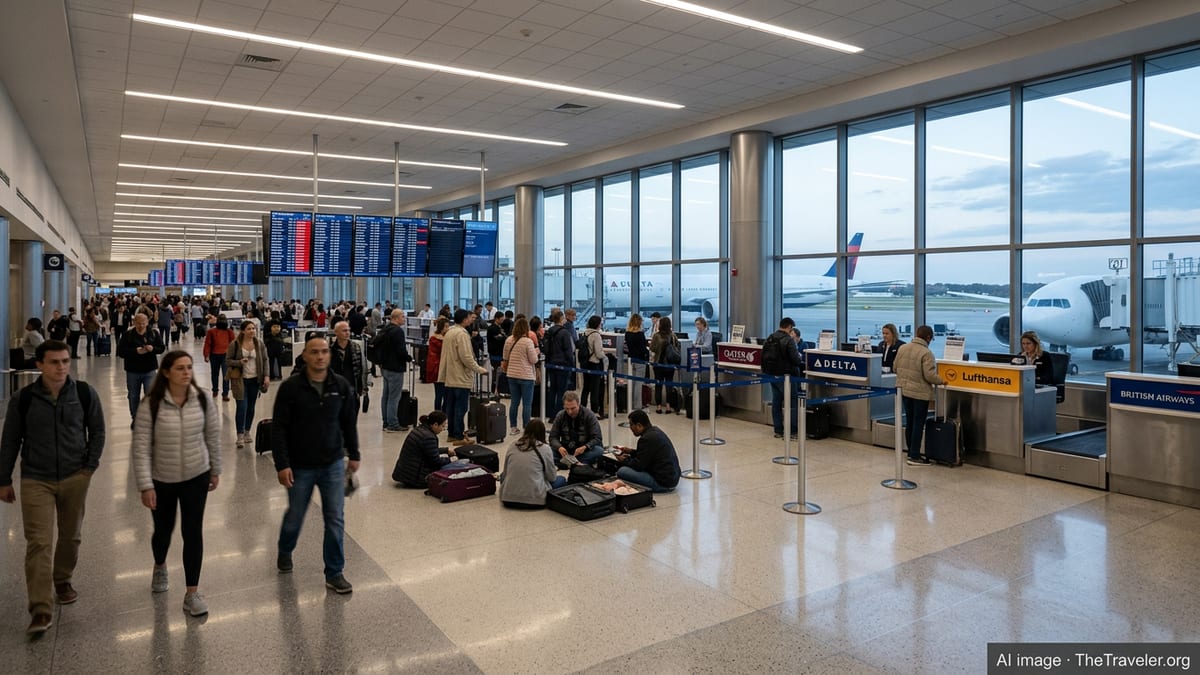
Operational data from flight-tracking and airport operations systems on March 13 indicated a concentrated wave of cancellations across several of the country’s busiest airports, including Hartsfield–Jackson Atlanta International, Dallas Fort Worth International, Chicago O’Hare, Los Angeles International, Orlando International, Charlotte Douglas, Harry Reid International in Las Vegas and New York area airports. The disruptions touched both domestic and long-haul international services, leaving passengers scrambling for alternatives at packed terminals.
While total nationwide cancellations remained well below levels seen during severe weather or past major IT failures, the impact at specific hubs was pronounced. Routes linking the United States with Europe and the Middle East were particularly affected, with departures and arrivals to Doha, London and Frankfurt among those cancelled or rescheduled at short notice. Selected transcontinental and cross-border services, including flights to San Francisco and Toronto, were also caught up in the disruption pattern.
Airline representatives described the situation as a “dynamic operational environment,” with schedules being adjusted throughout the day as crews, aircraft positioning and airspace conditions evolved. Passengers at affected airports reported long lines at customer service desks and gate podiums as they attempted to secure new itineraries, overnight accommodation or refunds.
Qatar Airways and Middle East Connections Under Strain
Qatar Airways, which relies on US feeder traffic into its Doha hub for onward connections to Asia and Africa, saw multiple services between American gateways and Hamad International Airport disrupted. Recent regional security concerns and temporary airspace restrictions around the Gulf have already placed pressure on schedules, and Friday’s cancellations compounded uncertainty for travelers relying on Doha as a key connection point.
In recent days, Qatar Airways has been operating a mix of limited commercial and relief flights on select routes while cancelling or consolidating others, with travelers urged to monitor flight status closely and work through call centers, airport ticket offices and travel agents to rebook. Passengers departing from or connecting through cities such as Atlanta, Dallas, Chicago and New York reported receiving late-night or same-day notifications that their flights to Doha had been removed from the schedule or retimed.
For travelers aiming to reach destinations beyond Doha, including South and Southeast Asia or East Africa, the cancellations often meant a complete reconfiguration of journeys. Some reported being re-accommodated on partner or third-party carriers via alternative hubs in Europe or the Gulf, while others were offered refunds or travel credits and advised to rebook at a later date once schedules stabilize.
European Carriers Trim London and Frankfurt Services
Lufthansa and British Airways also adjusted transatlantic operations on Friday, with cancellations and rolling delays affecting services between US cities and their primary European hubs in Frankfurt and London. While both carriers maintained a core schedule, selected departures from airports including New York, Chicago and Los Angeles were removed, forcing passengers onto later flights or indirect routings.
Industry analysts noted that European airlines are still contending with a delicate balance of aircraft availability, crew scheduling and variable demand patterns, particularly on routes that intersect with congested or rerouted airspace. Even small disruptions elsewhere in their networks can cascade into missed rotations and last-minute cancellations on high-profile US services.
Travelers bound for onward connections within Europe or to Africa, the Middle East and South Asia through Frankfurt and London were advised to build in additional buffer time and to avoid same-day tight connections. Airport staff at US departure points emphasized the importance of checking in early, ensuring contact details are correct in airline profiles and using carrier mobile apps to receive real-time schedule updates.
Delta, Spirit and US Domestic Links Feel the Ripple Effect
Delta Air Lines and ultra-low-cost carrier Spirit Airlines, both with significant presences at several of the affected airports, registered a mix of cancellations and extended delays on domestic and connecting routes. While the majority of their networks continued to operate normally, flights feeding international departures or relying on shared aircraft and crew rotations were particularly vulnerable to knock-on effects.
At hubs such as Atlanta, Dallas and Las Vegas, travelers reported seeing departure boards dotted with cancellations on narrower domestic sectors that typically act as feeders into larger long-haul banks. Some of these flights were pulled as airlines prioritized aircraft and crew for higher-demand or strategically important routes, a common tactic during periods of limited operational flexibility.
The disruptions also affected select services linking US cities with San Francisco and Toronto, complicating travel for passengers who planned to connect onward to international flights operated by partner airlines. In some cases, travelers found themselves stranded mid-journey, needing overnight stays or last-minute rerouting via secondary hubs in order to continue their trips.
What Affected Travelers Are Being Told to Do
Across the impacted airlines, the primary advice to passengers on March 13 was to avoid heading to the airport until they had verified that their flight was operating as scheduled. Carriers urged travelers to check their status through official apps or websites before departing home, and to pay attention to text and email notifications that might signal a time change or cancellation.
For those whose flights were cancelled outright, airlines generally offered a combination of free rebooking on the next available departure, rerouting via alternative hubs where possible, or refunds and travel credits according to fare rules and current waiver policies. In specific cases, especially where regional airspace restrictions are involved, passengers were warned that alternative options could be limited for several days.
Travel advisors recommended that anyone with critical travel in the coming week on routes touching Doha, London, Frankfurt or busy US hubs such as Atlanta, Dallas, Chicago and New York build flexibility into their plans. That includes allowing extra time for connections, considering travel insurance where appropriate and keeping essential items such as medications, important documents and one change of clothes in carry-on baggage in case of unexpected overnight stays.
While Friday’s disruption did not amount to a full-scale aviation meltdown, it underscored how quickly a combination of regional tensions, airspace constraints and tight airline scheduling can cascade into a tangible impact for travelers. With airlines adjusting operations day by day, passengers on these affected routes are likely to face a period of continued uncertainty and should stay closely informed as their departure dates approach.