

More news on this day
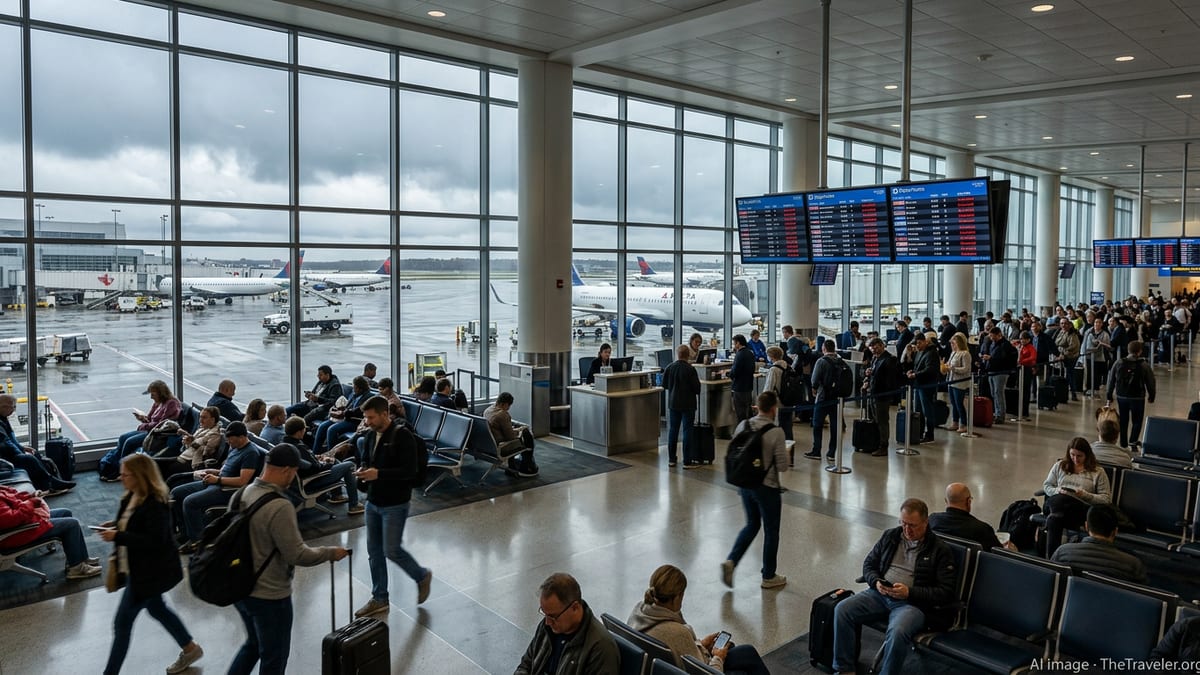
Numerous flights at Boston Logan International Airport were cancelled or severely delayed as powerful storms and operational disruptions rippled through one of New England’s busiest travel hubs, leaving hundreds of passengers facing long lines, missed connections, and last-minute changes to their spring travel plans.
Get the latest news straight to your inbox!
Storm Systems and Ongoing Weather Turbulence
Publicly available forecasting and aviation data indicate that the latest wave of cancellations at Boston Logan is closely tied to a volatile stretch of late-winter and early-spring weather across the eastern United States. A series of powerful systems, including recent blizzards and strong wind and rain events in February and March 2026, has repeatedly disrupted flight schedules in and out of New England.
Reports from meteorological agencies describe Winter Storm Hernando, widely referred to as the Blizzard of 2026, as a significant trigger for cascading disruptions at Boston Logan. During the height of that storm in late February, hundreds of flights at the airport were cancelled as heavy snow and near-blizzard conditions made safe operations difficult and sharply reduced runway capacity.
Even after the blizzard cleared, follow-on systems brought additional bouts of rain, low clouds, and strong winds to the region. According to regional weather discussions, embedded thunderstorms and gusts strong enough to affect aircraft operations have periodically forced ground delays and contributed to further cancellations, particularly during peak morning and evening travel banks.
The result has been a stop-and-go recovery in which airline schedules appear normal one day and then suddenly contract the next when new rounds of adverse weather cross key East Coast corridors, including Boston, New York, and other major hubs that feed Logan’s domestic and international networks.
Scale of Disruption and Impacted Routes
Although cancellation totals fluctuate from hour to hour, airline tracking data and media coverage point to a pattern of significant schedule cuts at Boston Logan whenever the latest storm pulses through. During the height of the February blizzard, nearly a thousand flights were reported cancelled at Logan in a single morning, and more recent stormy periods in March have continued to generate clusters of cancellations and long delays.
The impact has been especially visible on high-frequency domestic routes. Travelers have reported that flights to and from other major East Coast cities, along with popular leisure destinations, have seen multiple departures in a row scrubbed or pushed back. In some cases, entire blocks of service to warmer-weather destinations have been removed from departure boards as airlines consolidate operations to manage weather and staffing constraints.
International services have faced their own disruptions, particularly transatlantic flights that rely on tight overnight schedules and coordinated aircraft rotations. When an inbound aircraft cannot reach Boston on time due to conditions elsewhere in the network, the corresponding outbound flight is often delayed or cancelled, compounding the effect of local weather at Logan.
For passengers, the uneven recovery means that even flights that appear to be operating on time can be vulnerable to sudden changes. Published coverage of recent travel days shows that conditions can deteriorate quickly when wind gusts increase or bands of heavy rain move over the airport, forcing controllers to adjust runway configurations and reduce the rate at which flights can safely depart and arrive.
Why Airlines Are Cancelling So Many Flights
Beyond the immediate weather, several operational factors are magnifying disruption at Boston Logan. Industry analyses highlight a mix of aircraft and crew availability issues that can linger long after the skies clear, especially when storms have affected multiple hubs across the country.
When a storm forces large numbers of cancellations, aircraft and crews are often left out of position. Publicly available airline operations summaries point to aircraft displacement as a key challenge, with jets stranded at airports where demand is low or where follow-on flights have also been cancelled. Getting those aircraft back to Boston and other high-demand airports can take days, particularly when subsequent weather systems limit available time windows for repositioning flights.
At the same time, federal duty-time rules restrict how long pilots and flight attendants can remain on duty. After lengthy weather delays, crews may “time out,” reaching their maximum allowed working hours before a rescheduled flight can depart. Airline advisories note that this has been an issue following the recent Northeast storms, forcing carriers to cancel some flights even when aircraft and airport conditions would otherwise permit operations.
Ground operations are another pressure point. Snow removal, de-icing requirements, and gusty winds all slow the pace of airport activity. When de-icing backlogs develop or strong winds limit the use of certain taxiways and runways, turnaround times lengthen, gates remain occupied for longer, and delays can quickly snowball into cancellations as operating windows close.
What Stranded Travelers Should Do Now
With cancellations likely to continue sporadically as spring weather systems pass through, travelers heading to or from Boston Logan are being urged in public advisories and airline communications to build in extra time and remain flexible with their plans. Checking flight status early and often is essential, as schedules can change rapidly on days with marginal conditions.
Most major airlines serving Boston have issued or updated travel waivers tied to recent severe weather across the East Coast. These waivers typically allow customers booked on affected dates and routes to rebook once without change fees, and in many cases without fare differences if they stay within a defined travel window and route pattern. Passengers are advised to review the latest waiver details directly with their airline and to act quickly, as available alternative seats can disappear fast when disruption is widespread.
For those already at the airport during a wave of cancellations, airport and airline guidance emphasizes the importance of using multiple channels to seek rebooking options. Mobile apps and websites often update more quickly than gate displays, and some carriers enable customers to confirm new flights digitally without waiting in line. Travelers connecting through Boston may also find it easier to reroute through other hubs, depending on aircraft availability and weather patterns across the broader network.
Travelers with time-sensitive commitments, such as international connections or cruise departures, may want to proactively move their flights earlier by a day when major storms are forecast. Past events at Boston Logan show that when conditions deteriorate sharply, later flights are more vulnerable to cancellation, while earlier departures can sometimes operate before winds or visibility drop below safe operating thresholds.
Planning Ahead for Upcoming Spring Travel
Looking ahead, forecasters expect an unsettled pattern to persist at times across New England as winter transitions into spring, suggesting that Boston Logan could continue to experience intermittent disruptions. While not every system will be as severe as the February blizzard, even moderate storms with strong winds or heavy rain can slow operations enough to cause delays and targeted cancellations.
Travel experts recommend that passengers build additional resilience into their plans for trips over the next several weeks. Booking nonstop flights where possible reduces the risk of missed connections, and choosing early-day departures can provide more fallback options if a flight is cancelled. Flexible tickets or fares that allow same-day changes without steep penalties may also prove worthwhile during a season of volatile weather.
For those who must travel through Boston Logan during forecast storms, simple steps such as packing essential medications and a change of clothes in carry-on bags, downloading airline apps in advance, and monitoring both local forecasts and airline advisories can make unexpected disruptions easier to manage. While the recent wave of cancellations has been frustrating for many, public information suggests that conditions at the airport improve quickly once major storm systems move offshore and airlines are able to reposition crews and aircraft.
As New England inches toward more stable late-spring conditions, passengers using Boston Logan can expect a gradual return to more predictable operations. In the meantime, staying informed, planning ahead, and allowing extra time remain the most effective strategies for navigating the current period of heightened flight cancellations and delays.