

More news on this day
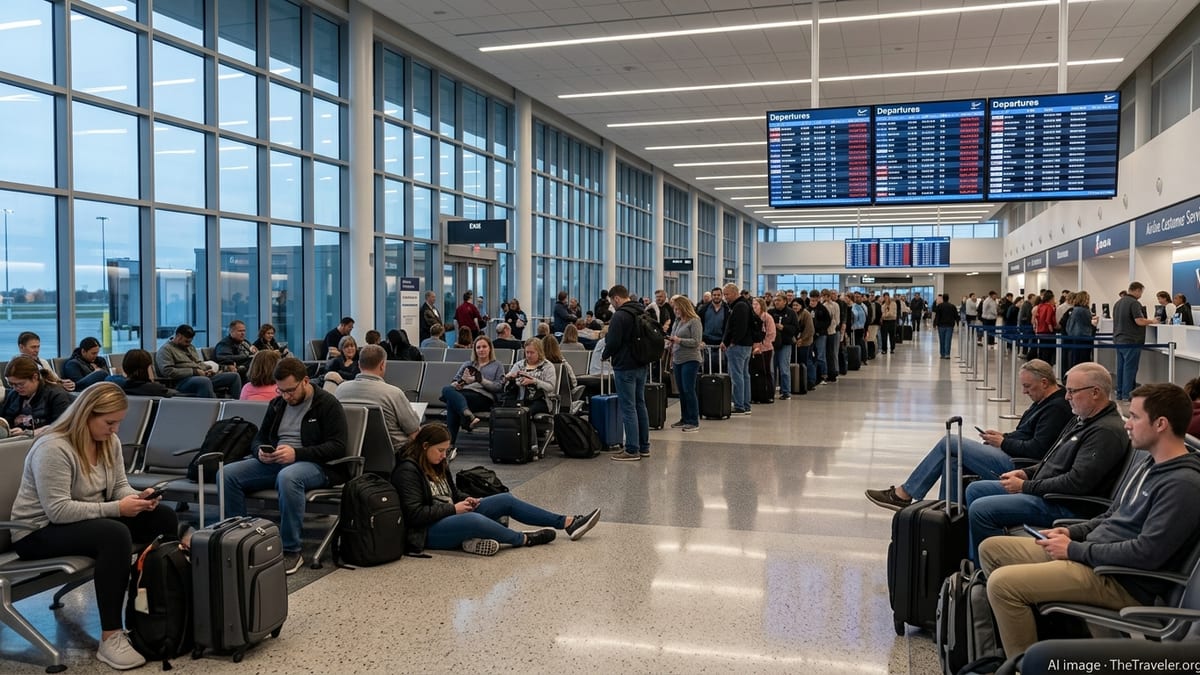
Numerous flights at Kansas City International Airport in Kansas City, Missouri, were canceled and delayed this week, leaving many passengers waiting for hours as a combination of lingering winter weather and wider network disruptions rippled through airline schedules.
Get the latest news straight to your inbox!
Weather and Network Disruptions Drive Cancellations
Publicly available flight tracking data for mid-March 2026 show elevated cancellation and delay rates at Kansas City International Airport, coinciding with a series of late-season winter systems affecting parts of the Midwest and other U.S. hubs. The pattern follows several storm complexes that have recently swept across the central United States, contributing to challenging operating conditions for airlines and airport crews.
Reports indicate that high winds around Kansas City, along with winter weather at other connecting hubs, have been a recurring factor in scrubbed departures and late arrivals. Travelers have described days where multiple early-morning departures from Kansas City to major hubs were canceled in quick succession, forcing rebookings through alternative routes or on later dates.
In addition to local conditions, cancellations at Kansas City are being compounded by aircraft and crew arriving late or not at all from other parts of the country. When a storm or operational issue disrupts flying at a major hub, planes and crews can end up in the wrong place, leading to further cancellations at mid-sized airports like Kansas City even when skies appear relatively calm.
Some passengers have noted that flights were canceled despite clear weather at the airport itself, highlighting how winds aloft, regional storms, and conditions at departure or arrival hubs all factor into decisions to delay or cancel.
Impact on Passengers and Spring Travel
The timing of the latest disruptions is particularly difficult for travelers as it overlaps with the busy spring break period. Families heading to vacation destinations, business travelers, and students returning to or leaving campus have all reported extended waits, missed connections, and last-minute changes to itineraries.
Accounts shared on public forums describe passengers at Kansas City International Airport being rebooked on itineraries with long layovers or on flights several days later than originally planned. Some travelers bound for popular warm-weather destinations from Kansas City have been shifted to multi-stop routings through other hubs as airlines try to work through a backlog of disrupted schedules.
Extended waits at the terminal are being reported, particularly for travelers whose flights were canceled after they had already cleared security. With some rebooked departures not leaving until late in the day or the following morning, passengers have been left seeking available seating, power outlets, and food options within the newer single-terminal facility.
As airlines work to restore normal operations, there are signs that performance can vary by day and by carrier. Travelers departing in the early morning or on less congested days may experience relatively smoother journeys, while afternoon and evening flights following earlier disruptions are more susceptible to rolling delays and cancellations.
What Travelers Should Do If Their Flight Is Affected
Publicly available guidance from airlines and travel experts consistently emphasizes checking flight status frequently, especially in the 24 hours before departure. For Kansas City passengers, this means monitoring airline apps, text alerts, and flight status tools rather than relying solely on conditions visible outside the window. Because many of the recent cancellations are linked to disruptions elsewhere in the network, a flight can be canceled even when local weather appears favorable.
When flights are canceled, most major U.S. carriers typically allow affected passengers to rebook once without an additional fare difference when seats are available in the same cabin. During broader disruption periods, airlines may publish change-fee waivers that expand the available travel dates or allow route changes within a defined geographic area. Travelers flying from Kansas City are encouraged to review these waivers on their airline’s website and adjust plans as soon as possible when cancellations appear likely.
Same-day options may include rerouting through different hubs, accepting longer layovers, or flying earlier or later than originally planned. Seats on alternative flights during busy periods can go quickly, so acting promptly after receiving a cancellation or delay notice is often critical to securing a reasonable replacement itinerary.
Travelers with time-sensitive plans, such as cruises, events, or international connections, may want to consider contingency options, including earlier departure dates or flexible tickets, for trips scheduled during active storm patterns. Travel insurance policies that cover weather-related interruptions may also offer partial reimbursement for extra lodging, meals, or rebooking costs, depending on the terms and timing of purchase.
Navigating the Airport During Extended Waits
The consolidated terminal at Kansas City International Airport was designed to handle increased passenger volumes, but heavy cancellation days can still strain seating, concessions, and ground transport. When flights are disrupted, check-in and customer service counters can see long lines as travelers seek assistance, particularly during early-morning peaks and following clusters of cancellations.
Passengers facing extended waits are finding it helpful to identify quieter seating areas away from the busiest gate clusters when possible. The terminal layout offers a mix of standard gate seating, worktables with power outlets, and dining areas that can provide temporary workspace or rest. Travelers with children may wish to locate family-friendly spaces or quieter corners early, before crowds build later in the day.
Ground transportation can also be affected when cancellations push more travelers into hotels or back into the city than originally planned. Ride-hailing demand may spike and hotel shuttles can become crowded in the evening following major disruption periods. Allowing extra time to secure a ride, considering backup options such as shared shuttles or rental cars, and confirming hotel availability before leaving the secure area can reduce stress.
Passengers who are rebooked for next-day departures should clarify luggage arrangements with their airline before leaving the airport, as policies vary on whether checked bags are held, re-tagged, or returned for overnight stays. Keeping essential items such as medications, chargers, and basic toiletries in carry-on bags remains especially important during these types of irregular operations.
Key Takeaways for Upcoming Kansas City Departures
For travelers with flights scheduled from Kansas City International Airport in the coming days, recent patterns suggest that conditions can change rapidly as weather systems move across the Midwest and other key hubs. Even as airlines work to stabilize schedules, knock-on effects from earlier storms and tight aircraft and crew availability can produce additional day-to-day volatility.
Checking in online as early as allowed, confirming flight status before leaving for the airport, and enabling mobile notifications can provide earlier warning of schedule changes. When disruptions appear likely, contacting the airline through digital channels such as apps or messaging services may offer faster options than waiting in line at an airport counter, particularly during peak disruption periods.
Travelers may also benefit from building more buffer time into connections, especially when connecting through other weather-prone hubs in late winter and early spring. For those starting their trip in Kansas City, selecting earlier departures in the day can sometimes reduce exposure to cascading delays that accumulate later in the schedule.
While the recent wave of cancellations at Kansas City International Airport has upended plans for many passengers, awareness of the evolving conditions, flexible planning, and early action on rebooking options can help travelers navigate what remains a challenging stretch for air travel across the region.