

More news on this day
Passengers traveling between Mexico and major cities in the United States and Canada are facing fresh disruption after more than 30 flights operated by airlines including Viva Aerobus, Spirit, Delta, United, Volaris and Air Canada were canceled across Cancun, Mexico City, Monterrey, Guadalajara, Los Cabos and Puerto Vallarta, affecting key routes to Chicago, Houston, Montreal, Atlanta, Seattle, Las Vegas and other destinations.
Get the latest news straight to your inbox!
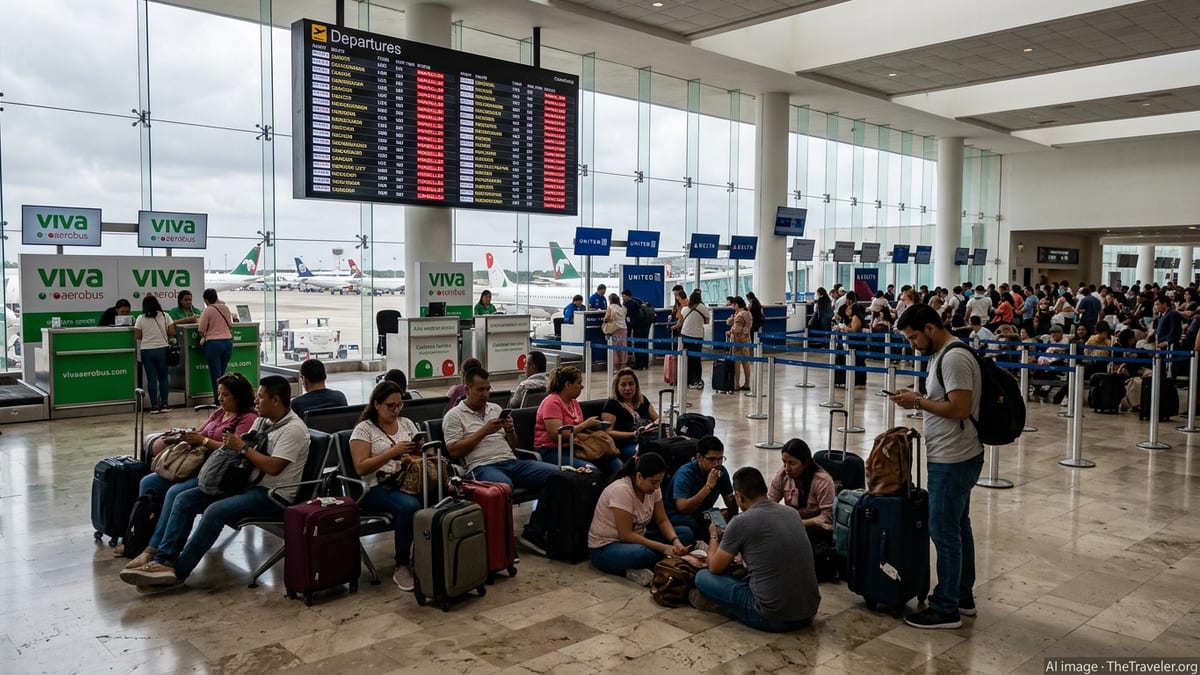
Wave of Cancellations Hits Key Mexican Gateways
The latest round of disruption, reported on March 11, 2026, has left travelers stranded or urgently rebooking as cancellations ripple through some of Mexico’s busiest airports. Services linking major tourist hubs such as Cancun, Puerto Vallarta and Los Cabos with North American cities including Chicago, Montreal, Seattle, Atlanta, Denver and Houston have been particularly affected.
United, Delta, Viva Aerobus, Volaris and Air Canada were among the carriers that scrubbed departures and arrivals, reducing already constrained capacity on popular transborder routes at the tail end of the winter travel season. The interruptions add new pressure to networks that have been strained for weeks by security concerns, staffing challenges and operational knock-on effects.
While full tallies are still being updated, more than a dozen cancellations were reported in a single day, with additional flights delayed or rerouted. Travel industry analysts say the total number of disrupted flights over recent weeks now exceeds several dozen when earlier episodes in February and early March are included.
For leisure travelers heading home from Mexican beach destinations and business passengers moving between major hubs, the sudden schedule changes have meant missed connections, overnight stays and extended detours through alternate airports.
Puerto Vallarta and Guadalajara Under Added Strain
Jalisco’s main air gateways, Guadalajara and Puerto Vallarta, have been at the center of many of the latest disruptions, compounding a difficult period for the region. In recent weeks, a series of security incidents and subsequent travel waivers prompted airlines to trim or suspend some services, and the newest cancellations have slowed the pace of recovery in outbound and inbound traffic.
United and Delta have both adjusted schedules at Puerto Vallarta, while low cost carriers such as Viva Aerobus and Volaris have also seen operations disrupted. Routes from Puerto Vallarta and Guadalajara to Chicago, Houston, Seattle, Montreal and other North American cities have experienced gaps in service as airlines juggle aircraft rotations and crew availability.
Travelers departing Puerto Vallarta reported last minute cancellations and multiple rebookings, with some passengers routed through Mexico City or Monterrey before being able to continue on to the United States or Canada. Others have had to wait days for the next available seat to their original destination, especially on peak northbound flights.
The uncertainty has pressured local tourism providers, who are fielding questions from guests about airport access, flight reliability and whether to modify upcoming itineraries. Hotels and resorts are increasingly working with airlines and tour operators to coordinate late checkouts and extended stays when flights are suddenly withdrawn.
Cancun, Mexico City and Monterrey Feel Network Ripple Effects
The impact is not limited to Jalisco. Mexico’s largest and most connected airports at Cancun and Mexico City, along with the key northern hub of Monterrey, have also experienced cancellations and delays affecting flights to major U.S. and Canadian markets. Routes from Cancun to cities such as Chicago, Houston, Montreal and Las Vegas, and from Mexico City and Monterrey to hubs including Atlanta, Denver and Seattle, have all seen interruptions.
Full-service carriers like United and Delta have been forced to trim parts of their Mexico network on short notice, while ultra low cost competitors such as Spirit and Viva Aerobus continue to balance robust demand with tight operational margins. When one flight is canceled, subsequent rotations can be affected, creating a chain reaction that stretches across multiple airports and days.
Mexico City’s primary international airport has recorded repeated pockets of disruption, with both domestic and international services impacted. Monterrey, a major gateway for industrial and business traffic to Houston, Chicago and other U.S. cities, has also felt the knock-on effects as carriers reposition aircraft and crews.
Although many flights continue to operate as scheduled, the uneven pattern of cancellations has made it harder for passengers to predict which routes are most at risk, prompting calls for clearer, more proactive communication from airlines and airports alike.
Security, Operations and Demand Combine to Disrupt Travel
The latest wave of cancellations comes against a backdrop of broader challenges for air travel in Mexico. Recent episodes of cartel-related unrest and security incidents in western states, including Jalisco, have led to periodic airport access restrictions, heightened security protocols and travel advisories for certain areas. These conditions have already prompted schedule adjustments and flexible ticketing policies on some routes.
At the same time, airlines are contending with tight staffing, aircraft utilization constraints and strong demand for Mexico’s leisure destinations. When disruptions occur, there is limited slack in the system to quickly absorb stranded passengers. Flights between Mexican resort cities and North American hubs are frequently operating near capacity, leaving few open seats for same-day rebooking.
Industry observers note that low cost carriers with dense point to point networks in Mexico, such as Viva Aerobus and Volaris, can be particularly exposed when one or two key flights are canceled, because the knock-on effects can travel through smaller, highly interconnected schedules. Legacy airlines like United and Delta, while having larger fleets, face their own constraints tied to global network commitments and hub congestion.
For travelers, the result is an environment where even a relatively small number of cancellations can translate into long waits, circuitous routings and, in some cases, the need to purchase entirely new tickets on alternate carriers.
What Affected Passengers Should Do Now
Passengers whose flights have been canceled or significantly delayed are being urged to stay closely in touch with their airline’s official channels and to monitor reservations via apps rather than relying solely on airport display boards. Same day rebooking options may appear first in digital channels, and some airlines are offering change fee waivers or fare difference flexibility on affected Mexico routes.
Travelers currently in Mexico and facing disruptions should contact their airline before heading to the airport when possible, as call centers and online agents may be able to propose routings through alternate hubs such as Mexico City or Monterrey. In some cases, shifting departure to a nearby Mexican airport with more available capacity can shorten delays.
Those with upcoming trips to Cancun, Guadalajara, Puerto Vallarta, Mexico City, Monterrey or Los Cabos are being advised not to cancel preemptively, but to build extra buffer time into tight international connections and to consider travel insurance that covers schedule disruptions. Experts also recommend booking the first flight of the day where feasible, as morning departures are less likely to be affected by the cumulative delays that build later.
With demand for Mexico remaining strong and airlines gradually restoring full operations after recent security and operational challenges, analysts expect schedules to stabilize in the coming weeks. For now, however, travelers on routes linking Mexican gateways with Chicago, Houston, Montreal, Atlanta, Seattle, Las Vegas and other key cities should remain prepared for last minute changes and stay flexible with their plans.