

More news on this day
Hundreds of travelers across Canada were left scrambling for alternatives on March 2 as a wave of 63 flight cancellations and 404 delays rippled through major hubs including Toronto, Vancouver, Ottawa and Montreal, affecting services from Air Canada, Air Inuit, Emirates, Borealis and several other carriers.
Widespread Disruptions Across Canada’s Busiest Airports
The fresh round of disruption hit at the start of the workweek, with operational data showing dozens of canceled departures and arrivals and hundreds more running late at key Canadian airports. Toronto Pearson, the country’s largest hub, bore the brunt of the impact, while Vancouver International, Montreal–Trudeau and Ottawa International also reported significant schedule upheaval.
According to airport and industry trackers, the combined tally of 63 cancellations and 404 delays reflects a mix of domestic and international disruptions. While some of the affected flights involved short‑haul routes between major Canadian cities, others linked Canada to Europe, the Middle East and the United States, leaving long‑haul passengers particularly vulnerable to missed connections.
Secondary airports in Quebec and the North also reported knock‑on effects, underscoring how even relatively small schedule changes can ripple through a tightly wound national network. Travelers in cities such as Quebec City and regional northern hubs faced extended time on the ground as crews and aircraft were repositioned to cope with the evolving situation.
Middle East Tensions and Airspace Restrictions Add Pressure
The latest wave of disruption comes just days after Air Canada suspended flights to Israel and Dubai in response to the deteriorating security situation in the Middle East and widespread regional airspace closures. Those suspensions, which extend into the first week of March, have already forced the airline to rework its long‑haul schedule and reassign widebody aircraft.
Emirates operations into Canada have also been affected, particularly at Montreal–Trudeau and Toronto Pearson, where links to Dubai are key gateways for travelers heading to South Asia, Africa and Australia. With airspace over parts of the Middle East restricted or closed, routings have become longer and more complex, and some services have been canceled outright rather than operating with significant detours.
The combination of suspended routes, extended flight times on remaining services and tighter crew‑duty limitations has reduced scheduling flexibility for carriers using Canadian hubs. This, in turn, has made the network more fragile and more susceptible to further delays and cancellations when additional operational issues arise.
Domestic Networks Strained From Toronto to the Arctic
Within Canada, the cascading effects have been particularly visible on routes radiating from Toronto, Montreal and Quebec City to other parts of the country. Air Canada, WestJet, regional partners and northern specialists such as Air Inuit and Borealis have all had to juggle aircraft and crew to keep essential services running.
In Quebec and Nunavik, travelers reported extended waits as flights linking smaller communities to larger centers such as Montreal and Quebec City were delayed or rescheduled. For many northern passengers, these flights are critical lifelines not only for leisure and business, but also for medical appointments and supply runs, raising concerns about the broader social impact of repeated disruptions.
On high‑frequency corridors such as Montreal–Toronto and Toronto–Ottawa, delays early in the day fed into a rolling series of late departures and arrivals. Even where cancellations were limited, tight turnaround times and heavy use of shared crews meant relatively small delays could quickly multiply, pushing flights further off schedule as the day progressed.
Operational Challenges Compound Weather and Capacity Issues
Industry analysts say the disruption reflects a convergence of factors: constrained capacity following years of pandemic‑era downsizing, ongoing staffing challenges in both airline and airport operations, and renewed geopolitical pressures affecting international routes. When combined with routine winter weather concerns in parts of Canada, the result is a system operating close to its limits.
Ground handling bottlenecks, aircraft maintenance requirements and congested air traffic corridors have further narrowed the margin for error. At some airports, airlines have chosen to cancel select departures preemptively rather than risk extensive rolling delays across their schedules, a strategy that can stabilize operations but concentrates the pain on affected passengers.
While airlines have stressed that safety remains their paramount concern, passenger advocacy groups argue that travelers are often left with limited information and few immediate options when flights are disrupted at short notice. With many flights already operating close to capacity, finding same‑day rebooking possibilities has become increasingly difficult, especially for those on long‑haul itineraries.
Travelers Face Long Lines, Rebookings and Uncertain Plans
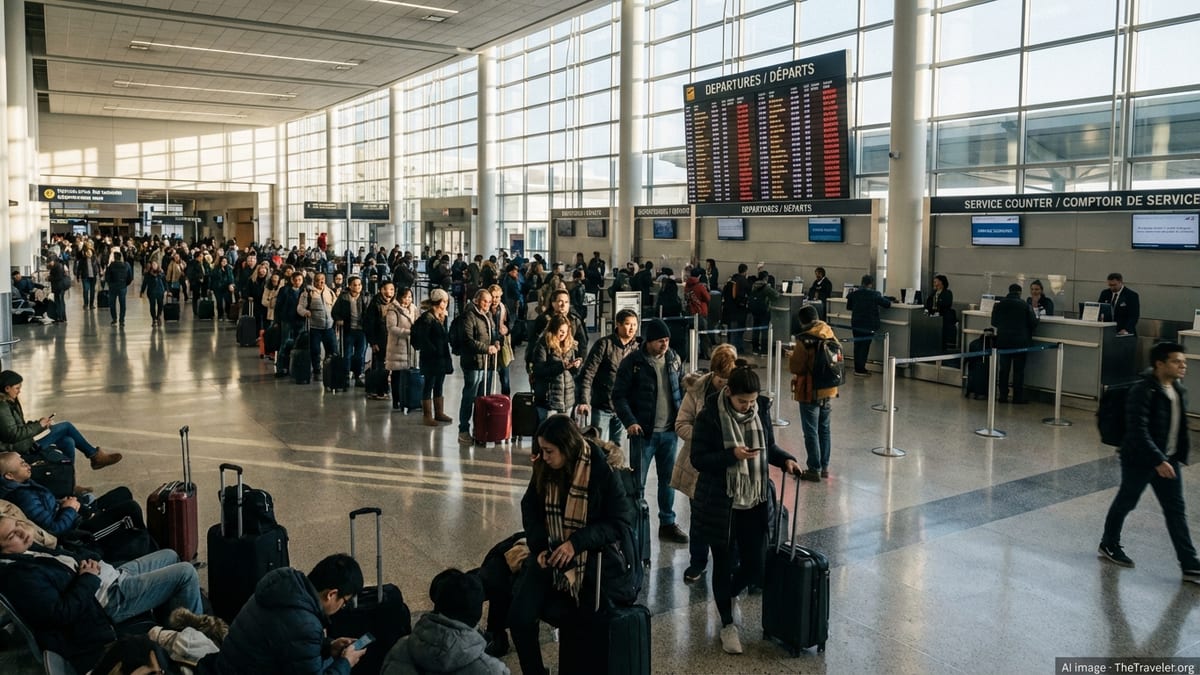
Inside terminals, the problems translated into long check‑in and service desk queues, overburdened call centers and crowded departure halls as delayed passengers waited for updated information. Families returning from school breaks, business travelers with tight schedules and international visitors alike found themselves navigating constantly changing departure boards.
Some carriers moved quickly to offer no‑fee rebooking for affected passengers, encouraging travelers to adjust their plans to later dates where possible. However, in peak travel periods and on high‑demand routes, alternative seats were limited, forcing many to accept lengthy layovers, overnight stays or reroutes through secondary hubs.
Travel experts advised passengers departing in the coming days to monitor flight status closely, arrive at the airport earlier than usual, and build extra connection time into itineraries, particularly when traveling through Toronto or Montreal or when itineraries touch the Middle East. With the regional security situation still fluid and airlines recalibrating their networks in real time, Canadian travelers may need to brace for continued turbulence in the skies and on the ground.