

More news on this day
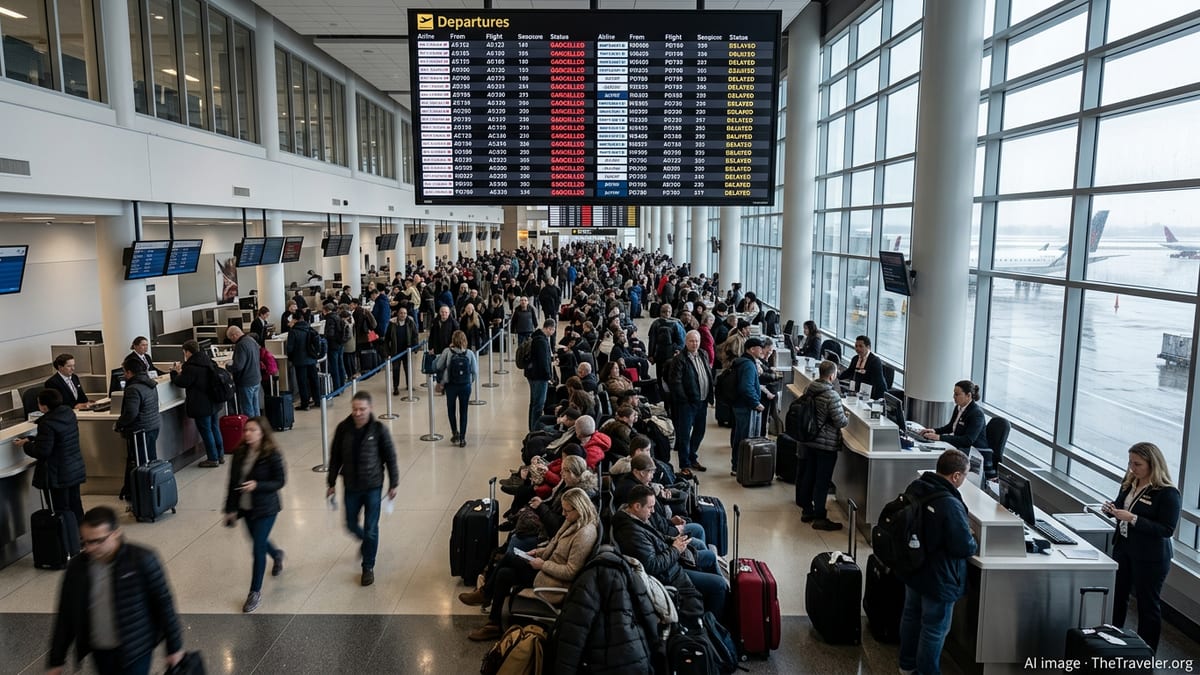
Thousands of airline passengers were stranded across Canada today as a wave of 246 flight cancellations and 303 delays rippled through major hubs in Vancouver, Toronto, Montreal, Calgary and Edmonton, disrupting operations at Air Canada, WestJet, Jazz Aviation, Porter Airlines and several smaller carriers.
Get the latest news straight to your inbox!
Storm Systems and Staffing Squeeze Create a Perfect Disruption
The latest day of aviation chaos comes as a convergence of factors batter Canada’s already stretched air network. A band of freezing rain and snow across Ontario and Quebec has complicated operations at Montreal and Toronto, while lingering staffing shortages, high demand and tight aircraft rotations have amplified the disruption at western hubs in Vancouver, Calgary and Edmonton.
Airlines have been issuing rolling advisories urging passengers to check their flight status frequently and arrive early, citing rapidly changing weather and “knock-on” operational effects as aircraft and crews struggle to get back on schedule. Industry analysts note that even a relatively small set of early-morning disruptions can cascade throughout the day, particularly at large hubs where turnaround times are tight and aircraft operate multiple segments.
Carriers are also contending with residual strain from an intense winter season and an upswing in leisure and business travel. While Canada’s overall cancellation rate in recent months has remained comparatively modest, concentrated disruption at the country’s five busiest airports today has exposed the system’s vulnerability when several hubs are hit at once.
Vancouver, Toronto and Montreal Bear the Brunt
Toronto Pearson and Vancouver International are experiencing some of the heaviest impacts, with a mix of domestic and transborder services disrupted. Flights linking Toronto and Vancouver to secondary cities such as Kelowna, Regina, Winnipeg and Halifax have seen particularly high rates of delays and cancellations, as airlines prioritize long-haul and backbone transcontinental routes.
In Montreal, forecast freezing rain has led carriers to proactively trim schedules to preserve safety margins during de-icing and ground handling. Delays on morning departures have pushed into the afternoon bank of flights, forcing some passengers to miss onward connections to Europe, the United States and other Canadian cities. Airport officials are warning of “rolling congestion” at security and check-in as departure times shift repeatedly.
While not all flights at these hubs are affected, the concentration of disruption on key routes has made rebooking difficult. With many alternative flights already full or departing significantly later in the day, travelers are facing extended waits in terminal seating areas, lengthy customer service queues and a shortage of same-day options on popular domestic corridors.
Calgary and Edmonton Feel the Ripple Effect
In Western Canada, Calgary and Edmonton are grappling with the knock-on effects of schedule problems in both directions. Flights arriving late from Toronto and Montreal are forcing carriers to delay or cancel onward departures, while weather-related slowing of operations in Vancouver is further constraining aircraft availability for prairie services.
Calgary International, a key hub for both Air Canada and WestJet, has seen a cluster of cancellations on short-haul routes to Vancouver, Edmonton and smaller regional destinations, as airlines consolidate passengers onto fewer flights. Edmonton International is reporting a growing tally of delays, particularly on services connecting to the country’s eastern hubs and popular sun destinations.
Operational planners say that when multiple hubs come under stress, regional cities often feel the impact disproportionately. Aircraft that would typically operate quick turnarounds between Calgary, Edmonton and other Western Canadian destinations are being held in larger hubs for recovery flying, leaving some smaller markets with reduced frequencies or last-minute cancellations.
Airlines Struggle to Support Stranded Passengers
Air Canada, WestJet, Jazz Aviation and Porter Airlines have all activated irregular-operations playbooks, bringing in extra call centre staff and encouraging customers to use digital tools to change itineraries. Some carriers are waiving change fees and fare differences on affected routes, particularly where weather or air traffic control restrictions have forced large-scale adjustments.
On the ground, however, passengers report long waits to speak with agents and limited information on when replacement flights might be available. At several airports, departure boards show long columns of “delayed” tags with estimated departure times shifting repeatedly, adding to the frustration of travelers unsure whether to wait at the gate or seek overnight accommodation.
Hotel availability near major airports is tightening as stranded passengers look for last-minute rooms. Travel agents and online booking platforms report a spike in same-day reservations in airport districts, with some travelers opting to reroute via alternative hubs or even switch to rail or long-distance bus services where those are viable options.
What Travelers Can Expect for the Remainder of the Day
With hundreds of flights already affected, aviation observers say a full operational recovery is unlikely before late tonight, and some knock-on disruption may persist into tomorrow’s morning departures. Crews displaced from their scheduled pairings, aircraft out of position and mandatory rest requirements for pilots and flight attendants are all expected to limit how quickly airlines can restore normal schedules.
Passengers with flights scheduled later today are being urged to monitor airline apps and airport departure boards closely and to allow extra time for check-in, baggage drop and security. Those with tight connections, especially through Toronto, Vancouver or Montreal, may wish to discuss alternatives with their carrier before heading to the airport, as minimum connection times may no longer be realistic in today’s conditions.
While today’s tally of 246 cancellations and 303 delays is severe, industry experts caution that such large-scale events are likely to become more common as volatile weather patterns, congested airspace and tight staffing intersect with strong travel demand. For Canadian travelers, building additional flexibility and buffer time into itineraries is increasingly becoming a practical necessity rather than a luxury.