

More news on this day
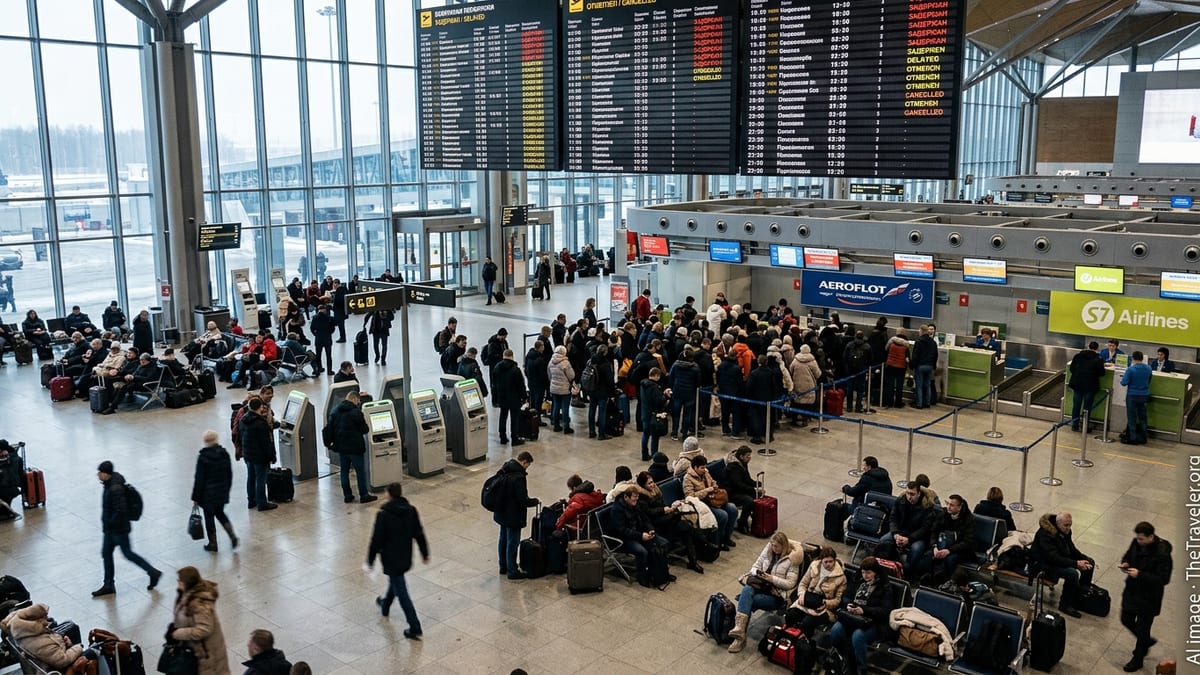
Air passengers across Russia faced a difficult travel day as widespread disruption rippled through key hubs in Yakutsk, Moscow, Saint Petersburg and Vladivostok, with 71 flight delays and six cancellations reported on services operated by Aeroflot, S7 Airlines and several other domestic carriers.
Get the latest news straight to your inbox!
Widespread Disruptions Across Russian Air Network
Publicly available airport and flight-tracking information for March 19 indicates that Russian air travel experienced significant operational strain, with dozens of departures and arrivals pushed back or scrubbed from schedules across multiple time zones. The disruption was most visible at Moscow’s congested airports, Saint Petersburg’s Pulkovo facility, Vladivostok’s Far Eastern gateway and Yakutsk, a vital aviation lifeline for the remote Sakha Republic.
Data collated from day-of-travel reports show at least 71 flights subject to delays alongside six outright cancellations, affecting both domestic and limited international routes. The knock-on effects extended well beyond the four headline airports, as late aircraft and crew rotations complicated operations at regional fields connected to these hubs.
The day’s irregular operations primarily involved major Russian carriers Aeroflot and S7 Airlines, but schedules for other operators in the domestic market were also affected. Passengers connecting through Moscow and Saint Petersburg in particular encountered revised departure times, missed connections and extended waits both on the ground and in transit.
While precise causes varied flight by flight, the scale and geographic spread of the disruption underscored the sensitivity of Russia’s tightly scheduled domestic network to any combination of weather, congestion and aircraft availability pressures.
Impact on Passengers in Yakutsk and the Russian Far East
Yakutsk, one of the coldest major cities in the world and a strategic hub for air links across the Sakha Republic, experienced notable schedule disruption. Available tracking data show multiple services delayed on routes connecting Yakutsk with Moscow and other regional centers, compounding the challenges for residents in a region heavily reliant on air travel for long-distance movement and essential logistics.
Delay minutes quickly accumulated as aircraft arriving late from western Russia forced a cascade of pushed-back departures. For many travelers, this meant extended periods in terminal buildings already coping with seasonal constraints and limited alternatives for rebooking, particularly on thinner regional routes where frequencies are relatively low compared with European Russia.
Farther east in Vladivostok, an important bridge between Russia and the Asia-Pacific region, disruption also rippled through domestic links to major cities such as Moscow and Novosibirsk. According to operational summaries, delays affected both early-morning departures and evening arrivals, compressing already tight ground-handling turnaround windows and limiting the ability of airlines to recover schedules later in the day.
Given the vast distances involved in Far Eastern routes, even modest timing shifts can result in missed ground transfers or forced overnight stays. On the most affected services, passengers faced the prospect of arriving at their destinations several hours later than planned, disrupting work commitments, onward rail journeys and local accommodation arrangements.
Moscow and Saint Petersburg Hubs Under Strain
Russia’s principal aviation hubs around Moscow remained central to the turbulence. Sheremetyevo, Domodedovo and Vnukovo collectively handle a large share of Aeroflot and S7 Airlines traffic, as well as that of other domestic carriers. On March 19, publicly accessible tracking boards showed sizeable clusters of flights departing behind schedule, with reactionary delays increasingly common as the day progressed.
Saint Petersburg’s Pulkovo Airport also contended with a dense bank of delayed flights, particularly on high-frequency routes linking the northern capital with Moscow and other major cities. Reports indicated that some services were held at gates awaiting aircraft or crews arriving late from previous legs, while others joined departure queues amid periodic congestion on runways and taxiways.
The interaction between Moscow and Saint Petersburg operations is especially sensitive, as both cities function as key redistribution points for passengers traveling between Russia’s regions. When departure banks from these hubs slip, the disruption can quickly reach onward destinations, from the Volga region to Siberia and the Far East, complicating travel plans even for passengers who did not pass through the most heavily affected airports.
Travelers already en route were confronted with real-time gate changes, revised boarding times and, in some cases, rescheduled onward connections. Airport information screens across both metropolitan areas reflected a patchwork of changing status updates, underscoring the dynamic and unsettled nature of the day’s operations.
Aeroflot, S7 Airlines and Other Carriers Affected
Aeroflot and S7 Airlines, Russia’s two most prominent carriers, bore a substantial share of the disruption, reflecting their dominant role in stitching together the country’s extensive domestic network. According to published flight-monitoring feeds, both airlines saw numerous services running late from their primary bases in Moscow and regional focus cities.
Aeroflot’s operations, heavily centered on Moscow’s Sheremetyevo Airport, showed clusters of delayed departures to destinations such as Yakutsk, Vladivostok and other regional centers. When aircraft arrived late from previous sectors, ground teams faced compressed turnarounds, making it harder to return schedules to normal rhythm as the day unfolded.
S7 Airlines, which operates a significant share of domestic point-to-point routes including links involving Siberian and Far Eastern destinations, also saw several flights affected. Late arrivals into Moscow and other hubs reverberated through subsequent departures, pushing some services into later time slots and tightening already busy evening waves.
Other regional carriers operating into Yakutsk, Saint Petersburg and Vladivostok likewise reported adjustments to scheduled times. While not all delays were severe, the combined effect of dozens of altered flights across multiple airlines contributed to an overall sense of uncertainty for passengers planning same-day connections or time-sensitive arrivals.
Travelers Confront Delays, Rebookings and Tight Connections
For passengers, the immediate impact of the 71 delays and six cancellations translated into longer waits, last-minute itinerary changes and, in some instances, unexpected overnight stays. Travelers connecting from regional cities through Moscow or Saint Petersburg found particular challenges when inbound delays left insufficient time to make onward flights.
Publicly available guidance from airports and consumer travel resources generally recommends that passengers facing extensive disruptions maintain close contact with airlines through mobile applications, call centers and airport service desks. On a day marked by widespread schedule changes, same-day rebooking options could be limited, especially on high-demand trunk routes linking European Russia with Siberia and the Far East.
Travel forums and social media posts referencing the day’s operations highlighted familiar scenes of crowded departure halls, long queues at customer service counters and boards dotted with revised departure times. While some travelers experienced only minor inconvenience, others reported missed meetings, disrupted holiday plans and additional out-of-pocket expenses for lodging and meals.
With Russia’s domestic air network relying heavily on tight aircraft rotation and long sectors, the pattern of disruption seen across Yakutsk, Moscow, Saint Petersburg and Vladivostok illustrates how even a relatively small number of schedule interruptions can cascade through the system, leaving passengers and airlines alike working to regain stability as the operational day progresses.