

More news on this day
Hundreds of passengers were left in long lines and crowded terminals at Miami International Airport today after 203 flights were delayed and four canceled, disrupting American Airlines, Delta Air Lines, Southwest Airlines and other carriers on busy domestic and international routes.
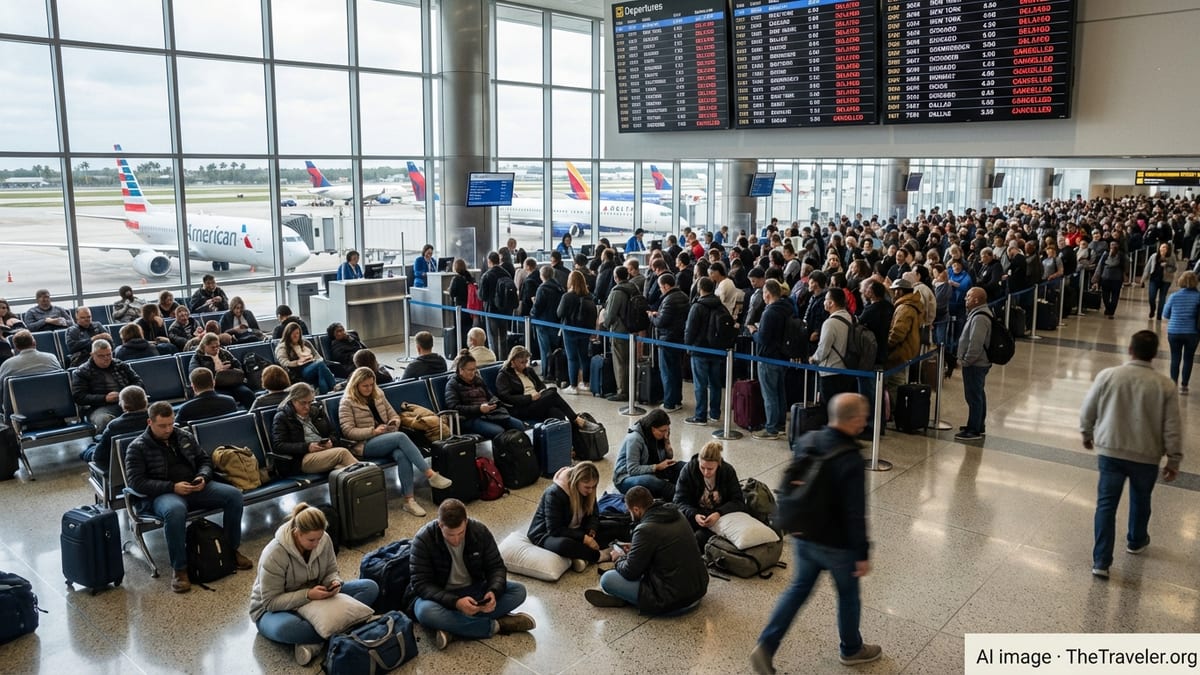
Severe Disruptions Across Major U.S. and International Routes
The disruptions at Miami International Airport rippled across some of the busiest corridors in global aviation, with delays and cancellations affecting flights to New York, Los Angeles, Chicago, Toronto, London, Paris and São Paulo. Travelers reported boarding, deplaning and reboarding aircraft as crews cycled through rolling departure estimates that shifted by the hour.
American Airlines, Delta and Southwest were among the hardest hit carriers at the airport, alongside a mix of other U.S. and international airlines operating codeshare services. Operations data showed a heavy concentration of delayed departures on transcontinental flights to the U.S. West Coast and on overnight transatlantic services to Europe, where displaced passengers now face missed connections and rebooking challenges.
While only four flights were officially canceled, aviation analysts noted that more than 200 delays at a major hub can cascade into network disruptions across the United States and beyond. Even relatively short delays in Miami can push aircraft and crew out of position for onward legs to cities such as Toronto and São Paulo, where schedules are already tight during the winter travel period.
The disruption comes as Miami International continues to rank among the U.S. airports with the highest share of delayed flights annually, a reflection of its role as a congested hub for both domestic and long haul international travel combined with frequent weather and air traffic constraints.
Passengers Face Long Lines, Missed Connections and Overnight Stays
Inside the terminals, travelers described scenes of crowded gate areas and winding customer service queues as hundreds of passengers sought new itineraries or answers about their flights. Families returning from Caribbean and Latin American vacations, business travelers on tight schedules and international tourists all found themselves competing for scarce rebooking options.
With so many flights running late, even those with confirmed seats often struggled to make onward connections in New York, Chicago or Los Angeles. Some passengers connecting onward to Europe and South America were offered next day itineraries, prompting a rush on nearby airport hotels and leaving others to spend the night in terminal seating areas.
Announcements over the public address system urged patience as customer service agents worked through backlogs, but frustrated travelers reported limited information about the exact causes of individual delays. Many described repeatedly refreshing airline apps as departure times slid in small increments throughout the day, a familiar pattern during large scale disruption events.
Airport staff moved additional personnel into key checkpoints and information desks to help direct crowds and manage growing lines around security, rebooking counters and baggage services for those whose luggage became separated from rapidly changing travel plans.
Airlines Implement Recovery Measures as Storm Impacts Linger
The operational challenge in Miami unfolded as airlines across the United States continued to manage the knock on effects of a powerful winter system in the Northeast that has already forced thousands of cancellations nationwide in recent days. Carriers responded by trimming schedules, repositioning aircraft and calling in reserve crews in an effort to stabilize operations.
At Miami International, airlines began consolidating some lightly booked departures and rerouting traffic through alternative hubs to ease pressure on constrained time banks. Additional customer care staff were deployed to handle rebookings, while some carriers offered passengers fee waivers and flexible travel policies to postpone trips away from the peak of the disruption.
Operations planners cautioned that even as the immediate backlog clears, passengers may continue to feel the effects for at least another day on certain routes. Aircraft and crew that departed Miami late are likely to arrive behind schedule at downline airports such as New York, Toronto or London, increasing the risk of knock on delays in those markets as well.
Industry observers say the latest episode once again highlights the vulnerability of tightly optimized airline schedules when confronted with storms or air traffic snarls, particularly at busy hubs where a high percentage of passengers connect onward to other destinations.
Miami’s Role as a High Traffic, High Delay Gateway
Miami International Airport has grown into one of the country’s most important international gateways, particularly for routes linking North America with Latin America and the Caribbean, as well as select services to Europe. That stature brings significant economic benefits but also places Miami near the top of national rankings for flight disruptions.
Analyses of recent flight performance data have consistently placed Miami among the U.S. airports with some of the highest proportions of delayed departures. Aviation experts attribute this to a combination of heavy traffic, summer thunderstorms, seasonal cold fronts that can disrupt operations, and the complex choreography involved in managing large numbers of widebody aircraft on tight turnaround schedules.
The airport’s importance as a connecting hub amplifies the impact of any single day of disruption. A delayed flight from Miami to São Paulo, for example, can strand passengers who were due to connect onward to regional destinations in Brazil, while delays on Miami to New York services can cause travelers to miss late night transatlantic departures from other East Coast airports.
Travel advisors increasingly recommend that passengers build longer connection windows when routing through Miami, particularly during peak winter and summer seasons, to create a buffer against the kinds of rolling delays witnessed today.
What Travelers Should Do If Their Miami Flight Is Affected
With more than two hundred flights impacted in a single day at Miami International, travel experts emphasize the importance of acting quickly when disruption hits. Passengers are urged to check their flight status before leaving for the airport and to rely on official airline apps or airport information screens for the most current updates.
Those whose flights are significantly delayed or canceled should immediately explore rebooking options via mobile apps and airline websites rather than waiting in physical lines, which can quickly become overwhelmed. In many cases, digital channels will display alternative routing possibilities through other hubs that agents at the airport are also accessing, potentially saving hours of waiting.
For travelers facing overnight delays, specialists advise confirming how their particular airline handles hotel and meal arrangements before leaving the secure area, as policies can differ based on whether the cause is weather related or operational. Keeping receipts for incidental expenses can be important for any later compensation requests.
Regular flyers also stress the value of travel insurance and flexible tickets, which can provide additional options when sudden disruptions in Miami or at other major hubs threaten to upend carefully planned itineraries, especially on long haul journeys to cities such as London, Paris or São Paulo.