

More news on this day
Travelers passing through Queen Alia International Airport in Amman are facing a fresh wave of flight disruptions, with dozens of delays and cancellations affecting Royal Jordanian, Qatar Airways and EgyptAir services to Doha, Cairo and other major hubs across the Middle East and beyond.
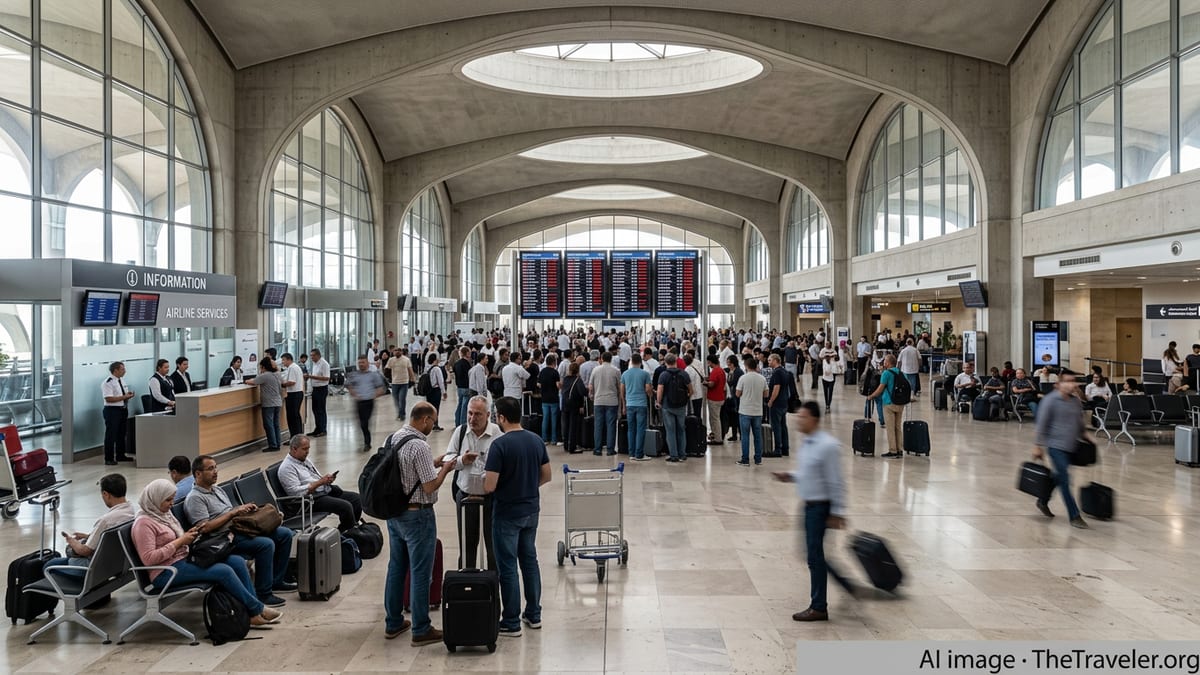
Dozens of Flights Delayed or Canceled in Amman
Operational data from Queen Alia International Airport on March 9 indicate a sharply reduced and highly disrupted schedule, with 38 delayed flights and 38 cancellations affecting departures and arrivals throughout the day. While some services are still operating, the knock-on impact for connections across the region is significant, particularly for passengers traveling onward to Europe, North America and Asia.
The most affected routes include services between Amman and other regional hubs such as Doha and Cairo, where aircraft and crews are tightly scheduled and any irregular operations quickly cascade through the network. Passengers connecting through Amman report missed onward flights and extended layovers, with some stranded overnight as seats on alternative departures rapidly fill up.
Airport staff in Amman are working with airline teams to rebook passengers where possible, but capacity constraints mean that many travelers are being offered re-routing via secondary hubs or later departures by several days. In the terminal, departure boards have alternated between long stretches of “delayed” and “canceled” notices, underscoring the volatility of operations.
Royal Jordanian Adjusts Network Amid Regional Airspace Constraints
Royal Jordanian, the national carrier based at Queen Alia International Airport, has been at the center of the disruption. The airline has already suspended or sharply reduced flights to several destinations in recent days as it responds to complex airspace restrictions and shifting security assessments across the region.
Services to key Gulf and Levant destinations have been particularly affected, with intermittent suspensions on routes including Doha and other nearby hubs. Even where flights are operating, Royal Jordanian has warned that departure and arrival times may change at short notice, and that some aircraft may need to take longer routings to avoid restricted airspace, adding to delays.
Royal Jordanian has emphasized that passengers on canceled flights will be rebooked on the next available service or offered alternative travel options where seats permit. However, with Queen Alia functioning under constrained operating windows and other carriers also trimming schedules, same-day alternatives are limited, especially for peak-time departures to Europe and long-haul destinations.
Qatar Airways and EgyptAir Feel the Strain Across Their Networks
Qatar Airways and EgyptAir, both major regional players, are also feeling the strain as disruptions at Amman intersect with challenges at their home hubs. Qatar Airways, which relies on its Doha base as a global connection point, is contending with shifting routings across parts of the Middle East, creating tighter aircraft rotations and increased reactionary delays that are now being felt on selected Amman services.
EgyptAir continues to manage a turbulent operating environment centered on Cairo, where recent days have seen elevated levels of delays and cancellations tied to regional airspace changes and surging passenger demand. The carrier’s flights linking Cairo and Amman form part of a broader network under pressure, and cancellations or delayed departures in either city can ripple through subsequent rotations.
For passengers flying Amman to Doha or Cairo and then onward to long-haul destinations, the compounded impact is especially acute. Missed long-haul connections are leading to extended hotel stays, rebookings on later dates, or re-routing via alternative hubs where seats are available, such as Istanbul, Dubai or European gateways.
Regional Knock-on Effects from Broader Middle East Disruptions
The current situation at Queen Alia cannot be viewed in isolation. Across the wider Middle East, airlines and airports have been grappling with a patchwork of airspace advisories and evolving security conditions since late February, leading to widespread schedule changes, diversions and day-of-flight cancellations.
Major hubs in the Gulf and North Africa have reported hundreds of disrupted services in recent days, with carriers including Qatar Airways, Royal Jordanian and EgyptAir all adjusting timetables as airspace corridors open and close or become more congested. Amman’s role as a key connecting point between the Levant, the Gulf and Europe means that disruptions elsewhere quickly translate into gaps or bunching in Queen Alia’s daily schedule.
Aviation analysts note that even a modest reduction in available airspace or airport capacity can produce outsized operational challenges when networks are tightly timed and aircraft utilization is high. With airlines already running lean schedules at the end of the winter season, there is limited slack in fleets and crews to absorb cascading delays.
What Affected Travelers Should Do Now
Travel experts are urging anyone scheduled to travel through Queen Alia International Airport in the coming days to monitor their flight status closely and build in extra contingency time for potential disruptions. Same-day changes are increasingly common, with some departures being retimed, consolidated or canceled just hours before boarding.
Passengers whose flights have already been canceled are being advised to contact their airline or travel agent as early as possible to secure rebooking options, as seats on alternative departures from Amman, Doha and Cairo are filling rapidly. Many carriers are temporarily relaxing change and refund policies for affected routes, although specific conditions vary by airline and ticket type.
Travelers in transit through Amman should also be prepared for longer layovers, limited same-day connections and possible overnight stays if long-haul links are missed. Travel insurance that covers delays and cancellations may help offset additional accommodation and meal costs, but policyholders are being reminded to keep all receipts and obtain written confirmation of disruptions from their airlines where feasible.
With operational conditions still fluid across the region, aviation authorities and airlines are cautioning that further schedule changes at Queen Alia International Airport remain likely in the short term. For now, flexibility and up-to-date information are emerging as essential tools for anyone planning to travel via Amman, Doha, Cairo and neighboring hubs.