

More news on this day
Hundreds of passengers across the United Kingdom, the Netherlands and mainland Europe are facing severe travel disruption as more than 40 flights were canceled and around 335 delayed at London Heathrow and Amsterdam Schiphol, triggering a wave of missed connections and overnight strandings from Nuremberg and Geneva to Oslo and Paris.
Get the latest news straight to your inbox!
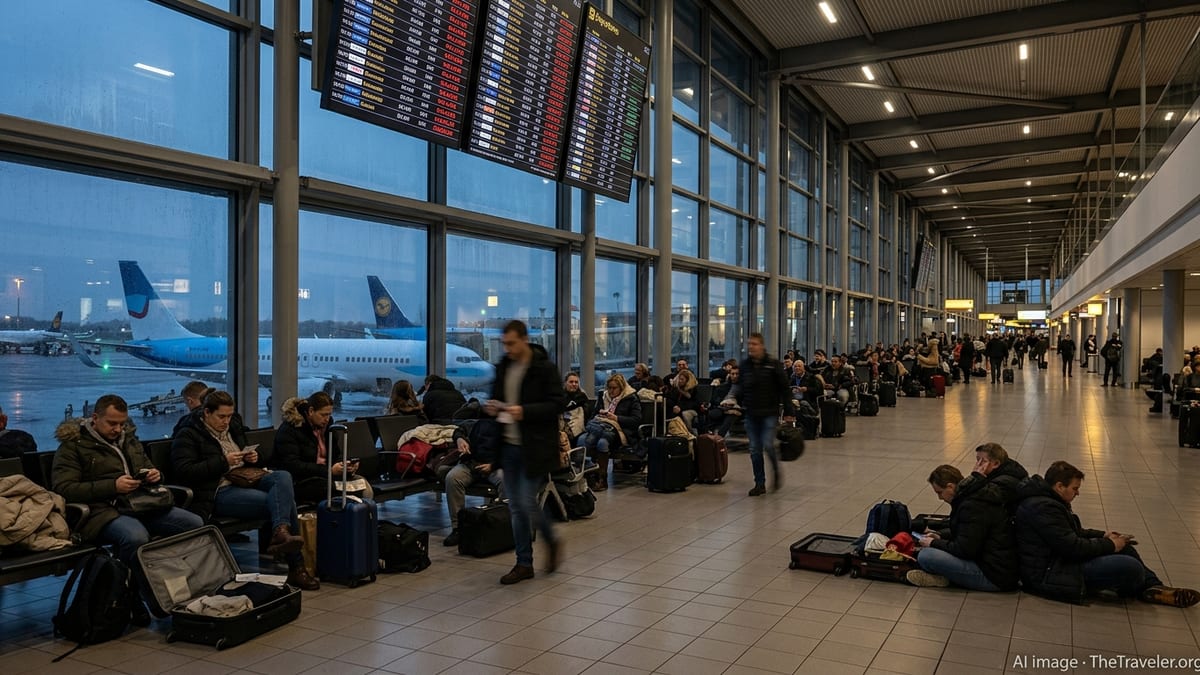
Severe Disruption at Two of Europe’s Busiest Hubs
London Heathrow and Amsterdam Schiphol, among Europe’s most heavily trafficked international hubs, have again become focal points for large scale disruption, with publicly available tracking data indicating that more than 40 flights were canceled and well over 300 delayed in a single day of irregular operations. The disturbance has affected both arrivals and departures, cutting into already tight schedules and pushing crews and aircraft out of position across the wider network.
Operational data and media monitoring show that the knock on effects have been particularly acute for passengers on intra European routes, where short sector lengths and rapid turnarounds leave little margin to recover from cascading delays. At Heathrow, the strain is compounded by high runway occupancy and slot constraints, while Schiphol has periodically reduced capacity during adverse weather or ground handling slowdowns, creating frequent choke points.
While the precise mix of causes varies from airport to airport, recent seasons in northern Europe have been marked by weather related pressure, infrastructure vulnerabilities and ground operation bottlenecks. Previous reports into disruption at both hubs have highlighted how relatively short interruptions, such as power issues, crosswinds or de icing backlogs, can swiftly translate into dozens of cancellations and hours of schedule knock on effects once airline rotations are disturbed.
Ripple Effects Across Nuremberg, Geneva, Oslo, Paris and Beyond
The impact of disrupted operations at Heathrow and Schiphol is being felt well beyond London and Amsterdam. Flight monitoring snapshots for the affected period show late running or canceled services across a chain of secondary and regional airports, including Nuremberg, Geneva, Oslo and Paris, as aircraft and crews fail to arrive on time for onward legs.
According to published coverage and punctuality data, even a limited reduction in movements at a hub can place considerable stress on satellite airports that depend on inbound aircraft for their next departures. When a flight from Amsterdam to Nuremberg or from London to Geneva is delayed or canceled, the aircraft scheduled to operate subsequent segments from those cities often remains out of position for much of the day, creating further disruption for local travelers.
Passengers report facing long queues at customer service desks, limited information on revised departure times and difficulty in securing same day alternatives. The combination of full winter and early spring schedules, constrained seat availability and aircraft nearing daily utilization limits means that rebooking options are frequently pushed to the following day or beyond, especially on heavily trafficked business and city break routes.
KLM, SAS, British Airways, Finnair, Iberia and ITA Airways Among Affected Carriers
The latest wave of disruption is hitting a roster of major European and network carriers, including KLM, SAS, British Airways, Finnair, Iberia and ITA Airways. Publicly available flight status information indicates that these airlines have experienced a mix of outright cancellations and extended delays on services to and from Heathrow and Schiphol, as well as on onward flights that depend on feed from those hubs.
For KLM, which relies heavily on Amsterdam as a transfer point, concentrated disruption at Schiphol can quickly spill over into its operations across Scandinavia, central Europe and southern European destinations. Reports from recent months have described days when de icing constraints, staffing shortages and weather restrictions combined to force the cancellation of hundreds of flights at the Dutch hub, leaving large numbers of transfer passengers seeking overnight accommodation and alternative routings.
British Airways and its partners face similar vulnerabilities at Heathrow, where tightly banked waves of departures and arrivals are designed to maximize connections but can prove fragile in the face of delays. Reactionary disruption is also evident for SAS, Finnair, Iberia and ITA Airways, whose aircraft operating into London and Amsterdam often continue on to other European cities. When an early morning feeder flight is held back or scrapped, the corresponding midday and afternoon rotations are frequently impacted, leading to a chain of missed slots and, in some cases, further cancellations.
Weather, Infrastructure and Capacity Constraints Drive Irregular Operations
Recent seasons in northern and western Europe have underlined how a combination of weather volatility, infrastructure strain and ground handling limitations can jointly undermine schedule reliability. Published analyses of earlier disruptions at Schiphol, for example, describe how modest accumulations of snow, shifting crosswinds or fog can sharply reduce runway and taxiway capacity, prompting airlines to pre emptively cancel flights in response to airport slot reductions.
At Heathrow, previous reports into major incidents, including power related outages and severe weather fronts, have shown that even short duration interruptions can lead to disproportionately large numbers of cancellations. With the airport routinely operating near capacity, recovery windows are narrow and airlines have little room to absorb rolling delays without cutting flights or trimming frequencies.
These pressures are compounded by broader industry challenges, such as staffing gaps in air traffic control or ground handling, and heightened regulatory requirements around crew duty times and de icing procedures. Operators increasingly face a trade off between maintaining ambitious schedules and building in buffers that could help limit reactionary disruption but may reduce overall network efficiency.
Passengers Confront Long Queues, Tight Rebooking Options and Compensation Questions
For passengers, the immediate experience of the disruption is measured in hours spent in terminals, missed meetings and holidays starting late. Social media posts and traveler accounts describe crowded customer service counters at multiple airports, with some passengers opting to seek rerouting via alternative hubs in Brussels, Frankfurt or other European gateways when connections through London or Amsterdam become untenable.
Publicly available guidance from consumer advocates and aviation regulators emphasizes the importance of monitoring flight status closely, checking in with airlines as early as possible when delays mount and retaining receipts for meals and accommodation in case of reimbursement or compensation claims. The increasingly complex mix of causes behind cancellations, from certified weather events to staffing and infrastructure issues, has made the question of eligibility for financial compensation a recurring point of contention between passengers and carriers.
As irregular operations ripple outward from major hubs like Heathrow and Schiphol, travel specialists suggest that passengers build more generous connection times into itineraries, particularly during the late winter and early spring period when weather and operational stresses frequently peak. While Europe’s aviation system is designed to move large numbers of people efficiently through a dense network of hubs and spokes, the events surrounding the latest wave of cancellations and delays show how quickly that system can be thrown off balance.