

More news on this day
Thousands of air travelers across northern and eastern China are facing extensive delays and cancellations after 60 flights were grounded and a further 332 services postponed on routes linking Beijing, Shanghai, Chengdu and Urumqi, severely testing the resilience of the country’s domestic aviation network.
Get the latest news straight to your inbox!
Wide Disruptions Across Northern, Eastern China and Xinjiang
The latest wave of disruptions has hit some of China’s busiest aviation corridors, affecting core hubs in Beijing, Shanghai, Chengdu and Urumqi and rippling across northern China, eastern seaboard routes and the Xinjiang region. Air China, China Eastern and China Express are among the most affected carriers, with a combined 60 outright cancellations and more than 300 delayed departures and arrivals across major airports, according to operational data compiled on Tuesday.
Services linking Beijing and Shanghai with inland hubs such as Chengdu and the northwestern gateway of Urumqi have seen particular strain, as bottlenecks at one airport quickly cascade to others. Passengers transiting through multiple hubs have been especially vulnerable, with missed connections compounding delays and forcing same day itinerary changes.
Industry analysts note that these routes form the backbone of China’s domestic network, carrying a significant share of business and long distance leisure traffic. When disruptions strike simultaneously across several of these trunk corridors, they quickly translate into widespread congestion, full rebooking queues and a shortage of spare seats for displaced travelers.
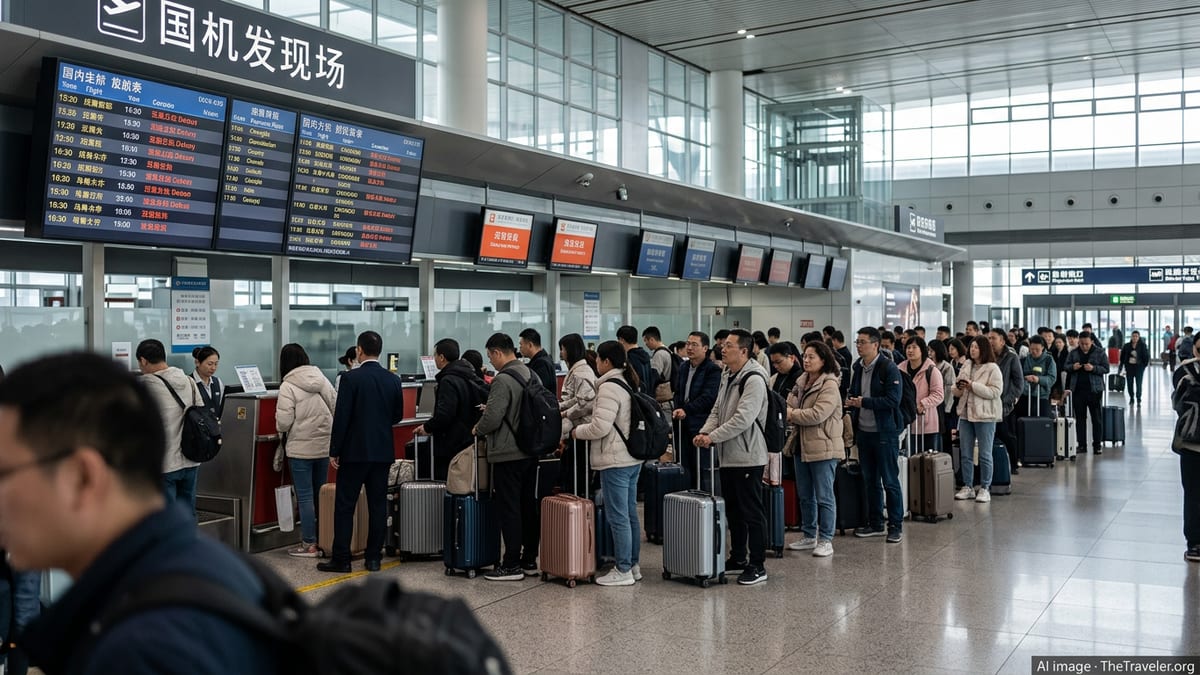
Airport terminals in the affected cities reported dense crowds around airline service counters and boarding gates, with many travelers forced to wait for hours while operations staff worked through the backlog of schedule changes. Loudspeaker announcements about rolling delays became a constant backdrop as airlines updated departure times in short increments.
Key Affected Routes and Cities
The heaviest impact has been seen on high frequency domestic routes radiating from Beijing and Shanghai toward the southwest and northwest. Flights between Beijing and Chengdu, Beijing and Urumqi, Shanghai and Chengdu, and Shanghai and Urumqi have experienced clusters of cancellations and long delays, disrupting both point to point travel and onward connections deeper into northern and western China.
In Beijing, services at both Capital and Daxing airports have been affected, especially departures in the late morning and afternoon banks when aircraft and crew rotations are tightly sequenced. Shanghai’s Pudong and Hongqiao airports have reported knock on effects, with some aircraft arriving late from inland cities and turning around behind schedule for onward flights to other eastern coastal hubs.
Chengdu, a key gateway to western China, has seen its own departures to Beijing and Shanghai pushed back, reducing connectivity for travelers headed to smaller regional airports across Sichuan and neighboring provinces. In Xinjiang, Urumqi’s position as the main hub for routes to cities such as Karamay and Yining has magnified the effect, as cancellations on trunk routes limit options for passengers starting or ending their journeys in remote areas.
International itineraries that rely on domestic legs into Beijing or Shanghai for long haul connections have also been affected. Some travelers heading to or from Europe, the Middle East or Southeast Asia have reported missed onward flights after their domestic feed services from Chengdu or Urumqi were significantly delayed, forcing costly last minute rebookings or overnight stays.
How Airlines Are Handling Rebooking and Refunds
Air China, China Eastern and China Express have activated irregular operations procedures, prioritizing free rebooking for passengers on grounded flights and those facing substantial delays on affected routes. At airport counters, travelers are being offered options to move to later same day departures where space exists or to rebook for subsequent days without additional fare differences on the same cabin in many cases.
Call centers and mobile apps are playing a central role in managing the surge of change requests. Travelers report long wait times on customer service hotlines, but many have been able to secure alternative itineraries via airline apps or through the platforms where they originally booked, reducing the need to queue in person. Some carriers are also sending push notifications and text messages with automatic rebooking offers when a flight is canceled outright.
Refund policies vary by ticket type, but passengers on canceled flights are generally entitled to full refunds if they choose not to travel, while those facing extensive delays can often request itinerary changes without extra fees. Flexible and semi flexible fares tend to provide broader options, including changes to different routes or alternate departure airports within the same city.
For travelers with tight onward connections, frontline staff at Beijing, Shanghai, Chengdu and Urumqi are advising customers to proactively flag their connecting flights as soon as a delay is announced. This allows rebooking teams to secure backup options earlier, when more seats may still be available on later departures or rival carriers on key trunk routes.
Practical Advice for Stranded and Soon to Depart Travelers
Passengers already at the airport are being urged to remain close to their departure gates and monitor display boards frequently, as estimated departure times can shift repeatedly while airlines work around air traffic flow restrictions and crew duty limits. Travelers should keep boarding passes and identity documents readily accessible, since ground staff may need to reissue boarding passes or retag checked luggage when itineraries change at short notice.
Experts recommend that anyone due to travel into or through Beijing, Shanghai, Chengdu or Urumqi in the next 24 to 48 hours build extra buffer time into their plans. Those with important business meetings, international connections or rail links should consider moving to earlier flights where available or, for shorter regional legs, explore high speed rail as a backup option if their route is well served by the train network.
Travelers are also advised to document their disruptions, including photos of departure boards, boarding passes and written confirmation of delays or cancellations from airlines. This documentation can be important later when seeking refunds, hotel reimbursement or travel insurance claims, particularly for passengers on complex multi segment itineraries or those who incur additional accommodation and meal costs while stranded.
With conditions evolving throughout the day, aviation observers suggest that travelers remain flexible and prepared for further short notice changes. While airlines are gradually working through the backlog of delayed services, the concentration of cancellations and postponements on such critical domestic corridors means residual effects could linger across northern China, eastern hubs and Xinjiang for several days, especially during peak morning and evening travel waves.