

More news on this day
Hundreds of passengers at Seeb International Airport in Muscat, Oman, have faced long delays, missed connections, and unexpected cancellations after a wave of disruptions reportedly affected at least 93 flights operated by carriers including Oman Air and FlyDubai on key routes to Dubai, Doha, Karachi, and other regional destinations.
Get the latest news straight to your inbox!
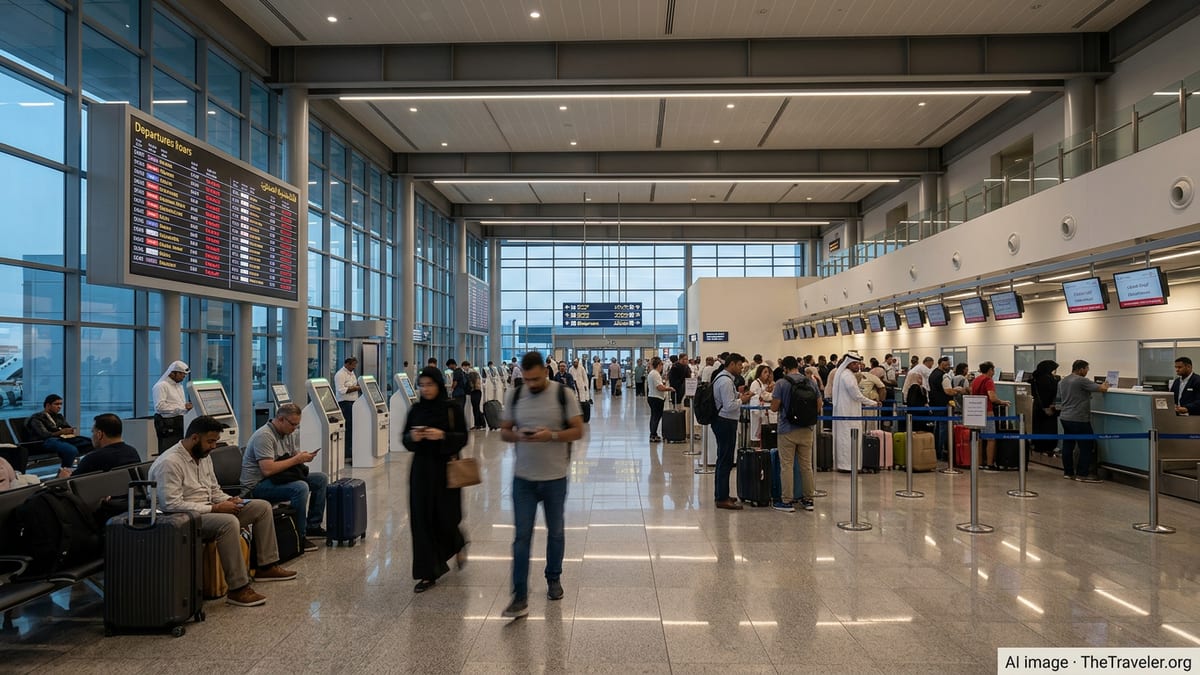
Regional Tensions Ripple Through Muscat’s Busy Hub
Publicly available information and regional travel advisories indicate that recent instability in Middle East airspace has contributed to a complex web of flight changes across major Gulf hubs, with Muscat’s Seeb International Airport emerging as a key diversion and connection point. While some advisories in early March described Muscat International Airport as operating close to normal, reports from passengers and aviation trackers now point to mounting schedule disruptions affecting dozens of departures and arrivals.
The current episode, involving delays and cancellations on approximately 93 flights, appears to reflect both direct operational challenges and the knock-on impact of airspace restrictions, diversions from nearby airports, and tight connection windows on multi-leg itineraries. Routes linking Muscat with Dubai, Doha, and Karachi are among the most affected, according to published coverage and real-time tracking snapshots referenced in regional media.
As airlines reroute aircraft, adjust rotations, and manage crew duty limits, passengers transiting through Muscat have experienced extended waits in the terminal, last-minute schedule changes, and in some cases multi-day rebookings. The situation has underscored the vulnerability of tightly timetabled regional networks when several neighboring hubs are simultaneously under strain.
Oman Air, FlyDubai and Other Carriers Forced to Rework Schedules
Oman’s flag carrier, Oman Air, is among the airlines most directly affected, given its reliance on Muscat as a central hub for connections between the Indian subcontinent, the Gulf, and Southeast Asia. Publicly available advisories and passenger accounts describe instances of Oman Air flights being retimed by many hours or pushed back by multiple days, with onward links to cities such as Karachi, Doha, and Dubai simultaneously disrupted.
FlyDubai and other regional operators have also been drawn into the operational turbulence. With Dubai International Airport handling its own wave of schedule changes and diversions, short-haul flights on the Dubai–Muscat and Dubai–regional sectors have reportedly faced rolling delays, aircraft substitutions, and, in some cases, outright cancellations. Similar patterns have been noted for services connecting Muscat with Doha, where airspace adjustments have periodically constrained available routes.
In parallel, other international carriers that use Muscat as an alternate or secondary gateway in the region have had to recalibrate their operations. Publicly available information indicates that some airlines have temporarily suspended or consolidated services to and from Muscat, while others have added ad hoc flights to repatriate stranded passengers once air corridors reopened or stabilized.
Passenger Experience: Long Queues, Missed Connections and Overnight Waits
Accounts shared on public forums and through local coverage describe crowded check-in halls, long security lines, and congested transit areas at Seeb International Airport as travelers attempt to navigate the disruption. Some passengers reported being advised to arrive as much as six to twelve hours before departure, particularly when traveling overland from neighboring countries to catch flights out of Muscat.
For many, the most challenging aspect has been uncertainty around connection times. Tight layovers of less than two hours between long-haul and regional sectors have proven especially vulnerable, with a delay on an inbound flight from Europe or Asia often leading to missed onward departures to Dubai, Doha, or Karachi. In such cases, travelers have described being rebooked on later services, sometimes involving overnight stays or multi-day waits before new flights became available.
Published commentary also notes that some carriers have struggled to keep passengers fully informed as schedules shifted repeatedly. While many travelers monitored flight status through airline apps and independent tracking tools, rapid changes in departure times, gate assignments, and even flight numbers have added to the sense of confusion on the ground.
Knock-on Effects for Gulf and South Asia Connectivity
The disruption at Muscat has had consequences far beyond Oman itself, given the airport’s role as a connector between the Gulf, South Asia, and key long-haul markets. Delays and cancellations on Muscat–Dubai and Muscat–Doha routes have affected travelers bound for onward flights to Europe, North America, and East Asia, where seats on alternative routings have been in high demand.
On the Muscat–Karachi sector and other links to Pakistan and the wider Indian subcontinent, passengers have faced rebookings onto later departures, rerouting through alternative Gulf hubs, or, in some cases, complete itinerary overhauls. Such changes can be particularly disruptive for travelers on time-sensitive journeys, including those with work commitments, expiring visas, or fixed event dates.
Regional aviation analysts quoted across open-source coverage suggest that these secondary effects on connectivity may persist even after immediate airspace pressures ease. Aircraft and crew displaced by diversions and extended ground time in Muscat may take days to be fully reintegrated into normal rotations, prolonging the period of irregular operations on key routes.
Guidance for Affected Travelers Passing Through Muscat
Travel experts and travel-risk advisories focused on the Middle East recommend that passengers with upcoming flights through Muscat build in additional buffer time and regularly monitor schedule updates. Where possible, travelers are being encouraged to opt for longer layovers, particularly when connecting from long-haul arrivals to short-haul flights to Dubai, Doha, Karachi, or other regional cities.
Publicly available guidance further suggests that passengers keep a close eye on airline notifications, mobile apps, and airport departure boards, as same-day changes to departure times and even dates remain possible while regional networks reset. Many carriers have been offering flexible rebooking options, although the exact terms vary by ticket type and route.
For travelers already at Seeb International Airport, on-the-ground information desks, airline counters, and staffed transit help points continue to be the primary channels for arranging new itineraries, securing hotel accommodation where provided, and confirming baggage handling for re-routed journeys. As airlines and airport operators work to clear backlogs and restore predictable schedules, the experience at Muscat underscores how quickly a regional airspace shock can cascade into widespread disruption across one of the world’s most interconnected travel corridors.