

More news on this day
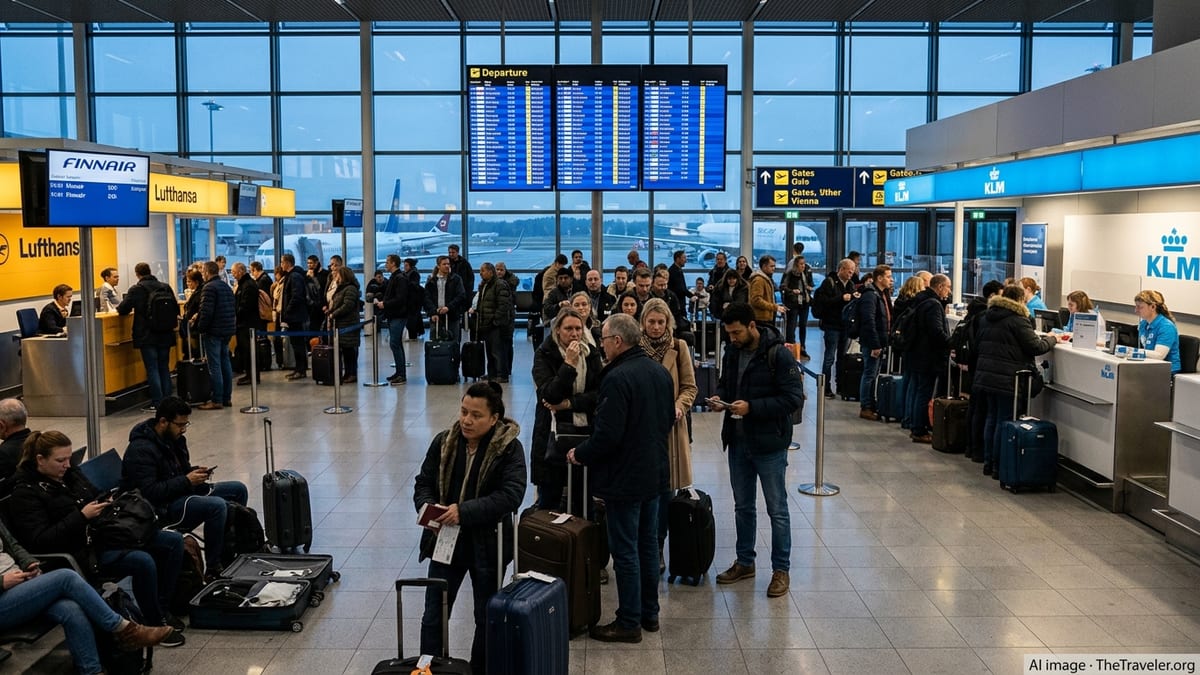
Air passengers across Northern and Central Europe faced widespread disruption as several major carriers, including KLM, Lufthansa and Finnair, delayed 567 flights and cancelled 25 services, causing significant knock-on effects in Norway, Austria, Poland and other markets.
Get the latest news straight to your inbox!
Oslo, Vienna and Key Hubs Buckle Under Strain
The latest wave of disruption centered on major European hubs, with Oslo Gardermoen and Vienna International among the hardest hit. Publicly available flight-tracking and airport operations data on March 20 indicated heavy delays and repeated schedule changes as airlines attempted to absorb earlier cancellations and reposition aircraft.
Oslo, a critical connecting point for travel across Scandinavia and to continental Europe, saw multiple departures and arrivals retimed, particularly on routes to Amsterdam, Frankfurt and Helsinki. Vienna experienced similar issues on services funneling passengers toward Western Europe and long-haul destinations, amplifying the impact for travelers from Austria, Poland and neighboring countries relying on one-stop connections.
Operational feeds and passenger accounts referenced a pattern of cascading delays, with aircraft arriving late from earlier legs, crew reaching duty-time limits and turnaround times stretching beyond normal buffers. As airlines struggled to re-sequence their networks, even flights not initially affected by the core disruption wave became subject to hold-ups at the gate and in the air.
Across the wider region, airports in Poland and other Central European states reported growing clusters of delayed flights during peak hours, reflecting the knock-on effect of disruptions at larger hubs and the concentration of traffic on a few major carriers.
Major Carriers Grapple With Network-Wide Knock-On Effects
KLM, Lufthansa and Finnair were among the most affected carriers, with schedule data showing a combined total of 567 delayed and 25 cancelled flights across their European networks over the latest 24-hour period. The majority of impacted services involved intra-European routes linking Northern and Central Europe to primary hubs such as Amsterdam, Frankfurt, Munich and Helsinki.
For KLM, delays on Amsterdam-bound and outbound flights had a direct effect on passengers departing from Oslo, Vienna and several Polish cities, where travelers frequently rely on Schiphol as a primary connection point to long-haul destinations. Once early rotations ran late, subsequent services increasingly departed outside their scheduled windows, compounding missed connections and forcing large-scale rebookings.
Lufthansa’s Frankfurt and Munich hubs experienced similar pressure. Delays affecting feeder flights from Norway, Austria and Poland translated into missed onward connections, particularly for North American and Asian routes. Finnair, which operates a dense network between Helsinki and Nordic as well as Central European cities, faced schedule challenges as disruptions on a handful of rotations reverberated throughout its carefully timed bank of arrivals and departures.
Industry data and recent published coverage point to a familiar pattern seen during previous disruption episodes: when multiple carriers in closely linked hub-and-spoke systems encounter even a modest operational shock, the tight interdependence of schedules can magnify the impact on passengers across several countries.
Travelers Face Cancellations, Long Delays and Rebooking Challenges
For travelers in Norway, Austria and Poland, the operational challenges translated into a difficult travel day. Passenger reports from airports such as Oslo Gardermoen and Vienna described long queues at service desks, limited availability on alternative flights and uncertainty around baggage handling as itineraries were hastily reconstructed.
Some travelers departing from or connecting through affected airports reported being rebooked onto flights one or even two days later than originally planned. Others faced complex reroutings via secondary hubs, sometimes on partner or rival airlines, as carriers sought to honor tickets while coping with limited spare capacity during already busy travel periods.
Reports also highlighted mixed experiences with digital tools. While some passengers were able to secure new itineraries via airline apps and websites, others noted that bookings temporarily disappeared from view or showed as archived while rebooking processes were underway in the background. This occasionally left travelers unsure whether to wait for automated solutions or join long lines at airport counters.
Accommodation and meal arrangements varied according to the specifics of each disruption and local regulations. Some affected passengers reported being provided with hotel and meal vouchers, while others indicated they had to organize and later claim reimbursement for last-minute stays and alternative transport options.
Regulatory and Compensation Context for Affected Passengers
The disruption once again drew attention to passenger rights frameworks that apply when flights in Europe are heavily delayed or cancelled. Under prevailing EU and UK rules, travelers whose flights depart from an airport within the European Union or are operated by an EU or UK carrier may be entitled to care provisions such as meals, refreshments and accommodation during long disruptions, as well as potential monetary compensation when the cause is deemed within the airline’s control.
Public guides and consumer-focused resources emphasize that entitlements depend on factors such as delay length, distance of the flight and the underlying reason for disruption. Weather, air traffic control constraints or security incidents often fall outside compensation rules, while technical or staffing issues within an airline’s control can, in some circumstances, trigger compensation eligibility.
Given the concentrated impact on carriers like KLM, Lufthansa and Finnair, consumer organizations are expected to closely follow how rebooking, refunds and compensation are handled in the aftermath. Past episodes have shown that processing times for claims can vary considerably, particularly when airlines face a surge in requests following large-scale schedule disruptions.
Passengers affected by the latest wave of delays and cancellations are being urged by travel advisers and public information resources to retain receipts for necessary expenses, document delay times and keep records of any communications or itinerary changes issued by their airlines.
What Travelers Should Watch for in the Coming Days
Operational data suggests that while the sharpest phase of disruption is likely to ease as airlines reposition aircraft and crews, residual delays could continue over the next 24 to 48 hours, especially on morning and evening peak services. Travelers in Norway, Austria, Poland and neighboring countries are being advised by publicly available guidance to monitor flight status closely and allow additional time for connections.
Frequent updates from airports and airlines indicate that schedules remain fluid, with some flights being retimed or consolidated at relatively short notice to improve overall network stability. This environment particularly affects passengers with tight onward connections, who may wish to explore options for longer layovers or alternative routings if schedules permit.
Industry observers note that the latest disruption underlines the vulnerability of Europe’s interconnected air travel system to clusters of delays and limited spare capacity. With demand for travel remaining high and many carriers operating close to the limits of their fleets and staffing, even localized operational challenges can quickly spread across borders, affecting travelers from Norway to Austria, Poland and beyond.
For now, the focus for both airlines and passengers is on clearing backlogs, restoring reliable schedules and ensuring that those affected by the 567 delayed and 25 cancelled flights can complete their journeys with as little additional disruption as possible.