

More news on this day
Travelers moving through key Southeast Asian hubs faced mounting disruption this week as Batik Air, Malaysia Airlines and other regional carriers cancelled or heavily delayed more than 50 flights, stranding passengers in Indonesia and Malaysia and disrupting busy routes linking Jakarta, Bali, Kuala Lumpur, Penang, Singapore, Doha and onward long haul connections.
Get the latest news straight to your inbox!
Wave of Cancellations Across Regional Hubs
Published information from airline schedules, airport boards and local media indicates that a fresh wave of cancellations and long delays has rippled through some of Southeast Asia’s busiest corridors, with short haul and connecting long haul services among the hardest hit. Routes between Jakarta and Kuala Lumpur, Jakarta and Bali, Kuala Lumpur and Penang, and links from these cities to Singapore and Doha all recorded disrupted services within a concentrated 24 to 48 hour window.
The latest disruption appears to involve both Indonesia based Batik Air and Malaysia based Batik Air Malaysia, alongside Malaysia Airlines and several codeshare partners. Flight tracking data and airport advisories show multiple services scrubbed or retimed at short notice, contributing to missed connections and unexpected overnight stays for transit passengers moving between Southeast Asia, the Middle East and onward destinations in Europe and Australia.
While precise tallies vary across different reporting channels, combined cancellations and multi hour delays attributed to these carriers and their partners are estimated to exceed 50 flights over the affected period. The impact is being felt most acutely at Jakarta’s Soekarno Hatta International Airport, Bali’s Ngurah Rai International Airport, Kuala Lumpur International Airport and Penang International Airport, all of which serve as key regional transfer points.
Travel industry observers note that the disruption is landing during a period of strong regional demand, with leisure and family travel driving high load factors on services linking Indonesian destinations with Malaysia and Singapore, as well as on long haul connections through Kuala Lumpur and Singapore to Doha and other Middle Eastern hubs.
Stranded Passengers Confront Long Queues and Limited Information
Accounts shared on social platforms and travel forums describe passengers in Jakarta, Bali, Kuala Lumpur and Penang facing extended queues at check in counters and customer service desks as they sought rebooking options and clarification on revised departure times. Several travelers reported receiving notification of cancellations or major schedule changes only after arriving at the airport, while others described learning of retimings via gate screens rather than direct communication.
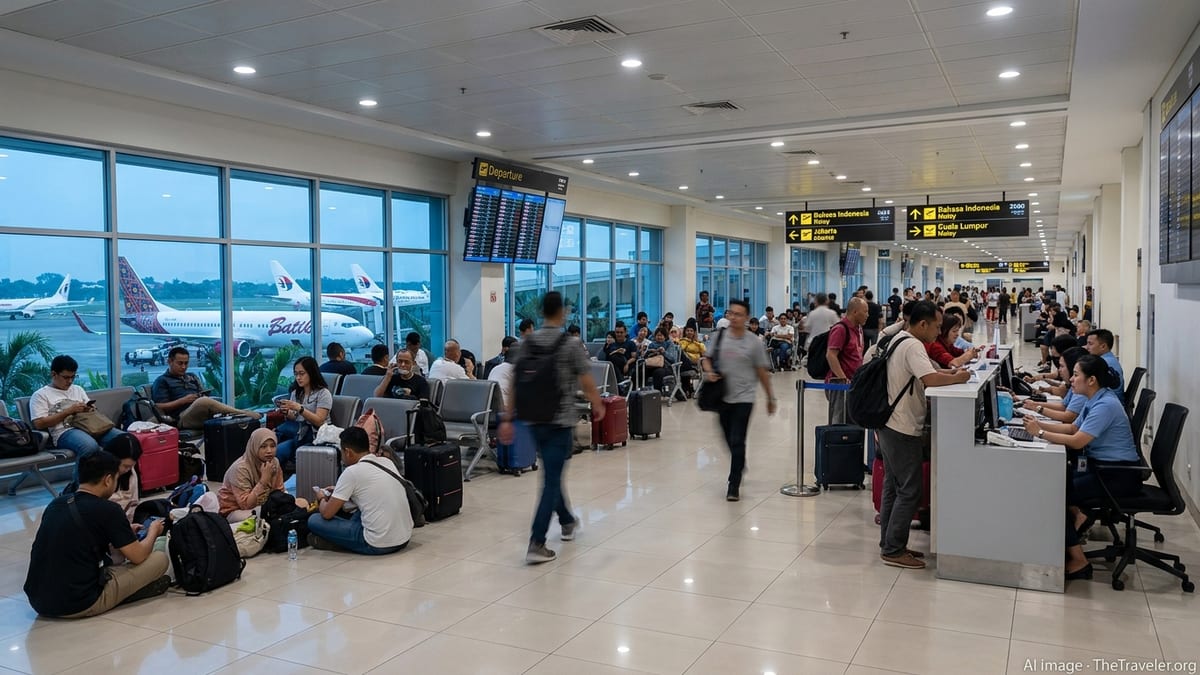
At Kuala Lumpur International Airport and Jakarta’s Soekarno Hatta, images circulating online show crowded departure halls and lines at airline transfer desks as travelers with onward tickets to Singapore, Doha and other international destinations tried to salvage missed or at risk connections. Some reported being rebooked on later flights the same day, while others described being pushed to departures 24 hours or more after their original itineraries.
Domestic holiday makers connecting from Jakarta or other Indonesian cities onto Bali services also appear to have been affected, with last minute cancellations and rolling delays disrupting carefully planned stays on the island. In Malaysia, travelers attempting to combine Kuala Lumpur city breaks with Penang or Langkawi beach trips reported abrupt changes to their domestic legs, in several cases requiring additional accommodation and ground transport arrangements at their own expense.
Publicly available discussions among travelers suggest that communication standards varied widely. Some passengers cited timely text or app based updates and prompt alternatives, while others pointed to a lack of clear guidance on entitlements such as meals, hotel vouchers or ticket refunds when flights were cancelled outright rather than merely delayed.
Knock On Effects for Singapore and Doha Connections
The disruption has not been confined to point to point regional traffic. According to schedule data and published airline notices, a significant share of the affected flights were feeding or drawing from major international connections through Singapore and Doha, intensifying the impact for long haul passengers.
Short haul services between Jakarta and Singapore and between Penang and Singapore form an important backbone for itineraries linking Indonesia and northern Malaysia to Europe, North Asia and North America. When these feeder flights are cancelled or heavily delayed, passengers risk missing once daily or even less frequent onward departures, with rebooking options sometimes stretched during peak periods.
Similarly, links from Jakarta, Bali and Kuala Lumpur into Doha play a central role for travelers routing between Southeast Asia and destinations in the Middle East, Europe and Africa. Reports indicate that several passengers bound for longer journeys found themselves re routed through alternative hubs or re protected onto different travel dates when their original short haul segments were cancelled.
Travel agents and online booking platforms monitoring the situation highlight that even a relatively contained block of cancellations can produce outsized ripple effects when it affects hub feeding services. As aircraft and crews fall out of position, knock on delays can surface a day or more after the initial problems, complicating recovery efforts for airlines already operating near capacity.
Operational and Regional Factors Behind the Disruption
Official explanations remain limited, but publicly available statements and recent history suggest a combination of operational and external pressures behind the latest round of disruptions. Recent advisories from Batik Air Malaysia, for example, have pointed to the need for precautionary adjustments on certain long haul and regional routes in response to security and airspace considerations in parts of the Middle East, which in turn can affect aircraft rotations across its wider network.
In addition, Southeast Asia’s aviation sector continues to navigate tight aircraft availability, lingering pilot and crew constraints and uneven demand patterns following the pandemic recovery. Analysts have previously noted that carriers operating complex mixes of domestic, regional and selective long haul routes, such as Batik Air and Malaysia Airlines, can be particularly vulnerable to cascading delays when a single aircraft or crew pairing falls out of schedule.
Weather related disruptions and temporary congestion at major hubs may also be compounding the situation. Seasonal storms around the equatorial belt and localized air traffic management constraints have periodically prompted holding patterns and minor diversions in recent weeks, adding further stress to schedules already operating with relatively thin buffers.
While there is no single publicly confirmed trigger for the current cluster of cancellations, the pattern is consistent with a fragile regional operating environment in which airlines are juggling tight fleet plans, volatile demand and external geopolitical and meteorological factors.
Guidance for Affected and Upcoming Travelers
Travel organizations and consumer advocates responding to the disruption are emphasizing the importance of proactive planning for anyone with near term itineraries touching Jakarta, Bali, Kuala Lumpur, Penang, Singapore or Doha on Batik Air, Malaysia Airlines or their partners. Many recommend checking flight status repeatedly in the 24 hours before departure and again before leaving for the airport, using both airline channels and airport departure boards where possible.
Passengers ticketed on itineraries involving tight connections through Singapore or Doha are being encouraged to build in additional buffer time where feasible, or to consider earlier feeder flights to reduce the risk of misconnection if schedules slip. Those already stranded or facing overnight delays are advised to document all communications, boarding passes and receipts for essential expenses, which may be relevant when seeking refunds, credits or travel insurance claims.
Consumer advice published by regional travel bodies also underscores the value of flexible booking options, including fares that permit no penalty date changes and accommodation reservations with free cancellation windows. For complex multi city trips combining Indonesia, Malaysia and onward long haul segments, some experts suggest temporarily avoiding razor thin self made connections between separate tickets until airline operations stabilize.
Although the latest wave of disruption has proven highly disruptive for many travelers, industry watchers note that airlines in the region are typically able to restore more regular operations within days once the immediate operational pressures ease. For now, however, passengers moving through Southeast Asia’s busiest hubs are being urged to remain alert to potential last minute changes and to allow additional time and flexibility in their plans.