

More news on this day
Travelers passing through Stockholm Arlanda Airport on March 1 faced significant disruption as 45 flights were delayed and 11 were cancelled, impacting services operated by major carriers including SAS, Emirates, KLM and Qatar Airways and causing knock-on delays on routes to London, Dubai, Doha, Helsinki and other key European destinations.
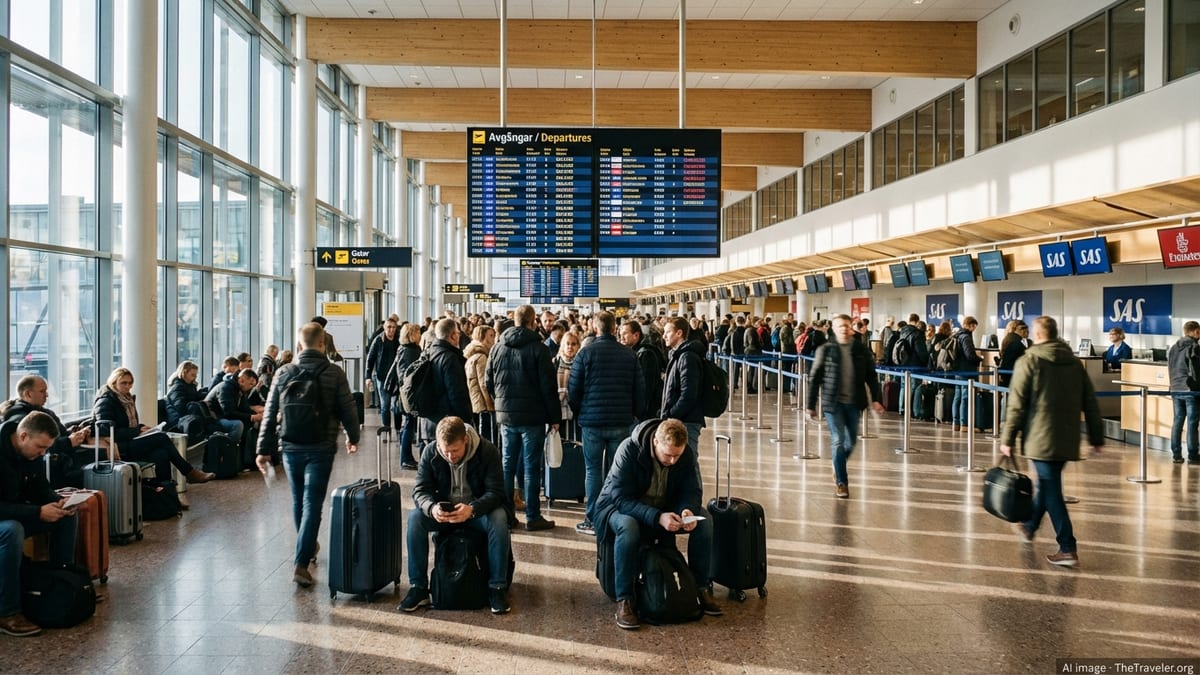
Severe Operational Disruption at Sweden’s Busiest Hub
Stockholm Arlanda, Sweden’s main international gateway, reported an unusually high level of operational disruption on March 1, with official monitoring data showing dozens of services departing behind schedule and more than ten flights cancelled outright. The disruption hit both domestic and international operations, affecting early morning departures as well as peak afternoon bank connections.
Scandinavian Airlines (SAS) recorded the largest share of affected movements, with multiple cancellations and delays across its Nordic and European network. Long haul and regional carriers including Emirates, Qatar Airways and KLM were also impacted, creating uncertainty for passengers connecting beyond Stockholm to global destinations.
Airport information screens showed a steady build-up of delays across the day, with some departures pushed back by more than an hour. While most flights eventually departed, the growing backlog created tight or missed connections for travelers heading onward through major hubs in Europe and the Middle East.
As the disruption unfolded, ground staff were forced to rebook passengers, rearrange crew schedules and manage congested gate areas, illustrating how even a relatively contained spike in delays and cancellations can strain operations at a major European hub.
Key Airlines and Routes Affected
SAS, the dominant carrier at Stockholm Arlanda, experienced the most visible impact, with several cancellations and a series of delayed departures across popular intra-European routes. Services to major Nordic cities such as Copenhagen, Oslo and Helsinki, as well as high-frequency links to European business centers, saw schedule disruption that rippled through the airline’s tightly timed network.
Gulf carriers Emirates and Qatar Airways each reported cancellations on long haul services between Stockholm and their respective hubs in Dubai and Doha. These flights typically feed extensive onward connections to Asia, Africa and the Pacific, meaning missed links and forced overnight stays for some transfer passengers.
KLM’s operations connecting Stockholm with Amsterdam, another key European hub used heavily for onward intercontinental travel, were also affected by delays. While most services ultimately departed, late departures from Sweden translated into compressed connection windows and some rebookings at onward gateways.
Routes to and from London and Helsinki were among those experiencing notable disruption, with passengers reporting extended wait times and gate changes. For business travelers and weekend city-break passengers alike, the irregular operations translated into shortened stays, missed meetings and, in some cases, the need to reconfigure entire itineraries at short notice.
Knock-on Impact for European and Long Haul Travelers
Because Stockholm Arlanda functions as both an origin and a transfer hub, the March 1 disruption extended far beyond Sweden’s borders. Passengers traveling from regional Scandinavian airports via Stockholm to London, Dubai, Doha and other European capitals found that even relatively minor initial delays could quickly cascade into missed connections.
Long haul travelers connecting through hubs in the Middle East and Western Europe were particularly vulnerable. Late departures from Stockholm left some guests racing across terminals or facing rebooking onto later services, with onward arrivals pushed into the early hours or the following day. Families returning from winter holidays and business travelers en route to Monday meetings faced the prospect of lost hotel nights and rescheduled appointments.
For airports on the receiving end of delayed flights from Stockholm, the disruption added to existing operational pressures. Late evening arrivals can complicate baggage handling and ground transport arrangements, while any aircraft and crew that arrive late may start the following day behind schedule, carrying operational hangovers into subsequent rotations.
Travel industry observers note that such concentrated bouts of disruption highlight how interconnected European and global aviation networks have become. A spike in delays at a single airport such as Arlanda can send ripples through schedules across multiple countries within hours, particularly at the tail end of busy travel periods.
Passenger Experience: Queues, Rebookings and Hotel Nights
At terminal level, travelers reported long lines at check in desks and transfer counters as the scale of delays became clear. With multiple airlines affected around the same time, rebooking options were limited on some routes, forcing passengers to accept later departures or alternative routings through different hubs.
For those on long haul itineraries, the disruption often meant involuntary overnight stays and last minute hotel searches, especially when misaligned connections in London, Dubai or Doha eliminated same day onward options. Families with children and elderly passengers were among those most affected, with extended waits in crowded gate areas adding to fatigue.
Airlines reminded passengers of their entitlement to care provisions such as meals and accommodation in cases of extended delays and cancellations under European passenger rights rules, while encouraging customers to manage rebookings via mobile apps where possible to reduce pressure on airport service desks.
Despite the challenges, most core airport services at Stockholm Arlanda continued to operate, and security screening and border control lines remained manageable for much of the day. However, the episode underscored how quickly the passenger experience can deteriorate once schedule reliability drops and rebooking volumes surge.
What Travelers Should Do if Flying via Stockholm
In the wake of the March 1 disruption, carriers serving Stockholm Arlanda urged passengers with upcoming travel to monitor flight status closely on the day of departure. Digital tools offered by SAS, Emirates, KLM, Qatar Airways and other airlines allow travelers to receive real time updates on gate changes, revised departure times and rebooking options.
Travel advisers recommend allowing extra connection time when itineraries route through Stockholm in periods of unsettled operations, particularly for links onto long haul flights from London, Dubai, Doha and other major hubs. Where possible, booking on a single ticket rather than separate point to point segments can also provide stronger protection, since airlines are then responsible for re-accommodating passengers when connections are missed.
Passengers planning critical journeys, such as time sensitive business trips or cruises departing from third countries, are also being encouraged to build in an additional buffer day when traveling via major hubs across Europe. While this adds to cost and travel time, it can provide important insurance in the event of sudden schedule disruptions.
For now, Stockholm Arlanda continues to operate normally following the March 1 incident, but the day’s events offer a reminder that even well managed airports and airlines can experience sudden spikes in irregular operations. For travelers, flexibility, up to date information and realistic connection planning remain key tools for managing the risks of disruption.