

More news on this day
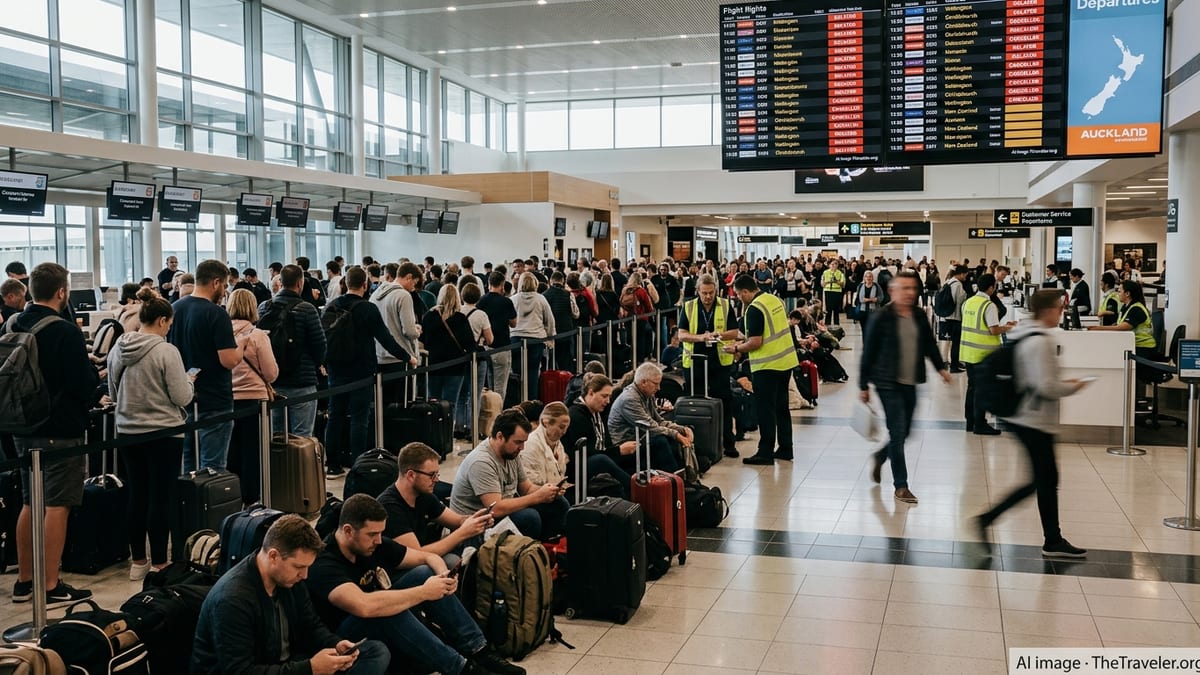
Hundreds of airline passengers were left stranded across New Zealand today as widespread disruption at Auckland, Christchurch, Napier and Wellington saw 53 flights cancelled and at least 167 delayed, snarling domestic and international services for several major carriers.
Get the latest news straight to your inbox!
Nationwide Disruption Across Key New Zealand Gateways
Reports from airport operations data and live flight-tracking services indicate that disruption has rippled through New Zealand’s busiest gateways, with Auckland and Wellington experiencing the largest share of cancellations and delays, followed by Christchurch and Napier. The combined total of 53 cancellations and 167 delayed services represents a significant portion of the day’s scheduled movements, affecting both short domestic hops and long-haul international connections.
The pattern of disruption shows knock-on effects across the network. Cancellations early in the day reduced aircraft and crew availability for later rotations, compounding delays on trunk routes such as Auckland to Wellington and Auckland to Christchurch. Smaller regional airports reliant on connections through these hubs also reported late arrivals and departures as aircraft were held on the ground or rerouted.
While precise passenger numbers have not been released, typical New Zealand domestic load factors suggest that several hundred, and potentially over a thousand, travelers may have been directly impacted through missed flights, missed connections, and extended waiting times at terminals.
Multiple Airlines Caught Up, From Domestic To Global Carriers
The disruption affected a broad mix of airlines, with Air New Zealand bearing the brunt on busy domestic routes and trans-Tasman services, and Qantas, Singapore Airlines, Emirates and Jetstar also experiencing schedule impacts on their New Zealand operations. Publicly available schedules show these carriers operating a web of flights linking Auckland and Christchurch to Australia, Asia, the Middle East and regional centers, leaving connecting travelers particularly exposed when timings slip.
In recent weeks, Air New Zealand has already been under pressure from a series of capacity and fuel-related constraints that have prompted advance cancellations of select services. Today’s operational issues added fresh strain, with late-running domestic legs disrupting planned onward journeys for international passengers booked on partner carriers. Travelers reported longer queues at transfer desks as staff worked within each airline’s rebooking policies and available seat inventory.
For Qantas and Jetstar, delays in and out of New Zealand fed into already tight timetables across the Tasman, where aircraft typically operate multiple same-day sectors. Long-haul operators such as Emirates and Singapore Airlines faced a different challenge: ensuring that New Zealand feeder flights arrived in time for heavily booked overnight departures from hub airports, or re-accommodating those who missed connections onto later services where possible.
Weather, Capacity Pressures And A Fragile Network
New Zealand’s aviation network has been operating under heightened stress in recent months, with a combination of adverse weather events, infrastructure constraints and global capacity pressures leaving little margin for error. Earlier in 2026, severe weather systems brought heavy rain, strong winds and localised flooding to parts of the country, underscoring how quickly conditions can deteriorate around exposed coastal airports such as Wellington and Napier.
Industry data and recent public commentary from airlines highlight how tight aircraft and crew availability can amplify even routine disruptions. When flights are cancelled at short notice, there may be few spare aircraft or standby crews to plug the gaps, especially on regional routes. As a result, a handful of early cancellations or extended ground holds can cascade through the schedule, translating into widespread knock-on delays by late afternoon and evening.
Fuel supply considerations and broader global route reshaping have also influenced how airlines structure their New Zealand services. Long-haul traffic has increasingly been concentrated through a smaller number of key hubs in Asia and the Middle East, meaning that any disruption at the start of a passenger’s journey in New Zealand increases the risk of missed once-daily or less frequent onward flights.
Heavy Passenger Impact At Terminals And Onward Journeys
At terminal level, today’s cancellations and delays translated into long queues at check-in, security and customer service counters in Auckland, Christchurch, Napier and Wellington. Travelers reported extended waiting times as they sought rebooking options, vouchers, or information on their rights, with some passengers facing overnight stays when alternative flights were already heavily booked.
For domestic travelers, disruption often meant curtailed weekend plans, missed family events or lost working time. For international passengers, particularly those connecting to long-haul flights with Air New Zealand, Qantas, Singapore Airlines, Emirates or Jetstar-affiliated services, the stakes were higher. Missed onward flights can trigger complex re-ticketing processes, potential changes in transit visa requirements, and additional costs for accommodation and meals that may or may not be covered, depending on individual fare rules and travel insurance policies.
Travel forums and social media feeds reflected a mix of frustration and resignation, with some passengers referencing earlier rounds of cancellations and expressing concern that such large-scale disruption is becoming more frequent. Others highlighted small acts of assistance from frontline staff attempting to manage crowds and rebook passengers within the limits of available capacity.
What Today’s Chaos Signals For Upcoming Travel
Today’s widespread disruption serves as a reminder of the fragility of airline networks serving New Zealand, particularly as carriers juggle strong demand with ongoing operational constraints. With school holidays and the Southern Hemisphere winter peak still ahead, analysts expect pressure on key domestic and international routes to remain intense, leaving little slack in the system when unexpected issues arise.
Publicly available commentary from aviation observers suggests that travelers flying in and out of Auckland, Christchurch, Napier and Wellington in the coming weeks may face elevated risk of delays, especially when itineraries involve tight connections between domestic and long-haul legs. Some experts recommend that passengers build longer layovers into their plans where possible, avoid the last flight of the day on critical sectors, and monitor airline apps and airport departure boards closely in the 24 hours before travel.
For airlines including Air New Zealand, Qantas, Singapore Airlines, Emirates and Jetstar, the latest wave of cancellations and delays underscores the importance of clear communication, flexible rebooking policies and robust contingency planning. As demand for both leisure and business travel remains strong, the ability of carriers and airports to absorb shocks without leaving hundreds of passengers stranded will be closely watched by travelers and industry observers alike.