

More news on this day
Dozens of flights were cancelled or delayed at Amman’s Queen Alia International Airport on Thursday, as regional airspace restrictions and capacity cuts at nearby hubs rippled across key routes linking Jordan with Cairo, Doha, Dubai, London and Beirut.
Get the latest news straight to your inbox!
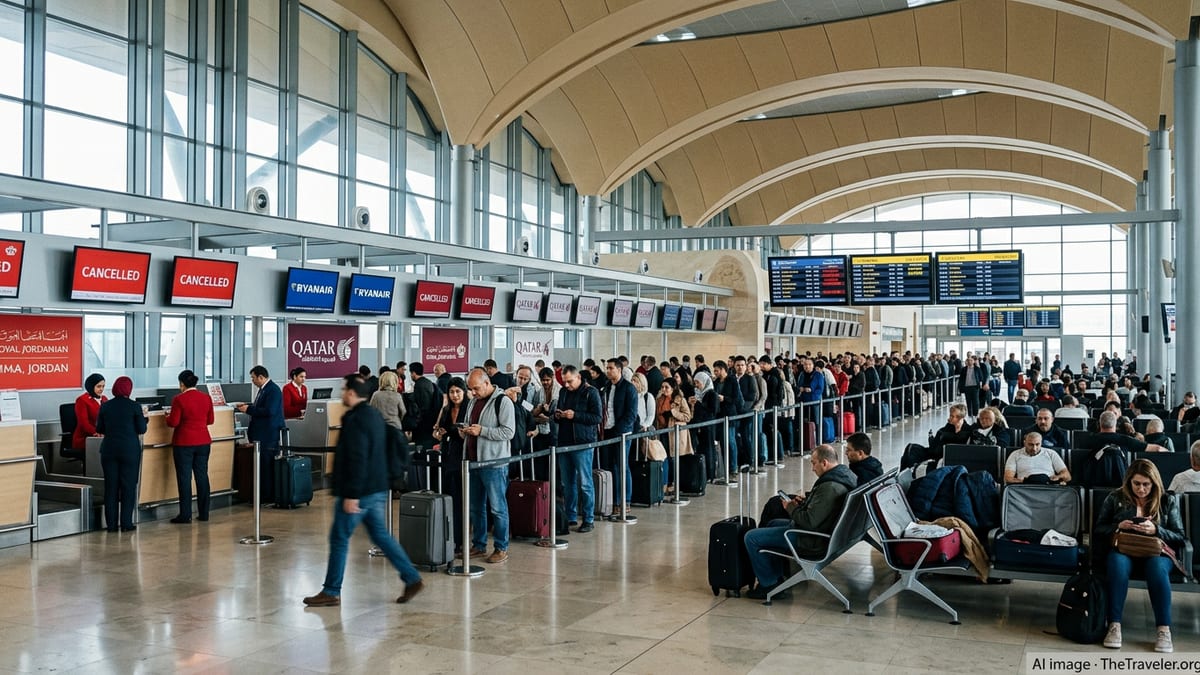
Wave of Cancellations Hits Amman’s Main Gateway
Operational data from Queen Alia International Airport on 12 March show at least 45 departures and arrivals scrubbed and a further 30 running late, an unusually high disruption level for Jordan’s primary gateway. The problems were concentrated in the morning and early afternoon banks of flights, when regional connections are normally busiest.
Schedules reviewed from airport information screens and flight tracking services indicated multiple cancellations on Royal Jordanian services to Beirut, Cairo and Gulf destinations, alongside scrapped Ryanair services on leisure routes into Europe and the Eastern Mediterranean. Services to and from Cairo, Doha, Dubai and London were among those most heavily affected, with knock-on delays for onward connections.
Airport staff said operations inside the terminal remained orderly but noticeably strained as passengers queued at airline counters to rebook, seek refunds or secure overnight accommodation. Ground handlers reported aircraft parked out of rotation and gate changes as controllers worked to compress the remaining schedule into limited airspace windows.
Although Amman’s airspace remains formally open, the cancellations reflect airlines’ need to adjust to tighter routing corridors, altered flight paths and reduced capacity at major regional hubs that normally absorb traffic from Jordan.
Royal Jordanian, Ryanair and Qatar Airways Among Worst Affected
Flag carrier Royal Jordanian bore the brunt of the disruption, with a string of short haul services to Beirut, Cairo, Jeddah and Gulf cities showing as cancelled or significantly delayed. The airline’s dense regional network, which relies on fast turnarounds and tightly timed connections, left it particularly exposed as air traffic control restrictions lengthened flight times and narrowed usable slots.
Irish low cost carrier Ryanair, which has built up a winter schedule linking Amman with Paphos and several European cities, also cancelled at least one departure and associated inbound sectors. Budget carriers typically operate with minimal spare aircraft and crew, meaning a single disruption early in the day can cascade through multiple rotations.
Qatar Airways, already operating a reduced timetable to and from Doha as it navigates partial airspace closures, contributed further cancellations and lengthy delays on flights touching Amman, London and other key Middle Eastern and European gateways. The carrier has warned passengers that only a limited set of routes will operate on certain days in March and advised travelers not to go to the airport without confirmed bookings.
Other Gulf and regional airlines, including Flynas, EgyptAir and several low cost operators, reported scattered schedule cuts on services connecting Amman with Riyadh, Cairo, Sharjah and Kuwait City, tightening capacity across the broader Levant and Gulf network.
Regional Airspace Constraints Drive Knock-On Delays
The turbulence in Amman is part of a much wider pattern of disruption across Middle Eastern and adjacent airspace since late February, as carriers react to changing security assessments and temporary closures of key flight corridors. Airlines have been forced to reroute traffic around sensitive areas, lengthening flight times and compressing traffic into fewer, tightly managed airways.
Major hubs such as Doha’s Hamad International Airport and Dubai International have been operating at reduced capacity at various points this month, according to airline advisories and industry data analysts. Limited runway slots and stricter air traffic control spacing mean fewer arrivals and departures per hour, forcing airlines to trim schedules, consolidate flights and, in some cases, cancel services outright.
The impact on Amman is indirect but significant. Queen Alia International Airport functions as both an origin and a transfer point for passengers heading to and from Europe, the Gulf and wider Asia. When Doha, Dubai or other regional hubs restrict operations, feeder flights from Amman are often among the first to be trimmed, as carriers prioritise long haul sectors and repatriation services.
Aviation analysts note that while Jordanian authorities have kept national airspace open, airlines must still comply with routing decisions and risk assessments issued by their own regulators and insurers. That combination has produced a patchwork of cancellations and delays that can change from one day to the next, complicating planning for both carriers and travelers.
Passengers Face Long Queues, Rebookings and Uncertain Itineraries
For passengers at Queen Alia International Airport on Thursday, the operational complexity translated into long waits and frayed nerves. Travelers bound for London and Gulf cities reported joining hour long queues at airline service desks as they attempted to salvage holiday plans, business trips and family visits.
Some passengers were offered rerouting via alternative hubs such as Istanbul, Riyadh or European gateways, while others accepted travel vouchers or refunds and abandoned their journeys altogether. Travelers connecting onward from Cairo, Doha and Dubai faced particular uncertainty, as limited long haul options made it hard to find same day alternatives.
Airport announcements repeatedly urged passengers to remain in contact with their airlines and stressed that only those with confirmed, operating flights would be allowed into the check in area at peak times. Staff handed out water and light refreshments in the most congested zones, and local hotels reported a modest uptick in last minute bookings from stranded travelers.
Despite the complications, there were no reports of major crowd control issues or security incidents inside the terminal. However, social media posts from affected passengers highlighted confusion over airlines’ refund rules and compensation rights, especially on itineraries involving multiple carriers and codeshare agreements.
Authorities Urge Travelers to Check Status and Expect Ongoing Disruption
Jordan’s civil aviation authorities and airport operator officials have so far stopped short of imposing formal capacity limits at Queen Alia International Airport, instead working with airlines on a flight by flight basis to manage demand. They have advised passengers to monitor airline apps and official channels closely, as same day schedule changes remain possible while regional airspace conditions evolve.
Industry observers caution that the pattern of rolling cancellations and delays is likely to persist in the short term, particularly on routes that depend on onward connections through Doha, Dubai and other Gulf hubs. Airlines are frequently updating timetables in response to new risk assessments, availability of safe routing corridors and operational constraints on aircraft and crew.
Travel agents in Amman said demand for alternative routings via Istanbul, European hubs and overland crossings has risen sharply as travelers seek to avoid the most volatile corridors. Some corporate clients are postponing non essential trips to London and major Gulf business centers until schedules stabilize.
For now, Queen Alia International Airport remains open and functioning, but with an elevated risk of disruption. With 45 cancellations and 30 delays recorded in a single day, the episode underscores how quickly regional airspace tensions can reverberate through a network of interconnected airports, stranding passengers far from the immediate source of the problem.