

More news on this day
Cairo International Airport is facing mounting disruption as widespread airspace closures across the Middle East force airlines to cancel, reroute and compress schedules, turning Egypt’s capital into both a pressure point and a lifeline for regional connectivity.
Get the latest news straight to your inbox!
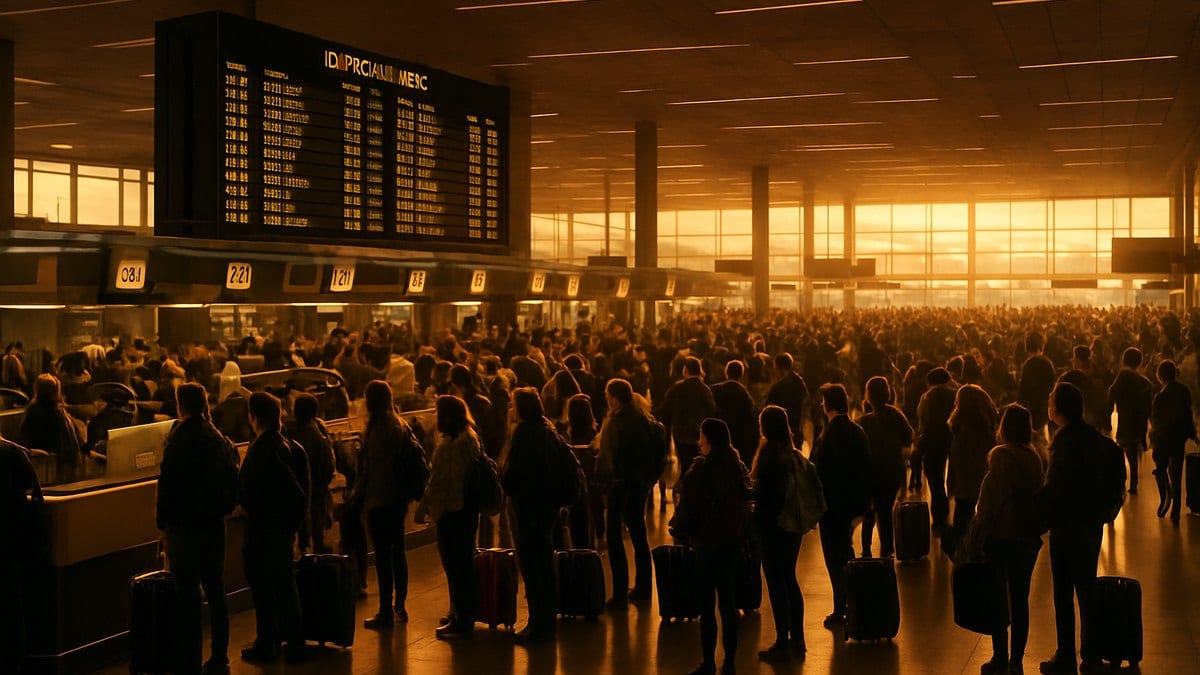
Cairo Strained by Wave of Delays, Cancellations and Diversions
Operational data and travel-industry reports indicate that Cairo has entered one of its most turbulent periods of air travel in years. In early April, banks of departures from Cairo International Airport recorded more than a hundred delays in a single day, alongside cancellations targeting key Middle East gateways. These disruptions follow weeks of rolling schedule changes that began when conflict escalated in late February and led to unprecedented airspace restrictions across the region.
Egyptian airports have been absorbing a growing number of diverted flights originally bound for Gulf and Levant destinations where airspace is fully or partially closed. Previous figures from local aviation coverage already documented more than twenty international flights diverted to Egypt in a single day at the height of the first shock wave, with Cairo taking the largest share. That diversion trend has continued into April as airlines search for alternative routings that preserve at least part of their networks.
Publicly available notices from EgyptAir outline an extended period of cancellations and rebooking flexibility for passengers whose flights between Cairo and Middle Eastern destinations have been scrubbed between late February and April 20, with travel waivers stretching into May. The scale and duration of these policies illustrate how the disruption is no longer confined to isolated days of turbulence but has evolved into a sustained schedule overhaul centered on Cairo’s role as a regional hub.
Airspace Closures Reshape Regional Route Maps
The immediate trigger for the current crisis was the rapid closure or severe restriction of airspace over Iran, Iraq, Israel, Syria, and several Gulf states after late February strikes and retaliatory attacks. Aviation advisories and specialist bulletins describe a central Middle East corridor that is effectively blocked, forcing airlines operating Europe to Asia services to seek longer and narrower pathways around the conflict zone.
Independent tracking of global routes shows that many long-haul flights now avoid traditional Gulf waypoints and instead loop north through the Caucasus or south via Egyptian and Red Sea corridors. Analysis published in early March estimated that detours around closed airspace were adding between two and five hours to typical Europe–Asia journeys, sharply increasing fuel burn and tying up aircraft and crews for longer rotations.
For Egypt, this shift has a double impact. On one hand, Cairo and other Egyptian airports are handling more overflights and technical stops as carriers reorient away from the Gulf. On the other, Egypt’s own links to high-risk destinations in the Middle East have come under pressure. Industry advisories circulated in early March noted that EgyptAir suspended services from Cairo to a broad list of Gulf and Levant cities, including Dubai, Abu Dhabi, Doha and Beirut, as operators reassessed exposure to nearby conflict zones.
By late March and early April, the pattern that emerged was a patchwork of partial resumptions and reduced frequencies layered on top of a still-volatile airspace picture. Some UAE routes from Cairo have begun a gradual comeback on limited schedules, even as overflight restrictions elsewhere persist and keep the wider network under strain.
Egypt’s Hub Status Tested as Transit Role Expands
Statements from Egypt’s civil aviation authorities and coverage in domestic media highlight how the country has leaned into its role as a safe transit corridor linking Europe, Africa and Asia. Officials have repeatedly emphasized that Egyptian airspace remains open and that navigation services over the Cairo flight information region are fully operational, even as neighboring countries impose sweeping restrictions.
This posture has turned Cairo into a critical node for rerouted traffic. Reports from Egypt-based outlets describe the airport’s operations center coordinating with international carriers as unscheduled diversions arrive for refueling or crew changes. The same coverage notes that Egypt’s navigation and airport infrastructure are being stress-tested by sudden spikes in traffic volume, sometimes involving multiple wide-body aircraft arriving in quick succession after abandoning original flight plans.
Regional analysis pieces suggest that this growing transit role carries both opportunity and risk for Egypt. On the opportunity side, increased overflight and handling fees provide a revenue boost at a time when some direct Middle East services are curtailed. On the risk side, the concentration of rerouted traffic heightens the importance of robust air traffic management, contingency planning and clear communication with airlines and passengers as conditions in nearby airspace continue to change at short notice.
International organizations have previously cited Cairo’s performance during earlier regional flare-ups as evidence of strong crisis-management capacity, but they also flagged an urgent need for continued investment in modernization to cope with future surges. The current wave of diversions and disruptions is now putting those recommendations into sharp relief.
Passengers Confront Longer Journeys, Sudden Itinerary Changes
For travelers passing through Cairo, the airspace crisis is being felt most directly in longer journey times, missed connections and last-minute rebookings. Travel rights platforms and passenger-advocacy groups tracking the situation note that on heavily affected days, hundreds of flights across Europe and the Middle East have been delayed or canceled as knock-on effects from rerouting cascade through airline schedules.
According to operational updates from airlines and travel advisories compiled since early March, many carriers have reduced or temporarily suspended services to destinations in the conflict’s immediate vicinity. Others remain technically operating but with revised routings that add hours to flight times and compress turnaround windows. For Cairo-bound and Cairo-transiting passengers, this translates into more frequent gate changes, tighter connection margins and a higher risk of baggage misalignment.
Public information from EgyptAir and other regional carriers encourages passengers to verify their bookings through official call centers, mobile applications or airport desks before heading to the terminal, especially for flights touching the Gulf or Levant. Some airlines have introduced flexible change policies, allowing free date or routing modifications for tickets issued before specific cut-off dates, reflecting recognition that conditions in the airspace can shift faster than printed timetables.
Analysts observing the situation point out that the complexity of rerouting around multiple closed or restricted flight information regions leaves limited slack in the system. Even routine technical issues or minor weather disruptions can now ripple more quickly, amplifying the impact on hubs such as Cairo that sit at the intersection of reconfigured routes.
Uncertain Outlook as Conflict and Airspace Policies Evolve
The broader crisis remains closely tied to the trajectory of the regional conflict and the pace at which airspace authorities in affected countries adjust restrictions. Security-focused aviation briefings issued in late March described an environment of ongoing missile and drone activity, electronic interference risks and short-notice operational changes across parts of the Middle East, suggesting that any return to pre-crisis routing patterns is unlikely in the near term.
European and Asian carriers, in parallel, have extended their own suspensions or diversions involving the Middle East, citing safety considerations and network instability. Recent updates from European-based media describe major airlines continuing to avoid certain airspace segments altogether, opting instead for longer paths that either bypass the region via the far north or rely on southern corridors that skirt Egyptian and Red Sea airspace.
Within this shifting landscape, Cairo’s aviation authorities and airlines are attempting to balance reliability with caution. Gradual resumptions of some suspended routes, such as carefully phased restorations of services to the United Arab Emirates, reflect a strategy of incremental normalization contingent on risk assessments and coordination with foreign airports and regulators. Yet almost every public advisory continues to stress that further changes, including renewed cancellations, remain possible at short notice.
For now, the deepening Middle East airspace crisis has firmly positioned Cairo at the heart of a wider realignment in global aviation. As long as key regional corridors remain closed or constrained, Egypt’s capital is likely to experience continued volatility in flight operations, even as it plays an essential role in keeping at least part of the region’s air traffic moving.