

More news on this day
Hundreds of passengers were left stranded at Hartsfield-Jackson Atlanta International Airport as around 300 flights were delayed and at least 64 were canceled, disrupting operations for major U.S. carriers and affecting key domestic routes to New York, Los Angeles, Miami, Chicago and other cities.
Get the latest news straight to your inbox!
Widespread Disruptions at the World’s Busiest Hub
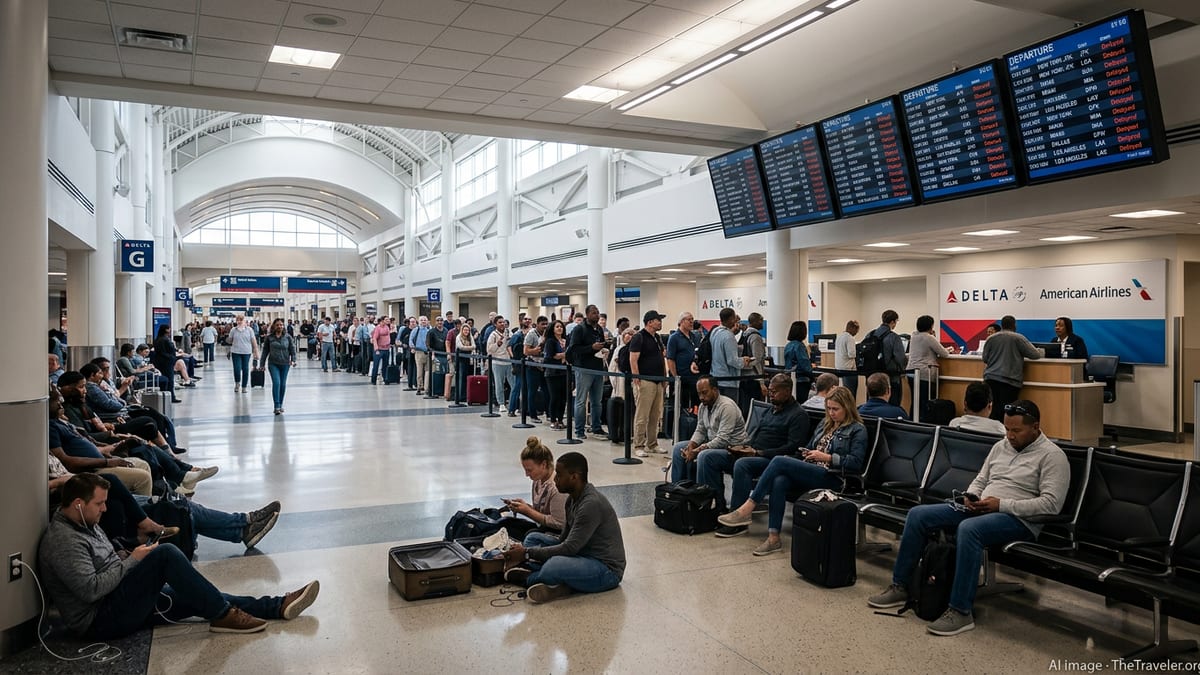
The latest disruption at Atlanta’s Hartsfield-Jackson airport has once again highlighted how quickly conditions at the world’s busiest passenger hub can unravel. Publicly available flight-tracking data and social media posts from travelers describe long lines at customer service desks, crowded gate areas and departure boards dominated by delay notifications.
The impact stretches across multiple airlines, including Delta Air Lines, American Airlines and Southwest Airlines, along with several smaller carriers. Many affected services are core trunk routes linking Atlanta with New York, Los Angeles, Miami and Chicago, meaning schedule problems in Atlanta are spilling into other major hubs as the day wears on.
Flight-tracking platforms show roughly 300 departures and arrivals classified as delayed, while at least 64 flights have been canceled outright. Industry reporting indicates that such disruptions at a central hub like Atlanta can affect thousands of passengers over the course of a single day, as missed connections multiply and aircraft and crews end up out of position.
Images and accounts shared online describe passengers queueing for hours to rebook, sleeping on the floor near power outlets and searching for scarce hotel rooms as evening approaches and options dwindle.
Multiple Airlines and Major Routes Affected
Delta Air Lines, which operates its largest hub in Atlanta, appears to be bearing a substantial share of the disruption, with a significant number of delayed and canceled departures on its domestic network. The airline relies heavily on connections through Hartsfield-Jackson, so problems at the hub can quickly ripple across its route map.
American Airlines and Southwest Airlines are also experiencing notable disruption, with flights from Atlanta to major coastal and Midwestern cities among those delayed or canceled. Publicly available schedules and tracking data show knock-on impacts on services heading to and from New York’s major airports, Los Angeles International Airport, Miami International Airport and Chicago-area airports.
Connections through Atlanta for smaller markets are similarly affected. When high-frequency routes to cities such as New York or Chicago fall behind schedule, aircraft assigned to secondary destinations can become unavailable, leading to additional last-minute schedule changes. Passengers report being rebooked onto alternative routings through other hubs or being pushed to flights departing a day or more later.
In several cases, travelers heading to or from international destinations via Atlanta have reported issues making onward connections, underscoring how domestic disruptions at a mega-hub can quickly interfere with long-haul travel plans.
Weather, Congestion and System Strain
While a complete picture of the causes is still emerging, current reporting and recent history at Atlanta point to a mix of weather-related constraints, congested airspace and knock-on operational challenges. The airport’s role as a central connection point in the U.S. network means even a temporary ground stop, visibility issue or storm system can trigger a cascade of delays.
Analysts frequently note that once early flights are disrupted at a hub, it becomes more difficult throughout the day to return operations to normal. Flight crews and aircraft can quickly end up in the wrong place at the wrong time, and strict duty-time limits restrict how long crews can remain on duty before flights must be delayed further or canceled altogether.
Recent seasons have also seen a series of severe weather events and infrastructure strains across the southeastern United States, with Atlanta regularly cited in federal transportation statistics and independent aviation reports as one of the airports most exposed to cascading delays and cancellations during peak travel periods.
Industry commentary suggests that when disruptions coincide with weekends, holidays or busy seasonal travel windows, the task of rebooking passengers grows more difficult because remaining seats on alternative flights are already limited.
Passengers Face Long Delays and Limited Options
For passengers on the ground in Atlanta, the numbers translate into missed events, extended layovers and logistical headaches. Accounts shared on social platforms describe travelers missing business meetings in New York, family gatherings in Chicago and vacation departures through Miami and Los Angeles as they wait for updated departure times or rebooking options.
With more than 300 delayed flights in a single day, basic airport services such as food outlets, restrooms and seating areas come under visible strain. Travelers report long lines at concessions and difficulty finding available seating in gate areas already crowded with passengers from earlier delayed flights.
Those facing outright cancellations are often forced to weigh whether to wait for the next available seat, reroute through another hub or seek alternative transport entirely. Travel experts note that when so many flights are disrupted simultaneously, options such as same-day rebooking, interline transfers to other airlines or overnight accommodation can become scarce or subject to stricter eligibility rules.
Some travelers have turned to rental cars, long-distance buses or nearby regional airports in a bid to bypass the congested hub, a pattern that has become familiar during recent large-scale airline disruptions across the United States.
What Travelers Can Do During Major Disruptions
Consumer advocates and aviation analysts often point to a handful of practical steps that can reduce stress when major disruptions unfold at airports like Atlanta. They typically recommend that passengers make use of airline mobile apps and websites to monitor real-time flight status, standby lists and available alternative routings, since digital tools can sometimes update faster than airport displays.
Travel commentary also suggests that travelers contact airlines through multiple channels, including phone, chat and social media, rather than relying solely on in-person customer service desks during periods of mass disruption. Having booking references, frequent flyer details and flexible routing preferences ready can make rebooking conversations more efficient.
Public information from the U.S. Department of Transportation notes that passengers are generally entitled to a refund when a flight is canceled and the traveler chooses not to be rebooked. However, compensation for delays, meals or accommodations varies by airline and is often governed by individual carrier policies rather than federal rules, making it important for travelers to review the conditions of carriage for their specific airline.
With Hartsfield-Jackson once again experiencing widespread delays and cancellations, today’s events serve as another reminder of how dependent the broader U.S. air travel system remains on the smooth functioning of a few critical hubs and how quickly disruptions at one airport can resonate across the country.