

More news on this day
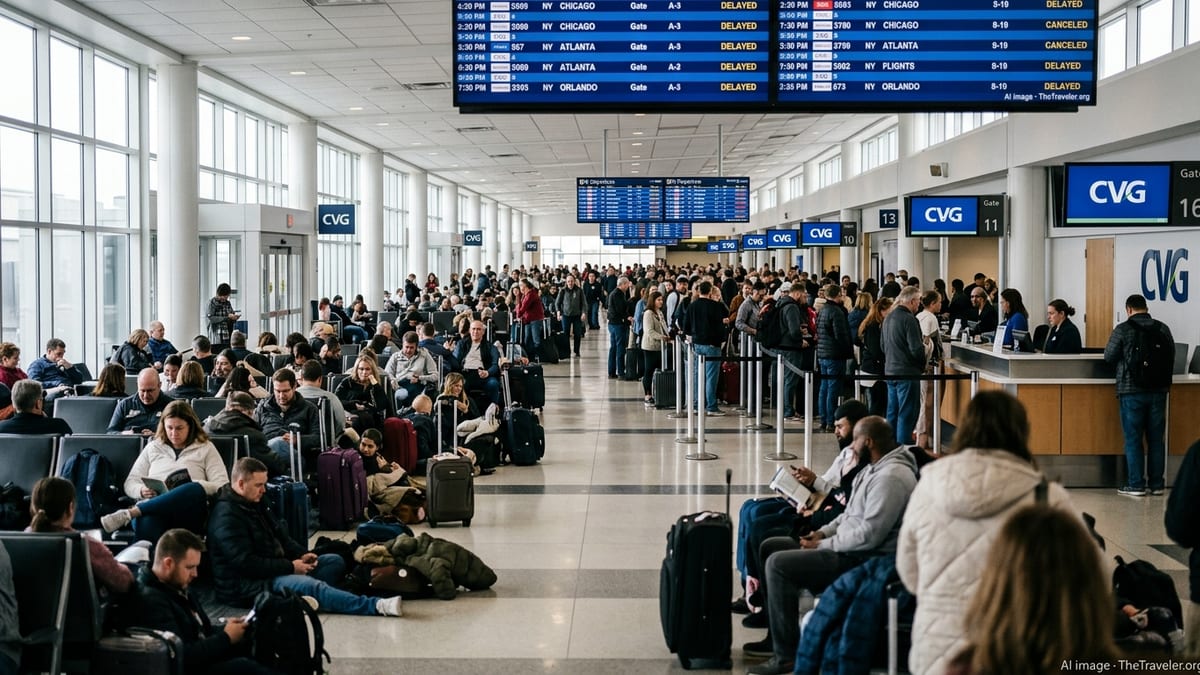
Hundreds of travelers at Cincinnati/Northern Kentucky International Airport faced long waits and disrupted plans today as more than 50 flights were delayed and at least 4 were canceled, affecting major carriers and key routes across the United States.
Get the latest news straight to your inbox!
Widespread Disruptions at a Key Midwest Hub
Publicly available flight-tracking data and airport status boards show that Cincinnati/Northern Kentucky International Airport, commonly known as CVG, experienced a wave of delays and cancellations impacting both departures and arrivals. The disruptions affected a mix of domestic routes, including connections to Chicago, Atlanta, Orlando, and other major destinations frequently used by business and leisure travelers.
The tally of more than 50 delayed flights and 4 cancellations represents a significant operational disruption for a single day at CVG, which typically markets itself as a reliably smooth and efficient airport for connecting traffic. Delays ranged from minor schedule slips of under an hour to multi-hour holds that pushed some departures into later time windows, creating downstream complications for connecting passengers.
Reports indicate that the irregular operations affected multiple airlines, including Delta Air Lines, Southwest Airlines, United Airlines, and other domestic carriers that operate key links from Cincinnati to major hub cities. Passengers reported crowded gate areas, frequent schedule updates on digital boards, and extended waits for rebooking assistance as airlines worked to reassign seats and reroute affected travelers.
While the number of outright cancellations remained relatively low compared with the volume of delayed flights, the combination of both created a ripple effect across the day’s operations. Travelers on early morning departures who were forced onto later flights frequently arrived at their destinations much later than planned, while afternoon passengers faced uncertainty about whether their flights would depart on time.
Impact on Routes to Chicago, Atlanta, Orlando, and Beyond
The disruptions were most visible on high-traffic corridors that link CVG with larger hub airports. Flights to Chicago, including services to O’Hare and Midway operated by major carriers, experienced knock-on delays as aircraft and crews arriving late into Cincinnati were turned around behind schedule. These routes are critical for passengers connecting onward to the Upper Midwest, West Coast, and international destinations, magnifying the inconvenience of even modest delays.
Service to Atlanta, another key domestic hub, also saw significant interruption. Atlanta routes are central for Delta and other carriers, feeding passengers into a nationwide and international network. When flights between Cincinnati and Atlanta arrive or depart late, travelers risk missing onward connections, leading to additional rebooking challenges and overnight stays when options run out for the day.
Orlando-bound flights, used heavily by leisure travelers and families, were among those affected as irregular operations cascaded through schedules. Delays on these routes can be particularly difficult for travelers working around vacation rentals, cruise departures, or theme park reservations, where late arrivals may mean lost prepaid experiences or shortened trips.
Other cities with frequent service from CVG, including hubs in the Northeast and South, also registered pushbacks in departure times. In many cases, aircraft that arrived late from one disrupted route were then scheduled to continue to another destination, allowing delays to propagate across multiple cities throughout the day.
Passenger Experience: Long Waits, Uncertainty, and Limited Options
Travelers at CVG faced a familiar mix of frustrations that have become common during large-scale disruption events across the U.S. aviation system. Gate areas grew crowded as rolling delays extended boarding times and departure estimates, while concourses saw long lines at airline customer service desks as passengers sought rebooking, meal vouchers, or hotel accommodations.
Reports from social media posts and traveler accounts described board after board of orange and red status indicators, reflecting delayed or canceled services. Some passengers attempting to depart Cincinnati for same-day events such as business meetings, family gatherings, or sporting events reported having to abandon their trips when rebooking options would have put them at their destinations too late to be useful.
Because many of the affected flights connected through major hubs like Chicago and Atlanta, rebooking opportunities quickly became limited. Once those hub flights filled with displaced passengers, travelers at CVG often faced the choice of accepting itineraries with multiple connections and longer travel times or waiting for flights on the following day when additional seats could be made available.
Families and less frequent travelers, in particular, appeared to be hit hard by the uncertainty. With school schedules, vacation windows, and fixed hotel check-ins, prolonged delays often meant hurried calls to adjust plans, extend childcare back home, or negotiate late arrivals with accommodation providers.
Airlines and Airport Work to Stabilize Operations
Publicly available information from airline status pages showed that carriers were attempting to absorb the disruption by rolling out a combination of schedule adjustments, aircraft swaps, and rebooking measures. In some cases, airlines consolidated lightly booked flights or reassigned aircraft to routes with the highest concentration of displaced passengers from Cincinnati and nearby cities.
At the airport level, CVG staff appeared to focus on passenger flow and information. Monitors across the terminal displayed frequent updates as estimated departure times shifted, while announcements directed travelers to check their individual flight status through airline channels and mobile apps. Ground handling crews, gate agents, and ramp operations worked to turn aircraft as quickly as possible once they became available, in an effort to prevent further knock-on delays later in the day.
Reports indicate that travelers who had built extra time into their schedules, or who were on nonstop flights not relying on tight connections, fared better than those whose itineraries depended on back-to-back connections in larger hubs. Some passengers chose to voluntarily move to later services, hoping to avoid the risk of missed connections and overnight disruptions downline.
While there was no immediate sign of a long-term operational issue specifically at CVG, the day’s events highlighted how quickly conditions can deteriorate when multiple routes and airlines encounter schedule challenges simultaneously. Even a modest number of cancellations can lead to sharp increases in demand for limited remaining seats, lodging, and ground transportation.
Broader Context of an Already Strained U.S. Air Travel System
The disruption in Cincinnati occurred against a backdrop of broader strain across the U.S. aviation network. Recent weeks have seen recurring bouts of severe weather in key regions, along with national-level operational pressures that have periodically pushed airlines and airports to the limits of their available capacity.
Industry data and recent published coverage on nationwide operations suggest that storms and heavy precipitation in the Midwest and along the East Coast have triggered thousands of delays and cancellations at major hubs. When those hubs experience cascading disruptions, smaller but significant airports like Cincinnati/Northern Kentucky often feel the aftershocks as aircraft, crews, and gate space become misaligned with scheduled demand.
Analysts note that the modern hub-and-spoke system, while efficient in normal conditions, can be vulnerable to exactly this kind of ripple effect. A single weather event or operational bottleneck in one part of the network can send schedule disruptions outward to dozens of connected airports, including CVG, where passengers may be caught in the middle of issues that began hundreds of miles away.
For travelers planning upcoming trips through Cincinnati, publicly available guidance from airlines and travel experts consistently emphasizes the importance of monitoring flight status closely, allowing extra time for connections, and considering earlier departures in the day when possible. As today’s disruptions demonstrated, even a relatively contained set of delays and cancellations can quickly translate into hundreds of stranded passengers and a challenging travel day at one of the region’s most important airports.